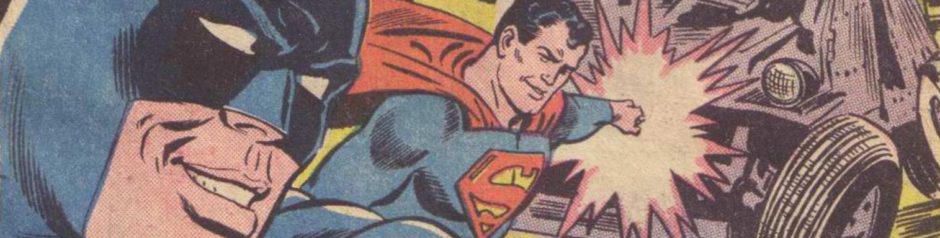
Rebirth Era (Post-“Superman Reborn”) Chronology
___________________________________________________________________________________
YEAR FOUR (2005)
_____________________________________________________________________________
I AM A GUN
————————–the 2nd feature to Batman Vol. 3 #128
————————–the 2nd feature to Batman Vol. 3 #129
————————–the 2nd feature to Batman Vol. 3 #130
Despite a month of sci-fi brain helmet-wearing “self-therapy” designed to strengthen his mental resolve, Bruce continues to have concerns about what could happen if a villain were able to access his mind. After a session, Batman has what he thinks is a random thought of his father saying, “they’d probably throw someone like Zorro in Arkham.” Pushing the memory aside, Batman meets with Commissioner Gordon, who reports that Joker has killed a bunch of security guards, curiously leaving a very uniquely different type of rigor mortis grin, one that looks deliberately like a fake smile, on their faces. Batman catches up with Joker at a pharmaceutical company, where he has killed yet again. Joker exclaims that he is pissed that Achilles Milo supposedly “broke Batman’s brain.” As he fights Joker, the Batman of Zur-En-Arrh persona, perceiving Joker as a psychological threat, begins to take over Batman’s mind. While combating Joker, Batman argues with the Batman of Zur-En-Arrh, which makes it appear as though Batman is talking out loud to himself. Batman even begins hallucinating images of his mother and a sane Joker. All the while, a confused Joker takes a beating. (The Zur-En-Arrh-influenced Batman’s confrontation with Joker is also shown via flashback from the second feature to Batman Vol. 3 #145 and also separately referenced in the second feature to Batman Vol. 3 #145.) A concerned Batman immediately returns to the Batcave to work out the kinks of his wild alternate persona. Wearing his special sci-fi headgear, the Dark Knight attempts to wrangle control over his Zur-En-Arrh persona. As before, Batman sometimes blacks out completely, giving full control of his mind and body to the Batman of Zur-En-Arrh during these sessions. Eventually, feeling as though he is in firmer control of his backup persona, a satisfied Batman tailors a new Bat-costume with a yellow oval insignia on its chest, showing it off to Robin. Batman cites that the yellow oval will draw gunfire to his heavily armored chest, but clearly he’s been influenced by the yellow oval on the chest of the Batman of Zur-En-Arrh, who still remains an active factor within his mind.
–REFERENCE: In Harley Quinn Vol. 3 #20, Bug! The Adventures of Forager #1, Super Sons #5, Gotham Academy: Second Semester #12, Flash Vol. 5 Annual #1, Batman Vol. 3 #44, Batman: Dark Patterns #9, and Batman and Robin: Year One #12 Epilogue. Starting now, Batman will begin using both his yellow oval shirt and his old black insignia shirt interchangeably. He’ll continue to wear both a blue cape-and-cowl and a black cape-and-cowl interchangeably as well. Batman will also randomly choose whether or not to wear trunks on the outside of his pants. Sometimes he will, sometimes he won’t. Essentially, Batman will don these specific different combinations costume-looks randomly from now until Year 12.[1]
–Batman/Superman: World’s Finest #30
Thanks to editorial notation (and writer Mark Waid’s own narrative), this item specifically tells the story of Batman and Superman meeting Wonder Woman for the second time (with Wonder Woman Vol. 5 Annual #1 Part 1 being the first time), just prior to the formation of the Justice League. It also details Robin’s first meeting with Wonder Woman. When a murder occurs on Themyscira (aka Paradise Island), Wonder Woman calls Batman (in his brand new yellow-oval costume) and Superman for assistance. After learning more about Themyscira, Batman fills in Robin, who begs to join. Upon arrival, Wonder Woman introduces the heroes to her mother, the queen of the Amazons, Hippolyta. Superman, Batman, and Robin examine the body of the victim. After riding a kanga (an Amazonian kangaroo), Robin assists Superman in questioning Magala, who says she has been attacked by a mystery person that emerged from the Well of Souls, which connects to the underworld of Tartarus. Meanwhile, Batman and Wonder Woman discover that the corpse isn’t even real, meaning there is no murder. The entire charade has been perpetrated by Apate (the Greco-Roman goddess of deceit) and her brother Dolos aka The Duke of Deception (the Greco-Roman god of trickery) in an effort to steal the magickal item known as the Secret Flame of Prometheus. Batman, Superman, and Wonder Woman fight Apate and Dolos, causing the destruction of the Secret Flame of Prometheus. Robin arrives with a squadron of Amazons (including Nubia and Penelope), who push Apate and Dolos back through the gate to Tartarus. With the case solved, Superman invites Wonder Woman to have coffee with he and Batman, setting a date shortly in the future. Presumably, the trio has this meeting.
–FLASHBACK: From Wonder Woman Vol. 5 #35, Flash Vol. 5 #21, Flash Vol. 5 #40, Justice League Vol. 4 #51, Absolute Power: Task Force VII #6, New History of the DC Universe #2, and DC KO #5—and referenced in Batman Vol. 3 #26, Justice League of America Vol. 5 #5, Justice League of America Vol. 5 #27, Justice League of America Vol. 5 #42, Titans Vol. 3 Annual #1, Superman Vol. 4 #37, Justice League Vol. 3 #24, Justice League Vol. 3 #38, Green Arrow Vol. 6 #29, Wonder Twins #1, Suicide Squad Vol. 5 #25, The Green Lantern #7, Batman Giant #12 (Batman: Universe #5), Green Lantern 80th Anniversary 100-Page Super Spectacular Part 2, Superman Vol. 5 #25-26, Wonder Woman #793, Green Arrow Vol. 7 #5, Nightwing Vol. 4 #109, Batman/Superman: World’s Finest #23, Batman/Superman: World’s Finest #35, Dark Crisis #0, Justice League of America Vol. 5 #5, Deathstroke Inc #2-3, Black Canary: Best of the Best #2, Justice League Unlimited Vol. 2 #9, the second feature to New History of the DC Universe #2, Cheetah and Cheshire Rob the Justice League #3, Green Lantern Vol. 7 #30, and DC’s Supergirl Next Door #1 Part 2. Loosely based on Justice League Vol. 2 #1-6 (“JUSTICE LEAGUE” aka “JUSTICE LEAGUE: ORIGIN”) and originally told via flashback from Justice League of America #9. The world learns of the existence of the New Gods when the evil New God Darkseid and his army of Parademons invade from the extradimensional planet Apokolips.[2] In response, several heroes join together to take on the powerful threat against the planet. Those gathered include: Batman, Superman, Wonder Woman, Flash (Barry Allen), Aquaman (Orin/Arthur Curry), Green Lantern Hal Jordan, and a thirteen-year-old Cyborg (Silas Stone’s son, Victor Stone).[3] (As referenced in Action Comics #978, Super Sons #5, and Superman Vol. 5 #25, starting now and moving forward, Superman will randomly alternate between his regular red trunks costume and a New 52-styled Mandarin/Nehru collar costume.) When Superman is captured and taken to Apokolips, Batman travels there to rescue him from Darkseid’s minions Desaad and Steppenwolf. (Nightwing Vol. 4 #109 tells us that an injured Batman—while doped up on painkillers—headbutts a New God. I’m not sure if this is a reference to something specific, but it could very easily be a nod to his first encounter with the New Gods here.) While in Apokolips, Batman learns that Darkseid’s lifelong goal has been (and continues to be) the search for The Anti-Life Equation, a cosmic sentient mathematical formula with which one can dominate all life. After defeating Darkseid and his army, Batman tells Robin all about his cosmic adventure. Batman also studies the physiology of a dead Parademon and learns about the New Gods’ sentient computers/wormhole-opening devices known as Mother Boxes. Batman keeps a Mother Box for study. Notably, a badly injured Cyborg is put into suspended animation where he will begin a long healing process. (We won’t see Cyborg again for a few years.) Shortly after repelling Darkseid, another interplanetary incursion occurs. Flash, Aquaman, Hal Jordan, Martian Manhunter (J’onn J’onzz), and new Black Canary (Dinah Lance) encounter seven vile alien invaders known as the Appelaxians (also spelled “Appellaxians”).[4] Despite having the power to turn people into wood, crystals, or various other organic material, the Appelaxians are defeated by the heroes, who are aided by the arrival of Batman, Superman, and Wonder Woman. Afterward, these heroes officially form the Justice League (JL). On very rare occasion, the JL will also be referred to as the “Justice League of America” (JLA), although, as seen in Justice League Unlimited Vol. 2 #9, the heroes will design a fancy JLA logo and emblazon it on a few items. With the aid of metahuman-powered construction, the JL quickly builds two separate HQs, one public-facing and one hidden—the Hall of Justice in Washington DC and the Secret Sanctuary in Happy Harbor, RI, respectively. At the Hall of Justice, the JL installs a semi-sentient networked super-computer, affectionately named Supercomputer. Presumably, this network connects to the Secret Sanctuary too. (In Wonder Twins #1, which takes place in 2018, Superman mentions that the Hall of Justice was built “before cellphones.” There were definitely cellphones in 2004, but definitely no touch-screen smartphones. Thus, Superman’s comment actually makes sense. The addition of the Hall of Justice in conjunction with the Secret Sanctuary is unique to the Rebirth Era. In previous comic book continuities, the Hall of Justice wasn’t built until much later. However, having it implemented here, early on our timeline, coincides with the way things were in the old Super Friends TV show from the 1970s. Suffice to say, the Justice League will utilize the private Sanctuary much more often than the Hall of Justice. Both HQs will have everything a good superhero lair requires, including training facilities, trophy rooms, armories, and more. Notably, Hal Jordan will nickname one of the trophy rooms the “Hall of Lost and Found.” The JL places a Mother Box and some Parademon armor into the trophy room.) During this time, Batman learns about the Green Lantern Corps, a universal police force created by the Maltusian immortals known as The Guardians of the Universe, who live on the planet Oa. Hal is but one of many soldiers in this army, each of whom wears their own sentient power ring. Hal provides Batman and the rest of the Justice League with a bunch of signal devices that can be used to contact the Green Lantern Corps. Despite learning that Hal also lost his father at a young age and being interested enough to memorize the “Green Lantern Oath,” Batman does not get along with Hal. Batman and Hal are like oil and water, and they’ll remain that way for years to come. Suffice to say, Batman will think about his rough relationship with Hal for a long time to come. The JL also learns about Martian history and J’onn’s psychic and telepathic abilities. They also learn much more about Themyscira (aka Paradise Island), home of the Amazons. Batman and the other heroes learn all about Aquaman’s powers and his undersea kingdom of Atlantis as well. Note that, while Aquaman is an essential part of the JL, he won’t trust surface dwellers for years to come. Batman also becomes close with Black Canary, who is the daughter of the original Black Canary. The JL also meets Detective Larry Lance (father to Black Canary II and husband to Black Canary I). Also note that the Secret Sanctuary will only be a secret to villains and civilians. As referenced in Justice League of America Vol. 5 #27, the JL will hold meetings with several other superhero teams in the Sanctuary over the course of the next few years. Who these other teams are is beyond me, but just imagine these gatherings occurring on our timeline below. Also note that, from this point forward, all Justice Leaguers will trust their secret IDs with all other members (with some exceptions, of course). It is a serious honor to be on the JL. To be on this team means to be 100% trustworthy. Each member of the JL receives an official paper Certificate of Membership (and every forthcoming member will get one too).
–REFERENCE: In Action Comics #1003, Dial H for Hero #1, Dial H for Hero #4, and the second feature to New History of the DC Universe #2. Recently turned thirteen-year-old Snapper Carr becomes the Justice League’s official sidekick, mascot, and mechanic. Batman doesn’t like Snapper.
–REFERENCE: In Batman/Superman: World’s Finest #35. Superman introduces Batman to Atlantean mermaid Lori Lemaris (his ex-girlfriend from his college years) and her husband Ronal (leader of the underwater city of Tritonis). The Dark Knight learns all about Tritonis, which is home to telepathic merfolk.
–REFERENCE: In Dark Days: The Casting #1, Dark Nights: Metal #1, and Batman/Superman: World’s Finest #38. The Justice League meets and creates the official JL Bylaws, a set of rules by which each JLer must live by in order to remain on the team. One of the many bylaws bans the incarceration of dangerous criminals without the JL’s full approval first. Similarly, one of the Bylaws states the JL must vote on everything before taking any action. The JL also agrees to hold regularly scheduled team meetings (the majority of which will go unseen and must be imagined on our timeline). Notably, Batman skips out on spending time with the team after the first official meeting. (Batman will skip pretty much every after-meeting hang-out, moving forward.)
–REFERENCE: In DC Festival of Heroes: The Asian Superhero Celebration #1 Part 4 and Superman Unlimited #4. Bruce begins bankrolling the Justice League, mostly via generous public donations from the Wayne Foundation. Each Justice Leaguer gets their own encrypted JL e-mail address. Batman also begins what will be a tiresome chore for decades to come—going through his emails and reviewing financial budgets related to team expenditures.
–REFERENCE: In Batman/Superman: World’s Finest #33. The Justice League applies alien “automatic phase-shift technology” to its dual headquarters at the Hall of Justice and the Secret Sanctuary. This means that, should anything of importance be under threat of destruction, it will instantaneously get teleported to a safe locale. This is kind of like cloud-based data back-up system, but for physical things. We must assume that this kind of tech only works for non-organic stuff (and uses a ton of energy), otherwise why wouldn’t it be used as an invincibility armor or something like that? All in all, this is Mark Waid’s cheeky way of explaining how, despite future JL HQs getting destroyed, all of the weapons and trophies will always be saved somehow. Automatic phase-shift technology will be utilized on all future JL HQs.
–REFERENCE: In Nightwing Vol. 4 #78 and Nightwing Vol. 4 2022 Annual Part 1. Bruce goes on unspecified business outside of Gotham. As snow blankets the city, Dick fights a bully named Shelton Lyle and meets Commissioner Gordon’s daughter Barbara “Babs” Gordon for the very first time. (Babs lives with her mom and brother in Chicago, but she is visiting her dad in Gotham for a bit.) Jim and Babs give Dick a ride home to Wayne Manor. Note that Jim Gordon is referred to as “detective” in this item, implying that he is still a captain, which is big-time continuity error!
–REFERENCE: In Detective Comics #1074. As a symbolic gift for Dick, Bruce purchases the Gotham fairgrounds where Dick’s parents were killed, telling him he should always visit and never forget his motivation. Bruce still has no clue that, despite having befallen similar tragedy, Dick simply isn’t built the same way.
–FLASHBACK: From The Batman Who Laughs #4. Batman and Robin patrol. Robin wears his alternate (New 52-styled) costume.
–REFERENCE: In New Talent Showcase 2017 #1 Part 3. Batman continues training Robin, who has come to regard his mentor as being quite grumpy. Batman tells Robin a few pointers: never take on problems that aren’t worth taking on; always realize that physical pain is only really in your mind; always attack assailants head-on if civilians are in danger; in limited combat space, use your opponent’s body against himself; never get cocky; everyone needs a family to rely on; there’s no problem that doesn’t have a solution; and always rescue babies and children first.
–FLASHBACK: From Justice League Vol. 4 #53 and Justice League Vol. 4 #57. Robin, as he often does, secretly follows Batman, trailing him to Justice League HQ. From the shadows, young Robin is awestruck at seeing the team assembled together.
–REFERENCE: In Batman Vol. 3 #33, Justice League Vol. 3 #34, Super Sons #9, Flash Vol. 5 #46, Superman Vol. 5 #5, Event Leviathan #1, Justice League Dark Vol. 2 #12, and Action Comics #1016. Each Justice Leaguer is given their own satcom radio relay device, so they can be reached in case of emergency at all times. The JL communicator can also act as a universal positioning system tracer, which can also identify anyone in close proximity to the hero being tracked (provided their scanned bio ID is registered in the JL database). Thus, in conjunction with the creation of the JL communicators, the JL now begins logging detailed information about all its meetings and cases, building a database of dossiers and biometric information on the various people—friends and foes—they have encountered. Specifically, Batman and Superman will build their own energy signature catalog as well. The JL also begins keeping an updated list of powerful magick users and begins categorizing all metahumans in terms of their power levels—with the top tier being “Alpha Level.” This is the start of a recurring event not visibly listed on our timeline, in which the JL will add to its database archives constantly. Relatedly, the JL sets up several communications servers at its HQ. Over time, access numbers will be distributed among the trusted superhero community.
–REFERENCE: In Detective Comics #985. Batman gives Robin a tricky test as part of his ongoing training. Having been taught strict obedience thus far, Batman gives Robin a rule that is deliberately wonky and made to be broken. Robin disobeys Batman’s bad order and passes the test.
–the second feature to Detective Comics #1050
The “Shadows of the Bat: House of Gotham” arc continues here, continuing directly from the Batman-less second feature to Detective Comics #1049. Scarecrow leads a group of brainwashed boys from the Martha Wayne Orphanage on an assault upon Wayne Manor, but Robin fends them off solo. Batman arrives just in time to strike Scarecrow in the leg with a Bat-shuriken, but not before the villain poisons the boy that was orphaned by Joker in Year One with more Fear Gas than he’s ever administered to one person before. While Batman, Robin, and Alfred are preoccupied with the boy, Scarecrow escapes.
–REFERENCE: In the second feature to Detective Comics #1051 and the second feature to Detective Comics #1058. Picking up directly from the second feature to Detective Comics #1050, Batman saves the life of the poisoned boy, who goes back to the orphanage. From this point onward, busy Bruce’s visits to the boy will quickly dwindle until he no longer sees him at all. The needless trauma suffered by the boy (his poisoning by Scarecrow but more-so his having been orphaned by Joker) will continue to deeply impact Batman, and he’ll subconsciously think about the victim’s trauma for decades to come (although he’ll eventually more-or-less forget about the boy specifically, thinking of a more generic version of him instead). This displays a flaw in Batman’s superhero actions—he’ll help as best as he can, but then he’ll eventually move on to the next item whether or not the damage from a prior case has been fixed or healed.
–FLASHBACK: From Nightwing Vol. 4 #112. Batman continues training Robin. They spar in the Batcave. Batman gives Robin a valuable life lesson about channeling one’s anger.
–FLASHBACK: From Detective Comics #1027 Part 3. January. For Batman’s monthly “birthday” gift, an escaped Joker kidnaps Crazy Quilt and delivers him to Batman along with a cake. Note that the next “birthday” gift shown in Detective Comics #1027 Part 3 is labeled “Year Four, Month Two,” which would seemingly place it in February of this year. However, it involves the New Teen Titans, so it must actually go in Year Seven instead.
–FLASHBACK: From Detective Comics #1027 Part 1 and The Joker Vol. 2 #15—and referenced in Batman Vol. 3 #25. Batman (shown in his yellow oval costume) busts a debuting Deadshot (Floyd Lawton).
–FLASHBACK: From Detective Comics #1000 Part 11, Detective Comics #1027 Part 1, Man-Bat Vol. 4 #1, Man-Bat Vol. 4 #4, and Batman: The Brave and The Bold Vol. 2 #2 Part 4—and referenced in Batwoman: Rebirth #1, Batman Vol. 3 #25, Batman Vol. 3 #32, Harley Quinn Vol. 3 #35, Detective Comics #1001, and Batman and Robin Vol. 3 #2. Originally told in Detective Comics #400. Batman meets super-science husband-and-wife duo Dr. Kirk Langstrom and Dr. Francine Langstrom. Kirk ingests experimental Man-Bat Serum, which mutates him into the flesh-eating “Man-Bat.” Batman not only deals with the debuting Blackout Gang (Jarret, Joey, Louis, Mick, and one unnamed member), but he also simultaneously takes-down the raging Man-Bat to save Francine’s life. (Batman: The Brave and The Bold Vol. 2 #2 Part 4 reveals that Batman earns a permanent scar from this fight.) The Dark Knight then restores Kirk to human form with an anti-serum. Batman will keep this antiserum in his utility belt at all times, moving forward. In response to his experience with Man-Bat, Batman begins keeping bat repellent (to ward off actual bats) in his utility belt. I guess you could call it Bat-bat-repellent. Able to somehow avoid a jail sentence, a thankful Langstrom—along with his wife—becomes an ally to Batman. Unfortunately, moving forward, Kirk will be a very unstable and troublesome ally, easily manipulated and prone to control by malevolent forces. He will be in and out of Arkham Asylum as well. Despite this, Batman will constantly pull strings to keep Kirk out of prison, hoping that his benevolence as a scientist will outweigh his monstrous nature. No matter the true relationship between Batman and the Langstroms, the public will come to regard Man-Bat as a menace and one of Batman’s biggest rivals.
–REFERENCE: In Batman Vol. 3 #141. Batman sends Robin to study/train abroad in Paris with his old mentor, the Gray Shadow (Lucie Chesson). Dick will be away for an unspecified amount of time, but likely for the entire duration of the upcoming “War of Jokes and Riddles.”
–FLASHBACK: From Batman Vol. 3 #25-26. Mid to late January.[5][6][7] When Joker escapes from jail and kills fourteen people, Batman puts police alerts on locations all over Gotham but is unable to find the Clown Prince of Crime. By the time Commissioner Gordon and the GCPD locate Joker at a comedy club, the morning sun has risen over Gotham. Batman, having patrolled all night long, has gone home to sleep. While the Dark Knight slumbers, Joker kills a dozen more and then blows up the place, calmly walking away while shooting cops left-and-right. Meanwhile, Riddler escapes from Arkham, intrigued by Joker’s antics. After some more brutal killings, Joker meets with Riddler in a skyscraper penthouse. Joker explains that he’s lost the ability to laugh because he always predictably loses to Batman. Riddler says he feels similarly and declares war against Joker over the right to kill Batman. Joker starts things off by putting a bullet in Riddler’s belly, which seemingly adds to the latter’s casus belli. (In actuality, however, Riddler isn’t interested in conflict at all. Thinking of Joker’s inability to laugh as part of a puzzle to solve, Riddler has created his most elaborate and mysterious riddle of all time: a violent war, which itself will function as a complex puzzle that will hopefully lead to Joker laughing again.) Batman tries to chase after Joker, but both Joker and the bleeding Riddler escape. While Joker murders a family in the suburbs, Riddler gets life-saving surgery from underground doctor Jamie Knowles (the doctor that fixes-up Joker in Tim Burton’s 1989 Batman movie!), which leaves him with a scar that he turns into a question mark on his chest. After brutally murdering Knowles, Batman and Commissioner Gordon examine the crime scene. Upon hearing Riddler is alive, Joker calls Carmine Falcone and tells him to execute Riddler. (Notably, Falcone has not only gotten out of prison early, but he’s in the middle of rebuilding his empire and he’s exacted a measure of revenge on Penguin by forcing him to be his lackey again. Or Penguin is merely playing a subservient role as part of a grander scheme. Either way, despite being paired together, Falcone and Penguin hate each other’s guts at this juncture. Honestly, as noted above, this feels like Tom King contradicting his own over-arching narrative, so it might be best to simply ignore Penguin’s involvement in this story altogether.) Falcone sends his men after Riddler, who goes to Poison Ivy for help. When Falcone’s men strike in the park, Poison Ivy wraps them up with vines. (As referenced in Batman Vol. 3 #43, Riddler executes the men tangled in the vines and then tells Ivy that her vines strangled them to death. Not the killing type, Ivy is traumatized by what she thinks she has done. Batman arrives to examine the dead men, immediately seeing that they’ve been shot to death.) Batman also learns from Gordon that one of the deceased was an undercover cop. Joker shows his frustration by murdering both Falcone’s mother and his top men. After shooting Falcone in the arm, Joker then usurps Penguin (whom he calls “Fatman”), making him his own assistant instead. (Notably, from this point onward, the Falcone Mob will retain a presence in Gotham, but it will never be what it once was in terms of power and influence—although many cops will continue to be linked to the organization.) Both Riddler and Joker then recruit super-villains into their respective folds. Nearly every villain in Gotham picks a side. Riddler’s team includes Two-Face, Scarecrow, Clayface (Basil Karlo), Firefly, Victor Zsasz, Killer Croc, and Deathstroke. Joker’s team includes Oswald Cobblepot, Solomon Grundy, Man-Bat (Kirk Langstrom), Cluemaster, Deadshot, Mad Hatter, Tweedledum, Tweedledee, Mr. Freeze, and the Ventriloquist (with Scarface). These two factions begin warring with each other, which leads to dozens of innocent deaths. The mainstream media outlets begin to call this carnage “The War of Jokes and Riddles.”
–Batman Vol. 3 #27
Late January. Picking up directly from our previous item, Batman shakes down Chuck Brown, asking him to get Joker’s phone number in an effort to find out his location to end “The War of Jokes and Riddles.” Brown reaches out to Deadshot, who gives him a number, but it winds up being untraceable. Batman then orders Brown to set up a one-on-one meeting with Joker (which will be a staging ground for an ambush). Brown calls Joker and sets up a face-to-face, but Riddler finds out and has Clayface (Basil Karlo) kidnap Brown to learn details of the meeting. As revealed in Batman Vol. 3 #32, it is at this time that Riddler begins a campaign of manipulating Brown as part of the longer con. (Riddler wants to ensure that Brown not only becomes a central player in the war, specifically a mole for Batman, but also a ridiculous joke of a super-villain, one silly enough to bring Joker back to laughter.) Batman shakes down Brown yet again and learns that Joker and Riddler are both planning to be at the meeting. A day later, Batman gets in the middle of a battle-royale including Solomon Grundy, Scarecrow, Killer Croc, Riddler, Joker, and Brown. As punishment, Joker straps an explosive device to Brown’s body and tells him his son Charlie will die unless he suicide bombs Batman at their next meeting. Batman puts Charlie into police protection, after which Brown realizes the bomb on his chest is fake anyway. Despite being under protection, Riddler is able to poison young Charlie to death. As referenced in Batman Vol. 3 #32, Batman and Chuck are both by poor Charlie’s side at the time of his passing. (Tom King’s fuzzy date specificity continues here, as he specifically tells us—in Batman Vol. 3 #32—that Riddler kills Charlie on May 6. Again, we must ignore this.) Batman tells Brown he will avenge his son’s death. A distraught Brown becomes the gaudy Kite Man (also spelled “Kite-Man”), returning to offer his services to Joker. Riddler has successfully manipulated Joker’s man into becoming a walking joke.
–FLASHBACK: From Batman Vol. 3 #28-29 and Batman Vol. 3 #85—and also referenced in Batman Vol. 3 #24, Batman Vol. 3 #30, and Batman Vol. 3 #32. Mid Late January to early February. Picking up directly from our previous item, the “War of Jokes and Riddles” continues. Joker’s army takes over the Upper West Side and Riddler’s army takes over the Upper East Side, turning the park into a war-zone and causing dozens of innocent lives to be lost. Batman and Commissioner Gordon are helpless and watch the city fall apart for a week or so. Gordon meets with both villain armies, asking what they want. Both sides say they want Batman. Gordon then reports back to Batman, telling him that he has asked the US Government for support from the military. When Kite Man is forcibly ejected through a skyscraper window, Batman saves his life. The Dark Knight then confronts Catwoman, who is robbing a Maroni family safe. In a reprieve from the war, Batman meets with Catwoman (in her skintight purple costume with black knee-high boots and black elbow-length gloves), and they have sex! Later, Deadshot and Deathstroke begin a solo war against each other. Batman apprehends them both, but not for a few bloody days, which results in 62 deaths. An angry Batman pummels Deadshot so mercilessly that he nearly dies in the hospital. Afterward, Gordon reports to Batman, telling him that two Army Special Forces (Green Beret) units were completely wiped-out by Joker and Riddler. After more bodies pile up, Bruce takes a page out of his mom’s playbook, calling a truce and arranging a meeting at Wayne Manor, during which both sides will share in a nine course French dinner and negotiate an end to the conflict. As Gotham’s worst villains hover around while Alfred waits the table, Bruce tells Joker and Riddler to convince him which side should get to kill Batman. Bruce explains that whoever makes the best case gets one billion dollars, which should be sufficient enough to give the winner the advantage to win the war, thus ending the carnage. After they state their cases, the villains and their crews leave as Bruce says he will send his answer and the prize money later via Commissioner Gordon. Soon after, Batman joins forces with Riddler’s army in exchange for Riddler ordering his men not to kill any more people. (We are never told if Bruce declared Riddler the billion dollar winner, but somehow Batman has thrown-in with his team.) Batman then meets with Riddler, who convinces him to capture Kite Man last. (Riddler needs Kite Man on the playing field as part of his longer plan to claim victory over Joker.)
–Batman Vol. 3 #30
Early to mid February—picking up directly from our previous item. Wearing a Riddler arm band, Batman fights Kite Man, Tweedledum, Tweedledee, and Penguin’s penguin commandos—straight out of Tim Burton’s Batman Returns film. The Caped Crusader punches-out Kite Man (but leaves him free as per Riddler’s order) before apprehending the Tweeds. Batman then neutralizes the Ventriloquist by stealing away Scarface. Next, the Dark Knight shoots Man-Bat out of the sky with Batplane missiles. Meanwhile, Scarecrow takes out Cluemaster. After that, Batman easily takes down Mr. Freeze and then Mad Hatter. Only Kite Man, eyewitness to each of these defeats, remains standing on Joker’s side. (Penguin, Scarecrow, and Solomon Grundy’s whereabouts are unknown.) Before long, Batman and Riddler interrogate Kite Man.
–FLASHBACK: From Batman Vol. 3 #31-32—and referenced in Batman Vol. 3 #25-26 and Batman Vol. 3 #32. Mid February—picking up directly from our previous item. The “War of Jokes and Riddles” continues. Kite Man secretly becomes Batman’s man on the inside, delivering the location of Joker’s hideout atop the skyscraper penthouse where the war started. Batman recruits Catwoman to help him. She spies on Joker, who nearly kills her. Batman then tricks Riddler into soliciting Kite Man’s help to break into Joker’s penthouse. Batman instructs Kite Man to build and offer special kite-gliders for Riddler’s army, only they don’t know that they are rigged with jet-propelled inverse parachutes. (Kite Man installs one on Firefly’s flight suit.) After Riddler and his crew crash in and easily take down Joker, Kite Man activates his parachutes and all of Riddler’s men go flying up into the sky where they are detained on the Bat-Blimp, which is piloted by Alfred. Riddler then punches-out Kite Man and faces-off with Batman and Joker, who still frustratingly can’t laugh despite all the ridiculousness that has occurred. Batman, the superior fighter, takes down Joker and Riddler. After confessing that his war games were always simply aimed at making Joker laugh again, Riddler feels dejected by his efforts having been in vain. Batman is outraged to learn that months of tragedy and carnage were in service of nothing more than a joke/riddle. Furious at the Riddler for the loss of life his war has caused, and especially for killing Kite Man’s son so sadistically, Batman decides that Riddler must face ultimate justice. Batman breaks his code against killing, trying to mortally stab Riddler with a knife. However, Joker blocks the would-be fatal thrust by shoving his hand through the knife, saving Riddler’s life. Joker is tickled by the idea of the hero losing his cool and playing executioner. The added irony of himself being the one to prevent Batman from violating his vow to never use lethal force finally causes Joker’s non-laughing streak to end. The Clown Prince of Crime cackles uproariously. Joker, Riddler, and Kite Man all go to Arkham Asylum. The war is over, but Batman is shaken to his core. He is not only extremely troubled by the massive collateral damage caused by the war, but also ashamed by his own attempted murder of Riddler. Batman is also deeply disturbed at the fact that Joker stopped him, feeling as though, in a sense, the Clown Prince of Crime will now and forever more have an emotional stranglehold over him. Batman, hoping to move on, reaffirms his vow to never use lethal force. Despite this reaffirmation, the Caped Crusader will be haunted by his own actions for the rest of his crime-fighting career. Batman then retraces the steps of all parties involved in the war, trying to make sense of it all. Batman studies victim dossiers, watches recordings, interviews witnesses, and collects evidence. He also visits and interrogates each imprisoned villain that took part in the conflict.
–REFERENCE: In Detective Comics #999. February—Bruce’s birthday. As he does every year on his birthday, Batman runs Program 2.1, placing himself into a virtual world that challenges him by pushing him to his most extreme limits.
–FLASHBACK: From Batman: Dark Patterns #5—and referenced in Batman Vol. 3 #150 and Batman: Dark Patterns #4. (I’ve taken the liberty of combining the reference from Batman Vol. 3 #150 with the Dark Patterns stuff.) Batman fights an escaped Ventriloquist (along with Scarface and his newest henchman Teddy Critchley). Batman prevents the villains from killing three people by destroying Scarface’s body, which causes the Ventriloquist to have a panic attack. Ventriloquist goes to Arkham Asylum. Batman does some digging on Teddy, learning that he and his wife Kim Critchley have just had a baby named Yuto Critchley. While we won’t see it on our timeline ahead, Batman will secretly keep tabs on Teddy and his family. Teddy will wind up henching for various super-villains. It’s entirely possible that Batman will scrap with Teddy again, although we’ll simply have to imagine those interactions over the years to come on our chronology.
–REFERENCE: In Batman: Urban Legends #23 Part 2. As part of Robin’s ongoing training, Batman teaches him that, if all else fails, you can always improvise in any situation.
–FLASHBACK: From Detective Comics #1076—and referenced in Batman: Prelude to the Wedding Part 2 – Nightwing vs Hush #1. Someone snaps a picture of Bruce and Dick at a black tie event. Bruce gets the picture, frames it, and puts it in one of the Wayne Manor living rooms. Detective Comics #1076 and Batman: Prelude to the Wedding Part 2 – Nightwing vs Hush #1 are completely separate items, but both occur at a fairly generic black tie event. As such, I’ve combined them.
–REFERENCE: In Batman: Pennyworth RIP #1. Batman, as part of Robin’s training, teaches him to be mindful of tools and tradecraft, meaning that, not only must he learn to forge his own throwing-weaponry, but he must also do his best to retrieve any weaponry left behind at the scene of battles. Batman will teach this important set of lessons to all the future Bat-Family members as well.
–REFERENCE: In Batman Vol. 3 #64. Batman realizes that Flash, whenever he is near, gives off static electricity that is so strong it feels like it is tugging on his cape. Batman tells Flash about this.
–FLASHBACK: In Batman: The Brave and The Bold Vol. 2 #2 Part 4—and referenced in Batman: The Brave and The Bold Vol. 2 #2 Part 4. Batman and Robin spar with bō staffs. Later, Batman watches Robin train on the gymnastic rings. This flashback/visual reference combo is drawn vaguely enough that it could be an image of Dick or Jason. But I’ve gone with the assumption that it’s Dick.
–REFERENCE: In Nightwing Vol. 4 #26 and Batman Vol. 3 #55. Batman tells Robin to never use real names when out in the field. This is a tough thing to remember and something that Batman will consistently have to remind Robin while on patrols and missions. Batman also begins referring to Robin as “Chum” while on patrol. This is a double entendre—Batman regards Robin as a legitimate friend and surrogate son, but the Dark Knight has also noticed a fishy miasma pervading the Boy Wonder. This is because Robin wears the same dirty and smelly costume without ever washing it. Ironically, when Batman first started out, he never washed his stinky costume very often either. Batman will call Robin “Chum” often, moving forward. Note that the rule of only using code-names in the field will often get broken by various writers. Thus, despite his insistence, Batman will often break his own rule time and time again. Oh well.
–REFERENCE: In Flash Vol. 5 #61 and Nightwing Vol. 4 #68—originally told in Robin: Year One. Dick goes undercover in a League of Assassins training camp led by Shrike. While training with Shrike, Dick befriends fellow student Boone. Eventually, Batman and Robin bring down the training camp and bust Shrike.
–FLASHBACK: From Detective Comics #1027 Part 3. March. For Batman’s monthly “birthday” present, Joker sends a crudely drawn picture of himself and Batman with the words “Best Friends” written on it. Alfred hates this.
–FLASHBACK: From Nightwing Vol. 4 #69. Bruce and Alfred celebrate Dick’s thirteenth birthday, surprising him with a cake.
–FLASHBACK: From Catwoman Vol. 5 #17—and referenced in Robin Vol. 3 #3. Batman responds to the Bat-Signal to find Catwoman waiting for him. They engage in a playful chase. As referenced in Robin Vol. 3 #3, by 2021, the super-villain community will be quite familiar with Batman and Catwoman’s not-so-hidden sexual chases across the rooftops of Gotham. While we’ll see a number of these encounters listed on our chronology, we should probably imagine even more of them sprinkled invisibly throughout.
–FLASHBACK: From Batman Vol. 3 #50. The Lee Weeks-illustrated Bat-Cat love affair continues with a splash page. Batman and Catwoman come face-to-face yet again, playfully sexual as always.
–FLASHBACK: From Batman Vol. 3 #50. Catwoman poses sexily as Batman approaches her, casting a looming shadow across her figure. This splash, drawn by Ben Templeton and Keiren Smith, is done in a very indie style that may or may not be representative of any actual costume that Catwoman wears in-continuity. In fact, it looks quite like an old DC Animated Universe version of Selina’s black feline costume. However, aside from the color and mouth, it doesn’t look too dissimilar from what she’d be wearing at this point on our timeline (the dun feline outfit), so I’ve placed it here.
–FLASHBACK: From Batman Vol. 3 #66 and Batman Vol. 3 #50. An escaped Two-Face meets-up with Catwoman (who is wearing a new pinkish-purple whiskers-and-tail costume), promising her a ton of cash and a diamond from the museum if she helps him set up Batman for an ambush. Of course, Catwoman agrees but immediately tells Batman the score. After donning extra armor, Batman leaps into the “trap.” With Catwoman’s help, the Dark Knight takes down Two-Face and his men. After a kiss on Batman’s lips, Catwoman runs off with Two-Face’s cash and the diamond. When Batman catches her, they kiss passionately in the pouring rain. Soon, the chase continues. Batman playfully spars with Catwoman, who turns the tables on and sneaks-up behind the Dark Knight. She lassos his neck with her whip before pouncing down on top of the smiling Dark Knight. Batman and Catwoman remove each other’s clothes as they passionately kiss yet again. Later, Catwoman donates Two-Face’s payoff to charity. Note that the main flashback for this item comes from the hallucinatory Batman Vol. 3 #66. I’ve paired it with similar pin-up splash images (three from Batman Vol. 3 #50 to be exact), all of which seem to coincide with and complete this narrative. The splash pin-ups are by Frank Miller and Alex Sinclair, Tim Sale and José Villarrubia, and Paul Pope and José Villarrubia (in that order).
–REFERENCE: In Batman Vol. 3 #138. Batman gives Robin access to (and the ability to emergency override or shut down) the central system/server hub for the Bat-computer network located in a downtown apartment. Robin’s special vocal access code is the candlelight oath that he swore before starting his training last year (combined with retinal and handprint scans). Presumably, other Bat-Family members will also be given similar access with unique vocal pass-phrases.
–REFERENCE: In Batman/Superman: World’s Finest #4. Batman learns Hal Jordan’s power ring has an impurity, making his only weakness the color yellow. (Yellow represents fear on the emotional spectrum.)
–FLASHBACK: From Titans Vol. 3 #19—originally told via flashback from Justice League Vol. 2 #51. Batman formally introduces Robin to the Justice League. Robin assists the JL in defeating a horde of techno-organic Schrodinger Hounds and an alternate universe version of Mammoth. (Note that Cyborg was originally a part of this event, but, thanks to New History of the DC Universe #2, he definitely no longer appears.) Afterward, Batman tells Robin that, when he gets older, he will one day lead the JL.
–REFERENCE: In Batman: Prelude to the Wedding Part 2 – Nightwing vs Hush #1. Dick is shocked to witness the stuffy Bruce eat a burger with a knife and fork. All of the future Robins will have a similar experience and have the same chuckling reaction to this politesse, thinking Bruce the ultimate product of being raised by a prim-and-proper butler. (These mealtime interactions will have to be imagined on our timeline ahead.)
–REFERENCE: In Detective Comics Annual #3 (2020) Part 1 and Batman and Robin Vol. 3 #12. Bruce, Dick, and Alfred pose for a portrait, which gets hung up in Wayne Manor. Bruce poses for a solo portrait as well.
–REFERENCE: In Batman: Black and White Vol. 5 #5 Part 5. Batman teaches Robin various meditation techniques, stressing the importance of fortitude and stillness.
–FLASHBACK: From Justice League of America Vol. 5 #22. Batman designs and builds the dual-seated Batmobile convertible (the one from Batman ’66). The Dynamic Duo takes it out for a spin.
–REFERENCE: In Justice League Vol. 4 #7. Batman tells his “criminals are a superstitious and cowardly lot” mantra to the Justice League.
–FLASHBACK: From Detective Comics #1027 Part 3. April. For Batman’s monthly “birthday” gift, Joker orchestrates the demolition of an entire city block.
–REFERENCE: In Green Arrow 80th Anniversary 100-Page Super Spectacular #1 Part 2. Batman meets rookie superhero Green Arrow (Oliver Queen) but comes to immediately regard him with disdain, thinking of him as a bargain basement version of himself, with an Arrow Car and Arrow Cave. Unlike in the Silver and Modern Ages, Batman and Green Arrow won’t become close friends.[8]
–FLASHBACK: From Absolute Power: Origins #1—and referenced in Robin 80th Anniversary 100-Page Spectacular Part 1 and the second feature to Batman Vol. 3 #150. Joe Chill escapes from Blackgate Penitentiary, leading to Batman busting him and finally gaining some semblance of revenge/resolution for his parents’ deaths. Batman also collects and supplies enough evidence to Commissioner Gordon to keep Chill locked in Blackgate for the rest of his life. Gordon holds a public press conference, mentioning the new evidence that proves Chill acted independently as the sole killer of the Waynes, while also declaring that “law and order has now closed one of Gotham’s most notorious cold cases.” (Prior to this, some believed that Chill—despite his confession of guilt—must have been a part of some greater conspiracy against the Waynes, but Batman and Gordon put an end to the rumors.) Notably, Gordon refers to Batman as a “confidential informant” and refuses to answer questions about “a masked vigilante acting extrajudicially.” This dialogue feels a bit Year One-ish, but this item should remain here since Batman is wearing his yellow oval costume and there is mention of Green Arrow having already debuted. (We should also mention that, in the second feature to Batman Vol. 3 #150, which occurs in 2024, Bruce says that he “eventually made Joe Chill pay,” which, while vague, can only apply to this item. Furthermore, dialogue in Robin 80th Anniversary 100-Page Spectacular Part 1 says that Bruce is “an adult by the time [he finds his parents’ killer].” While also vague, this line could either apply to this item or to Bruce visiting Chill earlier in Year One. Interestingly, this Absolute Power: Origins #1 flashback depicting the yellow oval-wearing Batman busting Chill is wholly unique to the Rebirth/Infinite Frontier Era and does not reflect any prior canon.)
–REFERENCE: In Nightwing Vol. 4 #24. Batman continues training Robin, telling him to always take advantage of one’s surroundings while in combat. Batman also tells Robin that most criminals are unable to focus on anything other than themselves, which is a foible that can be exploited.
–REFERENCE: In Batman Vol. 3 #81. Batman continues training Robin, teaching him the secret “language of fighting,” in which one can communicate via blows while in combat. Batman will teach this to every future member of the Bat-Family.
–REFERENCE: In Nightwing Vol. 4 #30-32. Batman continues training Robin, teaching him investigative skills. Batman tells his sidekick that detective work is “breaking things apart to put them back together”—meaning one must view the greater picture as a bunch of smaller puzzle pieces that must be put together in the correct way in order to solve the mystery. He also stresses that being a hero means helping and protecting everyone, even sometimes bad people who are undeserving.
–REFERENCE: In Nightwing Vol. 4 #43. Batman continues training Robin, impressing upon him that, in their line of work, they must be ready to respond to a call at all times, meaning they can never take a day off. He will stress this idea (and practice what he preaches) for decades to come.
–FLASHBACK: From Nightwing Vol. 4 2022 Annual Part 3. Batman programs a training robot to practice fighting with Robin in the Batcave. After watching Robin spar with the robot, Batman tells him he must practice something ten thousand times before really getting it right. He also says to never make mistakes, never become vulnerable, and never trust anyone.
–FLASHBACK: From Strange Love Adventures #1 Part 6. May—Mother’s Day. Batman and Robin get ready to go on patrol together. Before departing, a cheeky Robin gives Alfred a hand-drawn Mother’s Day card.
–REFERENCE: In Dark Nights: Metal #3 and Titans Vol. 3 #19. Despite having helped form the Justice League not long ago, Batman is plagued with thoughts of the danger that metahumans—good or bad—could potentially pose to the world. The Dark Knight does his best to suppress his concerns. Always the pre-planner, though, Batman can’t help but think of ways to both neutralize and utilize his metahuman friends’ powers to benefit his own personal war on crime. Unable to shake his paranoia, Batman begins pre-planning direct anti-metahuman action.
–REFERENCE: In Justice League Vol. 3 #29, Dark Nights: Metal #4, Super Sons #16, Superman/Batman Vol. 2 #12, Superman: Man of Tomorrow #19, Challenge of the Super Sons #9, Batman Vol. 3 #130, and Flash Vol. 6 #9-10. Hot on the heels of our previous item, Batman succumbs to his paranoia about the possibility of his friends going rogue or being controlled by evil. Taking action to put his mind at ease, Batman compiles multi-layered contingency protocols to combat them if need be. As per his plan, Batman collects (or builds) various countermeasures in the form of specific weaponry that can defeat each of his Justice League brethren. Batman puts his anti-JL items into locked briefcases inside a large safe in the Batcave.[9] The anti-Superman briefcase includes a Green Kryptonite ring, pieces of different colored Kryptonite, and an expanding Red Kryptonite-lined prison cell (of Batman’s own design). The anti-Flash briefcase includes temporal grenades, seizure-inducing vibra-bullets, and a frictionless coating spray (all of his own design). The anti-Cyborg briefcase includes a Mother Box, a ministroke-inducing ion-pulse hacking program (of his own design, and possibly made from the Mother Box), an electromagnetic nerve tree (of his own design). The anti-Wonder Woman briefcase includes the god Hephaestus’ magickal Bind of Veils and an auricular nanite implant (of his own design). (Both of these anti-Wonder Woman items cause hallucinatory experiences.) The anti-Aquaman briefcase includes a binding magnesium carbonate foam spray (of his own design) and a modified Fear Gas spray (of his own design, tweaked from Scarecrow’s chemicals). The anti-Green Lantern briefcase includes a citrine neurolizer, black power ring, and yellow power ring. Batman also devises an extra plan to use against the GL Corps. He learns how to introduce post-hypnotic suggestions and secretly does so to several of his GL pals, making it so he can render them temporarily blind with an activation codeword. Batman also constructs and/or gathers other anti-Superman weapons, putting them into the contingency safe: a red solar-flare projection staff, a particolored “Five Finger Death Punch” Kryptonite gauntlet, a microscopic red sun gauntlet, Kryptonite chewing gum, and magick wrist wraps that can create mystic armor. Batman adds his armored anti-Superman suit (the one based on the Frank Miller’s The Dark Knight Returns) into the mix as well. Batman also devises a hypothetical anti-Superman combat strategy that involves striking at the Man of Steel’s pressure points. Also in the safe: a nanite-fire weapon to use against Martian Manhunter. Batman also constructs (and draws up anti-JL plans that revolve around use of) a heavily-armored high-tech combat mech called the Justice Buster. Detailed files related to these contingency plan weapons and strategies are stored in the Bat-computer network and linked into Batman’s costume. Batman will keep his anti-JL contingency plans up to date, moving forward.
–REFERENCE: In Legends of the Dark Knight Vol. 2 #10 (Legends of the Dark Knight Vol. 2 Print Edition #5). Batman adds flame-gauntlets to his anti-Martian Manhunter contingency weaponry.
–REFERENCE: In Superman: Son of Kal-El #18. Batman builds special high-tech shielding as a part of his anti-Superman contingency plans.
–REFERENCE: In Deathstroke Vol. 4 #32. Batman, likely related to his anti-Superman contingency plans, designs power-charging gauntlets, which he will wear with his costume from this point forward.
–REFERENCE: In Trinity Vol. 2 #14-15. Batman either obtains or builds a high-frequency sound-vibration ray gun, which has the ability to take down someone as powerful as Superman. The origins of this weapon are unknown, but it is very likely a part of his recent anti-metahuman contingency plans. Batman stores the gun in the Batcave. Batman also adapts this sound-vibration weapon for use via cannons on some of his Bat-vehicles.
–REFERENCE: In Batman Vol. 3 #108 and Batman: The Brave and The Bold Vol. 2 #12 Part 1. Batman begins training in defense techniques against psychic manipulation and other telepathic/mental invasion. Presumably, Martian Manhunter is and will be one of his primary teachers. Batman also adds binaural defenses to his cowl, which can protect against some forms of hypnotism.
–FLASHBACK: From Batman Vol. 3 #146 and Batman Vol. 3 #149—and referenced in Batman Vol. 3 #125-130, the second feature to Batman Vol. 3 #136, Batman Vol. 3 #146, and Batman Vol. 3 #149. Batman blacks-out completely, once again giving full control of his mind and body to the Batman of Zur-En-Arrh. With Batman’s previously-devised contingency plans in mind (literally and figuratively), the Batman of Zur-En-Arrh begins taking action. Playing Bruce, Zur-En-Arrh visits Wayne Enterprises and sets up a series of illegal secret off-shore accounts (worth billions of dollars), which he will use to fund his elaborate plans for decades to come. With this unlimited revenue stream, Zur-En-Arrh uses Amazo tech to begin constructing Failsafe, a super-powered anti-Batman robot. He also begins constructing an army of robot minions as well. He also sets anti-Justice League traps onto a specific Gotham block that is owned by Bruce—with the idea that Failsafe can lure any potential foes there if need be. The concept of a living contingency plan (the Batman of Zur-En-Arrh himself) now creating another contingency plan is not lost on the Batman of Zur-En-Arrh. As such, he wipes his own memory of the knowledge of how to defeat Failsafe. While still not 100% programmed, Failsafe goes dormant and is hidden in the Zur-En-Arrh lab, which itself is hidden behind a rock wall in the bowels of the Batcave. Failsafe is designed to activate only if it receives news reports that Batman has committed murder or turned evil. The Batman of Zur-En-Arrh pretends to be Batman, tasking Alfred with monitoring false alarms for Failsafe and overriding/resetting its pending activations. Presumably, Alfred is instructed never to speak of Failsafe in any capacity. Shortly thereafter, Batman returns to status quo with no memories of what the Batman of Zur-En-Arrh has done. Alfred will follow orders and keep the secret from Batman. Meanwhile, the Batman of Zur-En-Arrh will periodically take over Batman’s mind and body to continue programming, updating, and perfecting Failsafe and the minion-bots in the years to come. We’ll have to imagine Zur-En-Arrh taking over Batman to do this every once in a while on our timeline ahead.[10]
–Batman: Dark Patterns #1-3 (“WE ARE THE WOUNDED”)
Batman is wearing his blue-and-grey/yellow oval duds and says he has been doing costumed vigilantism for three years, hence placement of this item here. (It’s also worth noting that artist Hayden Sherman, aside from being heavily influenced by Tim Sale, makes the conspicuous stylistic choice of drawing everything in this arc with a 1950s feel à la Batman the Animated Series.) On the police scanner, Batman hears about boys jumping in front of trains, wild dogs running loose, an arson fire, and a bizarre series of torture murders. However, he’s unable to be everywhere all at once, so he chooses the latter, visiting the scene of the latest murder to examine the corpse of a Mr. Choi with Gotham University forensic pathologist Dr. Sereika and Commissioner Gordon. (The bizarre Dr. Sereika mistakenly calls Gordon “lieutenant,” but everyone else in this arc will correctly refer to him as “commissioner,” so this must be a deliberate choice by writer Dan Watters to show that Dr. Sereika is out-of-touch.) The victim’s body is covered with needles and missing its tongue and teeth. Before departing, Batman tells Gordon that he doesn’t trust Dr. Sereika. Across town, Batman breaks into the office of the first torture murder victim (attorney Francis Oakley), fighting off a swarm of security guards in the process. Back in the Batcave, Bruce sews up a bullet wound while chatting with Alfred and doing research on the Bat-computer. Bruce learns that Oakley recently represented the other two victims (Kenneth Armitage and Choi) in court cases. Bruce realizes that the killer is murdering Oakley’s recent clients in alphabetical order. With Bruce distracted, Alfred takes over and finishes stitching him up. Batman bugs the home of the killer’s next target, Michael Gallo—a man that had run afoul of the Falcone Mob a year prior, leading to his wife’s murder and a brief association with Oakley. When Batman overhears the killer accosting Gallo, he smashes into the apartment to meet The Wound Man, a strange villain pierced with needles, nails, tacks, spikes, and rebar. After a short fight against Batman, the Wound Man flees. At Wayne Manor, Bruce reviews one of his father’s old medical books, telling Alfred that the Wound Man is modeled off pain maps from manuscripts dating back to the 14th century. Batman debriefs Gordon via phone then meets up with him in person. Gordon tells him that the security guards at Oakley’s office work for Ace Chemicals, which itself is represented by Oakley’s firm. Later, Batman prevents the Wound Man from killing another victim, capturing and injuring the villain in the process. Batman attempts to take him to Gotham General Hospital, but the building is ablaze, the latest in the continued string of arson fires. Seeing no other nearby options, Batman delivers the Wound Man to Dr. Sereika. Batman then visits journalist Nicky Harris to get dirt on Ace Chemicals. Harris reveals that, fifteen years ago, Ace Chemicals made a nerve agent called Crioxin, which is linked to the Wound Man’s origins. Harris also tells Batman that Crioxin has a connection to Green Fields, an upstate suburb the tabloids dubbed “The Town Without Screams” following a series of strange abnormalities happening there one year prior. En route to Green Fields, Batman remotely briefs Gordon, who meets with the mayor of Gotham and Christopher Sionis (Black Mask’s relative and current CEO of Axis Corp, which is the parent company of Ace Chemicals and Janus Cosmetics). Across town, masked men kidnap Dr. Sereika and the Wound Man. In Green Fields, Batman finds a boarded-up home that once belonged to the Wound Man. He quickly discovers the Wound Man is Dr. Jessup Hartnel, a man who (like everyone else in Green Fields) had been Crioxin-poisoned by Ace Chemicals. Batman is then confronted by the townsfolk, all of whom can’t feel pain just like the Wound Man. They nearly beat Batman to death before a citizen of more sound mind saves him and gives him the Wound Man’s backstory. (The Wound Man’s wife died thanks to Ace Chemicals and he wants revenge.) After a briefing with Commissioner Gordon, Batman converges on Sionis’ home. En route, Batman takes note of various items on the police blotter, including what vaguely sounds like activity by Ten-Eyed Man, who hasn’t officially made his public debut yet (and won’t for a couple more years). Upon arrival to Sionis’ home, Batman finds that the Wound Man has killed two Axis Corp guards but injured himself in the process. Sionis tells Batman that he can’t prove his involvement in any criminality. Batman responds by permanently damaging his shoulder.
–FLASHBACK: From Batman Beyond Vol. 8 #25. Batman and Robin fight an escaped Joker atop a moving tanker train filled with Joker Venom, which the Clown Prince of Crime intends to release into the city. Our heroes stop the Joker’s plot, but the villain escapes custody yet again.
–REFERENCE: In Superman Vol. 5 #26. The Justice League installs the same high-tech security measures around various important locations, including the Daily Planet Building. Specifically for the Daily Planet Building, Superman can teleport any potential threat into the Phantom Zone, should the threat come into close proximity of the premises.
–FLASHBACK: From Multiversity: Harley Screws Up the DCU #6 and Superman Treasury 2025: Hero For All #1—and referenced in Flash Vol. 5 #21, Dark Crisis #0, Batman: One Bad Day – Mr. Freeze #1, and Cheetah and Cheshire Rob the Justice League #3. Originally told in The Brave and The Bold #28. The Justice League defeats Starro the Conqueror, a giant alien starfish that can create mini parasite spores of itself that attach to people’s faces, giving him mental control over them. Batman keeps a dead Starro spore as a keepsake, following this encounter. The JL puts a bunch of live mini Starros in a vat in its trophy room. (Note that a time-traveling Harley Quinn secretly ensures this item goes off without a hitch, although she makes Flash smell like monkey piss and temporarily erases Aquaman from existence.)
–REFERENCE: In Justice League: No Justice #4—originally told in The Brave and The Bold #29. The Justice League encounters and defeats Xotar the Weapons Master, who hails from the 120th century. Afterward, they keep his “Eye of Xotar” as a trophy.
–FLASHBACK: From Green Arrow 80th Anniversary 100-Page Super Spectacular #1 Part 7. Green Arrow introduces his young sidekick Speedy (Roy Harper) to the Justice League and Robin. This is the start of Green Arrow’s Arrow-Family (aka Team Arrow).
–REFERENCE: In Titans Vol. 3 Annual #1, Superman Vol. 4 #20, Super Sons #5, and Nightwing Vol. 4 #24—originally told in The Brave and The Bold #30. The Justice League defeats the creation of Professor Anthony Ivo, the evil android known as Amazo.
–REFERENCE: In Action Comics #976. The Justice League defeats the debuting Despero.
–REFERENCE: In Wonder Woman Vol. 5 #1. The Justice League defeats Wonder Woman’s former best friend and now metahuman rival Cheetah aka The Cheetah (Dr. Barbara Ann Minerva).
–REFERENCE: In Trinity Vol. 2 #12 and Green Arrow Vol. 7 #10-11. The Justice League purchases properties in major cities all over the world to use as emergency safe houses. In Gotham, for example, the JL sets-up at least one brownstone apartment building as a safe house. Likewise, the JL begins setting up secret storage bunkers all over the globe. Batman will keep vehicles and weaponry in these bunkers.
–REFERENCE: In Super Sons #10 Part 2, Mera: Queen of Atlantis #2, Wonder Twins #1, Legends of the Dark Knight Vol. 2 #9, Flash 2021 Annual #1, Absolute Power #1, and Titans Vol. 4 #14. Batman and Alfred already use a tiered emergency level priority code system, with “Alpha-One” and “Code Red” being in the top tier. The Justice League now initiates a tiered system as well, but one that uses a mix of greek letters, numbered order, and colors. “Class-One,” “Alpha,” “Omega,” and “Code Red” are designated the highest priority JL alerts. “Code Black” is used for any alien-related emergencies. Additionally, the superhero community jointly sets up emergency communication signals, one called the “Red Channel” and another called “Channel Omega.”
–REFERENCE: In Action Comics #976 and The Green Lantern #3—originally told in Justice League of America #3. The Justice League fights the debuting Kanjar Ro, a vile Dhorian super-villain that wields the powerful Gamma Metal Gong, which he uses to place all of humanity into suspended animation. Kanjar Ro forces the Justice League to challenge and defeat his evil alien rivals—Hyathis, Kromm, and Sayyar. Eventually, the Justice Leaguers turn the tide at the far end of the universe and take all four tyrants captive, freeing the people of Earth simultaneously.
–REFERENCE: In Strange Adventures Vol. 5 #1—originally told in Mystery in Space #75.[11] Kanjar Ro travels to the planet Rann to challenge human space adventurer Adam Strange, Strange’s girlfriend Alanna, and Alanna’s father Sardath. (Adam Strange is the champion of the planet Rann. He is able to travel back and forth between Earth and Rann via bizarre Zeta-Beam technology that only he has mastered.) The Justice League intervenes on Rann, helping Adam Strange bust the Dhorian despot. During this fight, Adam Strange saves Batman’s life. Note that Adam Strange and Batman will team-up on several occasions moving forward, but we’ll simply have to imagine these team-ups on our chronology.
–FLASHBACK: From Green Arrow Vol. 7 #7—and referenced in Batman/Superman: World’s Finest #32 and Green Arrow 2024 Annual #1. Originally told in Justice League of America #4. Green Lantern (Oliver Queen) joins the Justice League. Soon after, Carthan (an alien exiled from his home planet of Dryanna) kidnaps Green Arrow and forces the JL into a series of trials. (The benevolent Carthan has been forced to act badly due to the influence of Dryanna’s totalitarian ruler, his arch rival Xandor.) Eventually, Carthan traps all the JL members (except Batman, Superman, and Green Arrow) in a diamond prison cell aboard a spaceship. Green Arrow proves his worth by shattering the prison cell using a diamond-tipped arrow. Freed of Xandor’s control, Carthan departs Earth.
–REFERENCE: In Green Arrow Vol. 6 #25, Green Arrow Vol. 6 #29, and Titans Vol. 4 2025 Annual #1. Despite having just joined the Justice League and completed a successful first mission with them, Green Arrow won’t make very strong connections with anyone else on the team, often acting as an uncertain ally of sorts. Upon learning each other’s secret identities, Green Arrow and Batman fail to connect despite both being mega-rich playboys in their alter-egos. Although, Batman does give Green Arrow a tour of the Batcave. As stated above, Batman already thinks of Green Arrow as a discount version of himself, with his Arrow Cave and Arrow Car. Batman and Green Arrow just don’t get along very well, nor will they in the future. (As mentioned above, this negative relationship between Batman and Green Arrow is the same in the New 52, but it’s decidedly different from the Silver and Modern Ages where Batman and Green Arrow were close friends.)
–REFERENCE: In Detective Comics #982 and Detective Comics #1006-1007. Batman meets The Spectre. The Spectre is the physical embodiment of the wrath and vengeance of God—the single Judeo-Christian/Islamic (Abrahamic) god. In order to complete his divine work on Earth, the Spectre must be held within a human host vessel: Jim Corrigan, a police detective that has recently transferred from the NYPD to the GCPD. Notably, God’s commination is a sentient entity unto itself—a former angel named Aztar, now simply called Wrath. The Spectre shekhinah can only take shape when Wrath combines with Corrigan. Batman also interacts with human host Corrigan and Corrigan’s partner, Detective Tony Martinez, during this episode. However, Batman does not learn that the Spectre and Corrigan are linked. Interestingly, Batman takes a liking to Corrigan but hates the Spectre.
–REFERENCE: In Justice League Vol. 4 #1 and the second feature to New History of the DC Universe #2—loosely based on JLA: Year One #2. When the Justice League holds a public press conference in Gotham City, Batman, Superman, and Wonder Woman fail to show up. Naturally, during the Q&A session, the criminal gang Locus—represented by Vandal Savage, Solomon Grundy, Clayface II, Thorn (Rose Canton), and Eclipso—attacks the JL members that are in attendance. Notably, Eclipso is an evil supernatural force that inhabits the body of Dr. Bruce Gordon (no relation to the Gordons of Gotham). Eclipso is also the former angel Galid, who was the embodiment of God’s wrath and vengeance prior to Aztar/Wrath/the Spectre. (As referenced in Justice League Incarnate #5, Eclipso is an agent of the Great Darkness.) The JL—sans the Trinity—defeat the villains. Batman assesses the team’s performance and is less than pleased.
–REFERENCE: In Doomsday Clock #6, Adventures of the Super Sons #1, Batman: Urban Legends #18 Part 4, Knight Terrors: Robin #1, and DC’s Lex and the City #1 Part 4—originally told in Justice League of America #5. The Justice League defeats The Getaway Master (Monty Moran), Captain Cold (Leonard Snart), Professor Menace, the original Clock King, Puppet Master (Jordan Weir), Electric Man, and Dr. Destiny (John Dee). (Unknown to all, Puppet Master is actually a secret agent working for the US goverment’s Department of Metahuman Affairs.) Note that Dr. Destiny has the power to control dreams by wielding the Dreamstone, an artifact that is a part of and which belongs to Morpheus aka The Sandman aka Dream of the Endless. Dr. Destiny refers to the Dreamstone as the “Materioptikon.” Following this case, Batman does extensive research on how to recognize whether or not one is in a dreamscape. This research gets attached to Dr. Destiny’s file in the JL computer database. Following this affair, Batman keeps Dr. Destiny’s Materioptikon as a trophy, storing it in a secure lockbox inside the Happy Harbor Sanctuary.
–REFERENCE: In Flash Vol. 5 #33. While on an unspecified Justice League mission, Flash becomes nervous and loses his cool. Batman, hoping to motivate his friend, shouts, “Just run faster!” Sure enough, Flash is inspired and regains his sangfroid, helping to save the day. From this point onward, Batman will often say this “just run faster” line to Flash to pump him up.
–REFERENCE: In Trinity Vol. 2 #9 and Batman/Superman: World’s Finest #7. During an unspecified Justice League mission, Flash takes hold of Batman and uses his powers to vibrate them through a wall. Batman does not like the experience and lets Flash know. While we won’t see every instance of this practice moving forward on our timeline, Flash will use this move in conjunction with Batman multiple times in the future, much to his chagrin. Batman also learns that Flash can vibrate into alternate universes.
–REFERENCE: In Deathstroke Vol. 4 #22. The Justice League defeats the debuting Dr. Light (Dr. Arthur Light).
–REFERENCE: In Flash 2021 Annual #1. Having become fast friends with Speedy, Robin tries to impress him by taking the Batmobile for a joyride. Of course, Batman finds out and flips his lid, scaring young Speedy half to death in the process.
–REFERENCE: In Batman Giant #11 (Batman: Universe #5). Batman and Robin ride in the Batcopter. Robin complains that there are no cup holders. While we won’t see it on our timeline in the future, several other heroes will ride in the Batcopter and they will all mention the lack of cup holders.
–REFERENCE: In the second feature to New History of the DC Universe #2—loosely based on JLA: Year One #7-12. Several Justice League members attend a fancy fundraising event. Bruce is present (as Bruce, not Batman). Max Lord and Simon Carr (Snapper’s dad) are present as well. Soon afterward, thousands of Appelaxians invade Earth, hoping to get revenge against the superhero community. Nearly all the heroes—including Batman, Superman, The Atom (Professor Ray Palmer), and many more—are captured and detained. The last five JL members standing (Flash, Hal Jordan, Aquaman, Black Canary, and Martian Manhunter) are able to trick the Appelaxians to rescue their comrades. With the tide turned, the heroes expel the Appelaxians from the planet for good. In the end, this adventure marks a turning point for the camaraderie of the JL.
–REFERENCE: In Justice League of America Vol. 5 #5 and Batman/Superman: World’s Finest 2025 Annual #1. The Justice League works with the Atom (Professor Ray Palmer) on an unspecified case. He also officially joins the JL. The JL also meets Jean Loring (the Atom’s fiancée) and Professor Alpheus Hyatt (the Atom’s colleague at Ivy University).
–FLASHBACK: From Detective Comics #1027 Part 3. July. An escaped Joker throws an evil party for Batman’s “birthday” at the zoo. A shirtless Batman is forced to tranquilize a raging gorilla.
–FLASHBACK: From Nightwing Vol. 4 #68. Bruce and Dick sit down for an Alfred-cooked meal at Wayne Manor, but are interrupted by the Bat-signal shining brightly in the night sky. They immediately depart to answer the call. Batman and Robin patrol together, completing an unknown case.
–FLASHBACK: From Nightwing Vol. 4 #47 and Nightwing Vol. 4 Annual #2. Batman and Robin patrol together. I’ve taken the liberty of combining these two generic flashback images. This could even be attached to the previous item as well.
–FLASHBACK: From Detective Comics #1027 Part 1. Deathstroke fights Batman and Robin, luring them into an ambush atop the roof of the GCPD HQ building.
–REFERENCE: In Flash Vol. 5 #21 and Absolute Power #2. The Justice League defeats Matter Master and keeps his wand for the trophy room. The JL also places Matter Master’s other various weapons into its armory.
–REFERENCE: In Batman: Dark Patterns #5. Having been able to convince Arkham Asylum doctors of his sanity, the Ventriloquist is released.
–REFERENCE: In Detective Comics #957—originally told in Batman Special #1 and via flashback from Batman Confidential #13-14. Batman takes on the debuting super-villain known as Wrath (aka The Wrath). The newcomer winds up accidentally killing himself while fighting Batman.
–REFERENCE: In Batman: Black and White Vol. 5 #5 Part 5. Batman and Robin begin the practice of doing hours-long meditation sessions (complete with burning incense) after particularly tough patrols.
–REFERENCE: In Nightwing Vol. 4 #24. Batman assigns Robin ongoing homework to read the criminal records and info sheets for all masked super-villains, even crooks that neither he nor Batman have met before. Both Bruce and Dick will do this practice for the remainder of their crime-fighting careers, constantly keeping up to date on all things in the hero-villain community, whether it affects them directly or not. Batman also teaches Robin how to turn any object within reach into a weapon, encouraging him to continue training himself in this regard, moving forward.
–FLASHBACK: From Robin 80th Anniversary 100-Page Spectacular Part 4. Batman tells Robin a series of important crime-fighting mantras to keep in mind while in the field.
–REFERENCE: In Legends of the Dark Knight Vol. 2 #4 (Legends of the Dark Knight Vol. 2 Print Edition #2). While chasing after an escaped Riddler, Robin solves the Riddler’s clue-riddle, which points the Dynamic Duo in his direction. Robin loves solving Riddler’s riddles, and he always will.
–FLASHBACK: From Dark Crisis on Infinite Earths #7. Batman and Robin take down Joker and his henchmen.
–FLASHBACK: From Batman/Superman: World’s Finest #20. Slightly dinged up from patrol, Batman hangs out with Alfred and a joyous Robin in the Batcave.
–REFERENCE: In Batman Vol. 3 #143. Dick begins forcing Bruce to watch zombie movies. While we won’t see it on our timeline, Bruce will have to endure a lot of zombie flicks.
–REFERENCE: In Nightwing Vol. 4 2021 Annual. Bruce, Dick, and Alfred pose for a photo.
–FLASHBACK: From the second feature to Nightwing Vol. 4 #102. Batman and Robin survey the scene of a murder mystery. Batman coaches the Boy Wonder to look more closely at the details. Regarding investigations in general, Batman shows his distrust of humanity, telling Robin to “believe no one” under any circumstances.
–REFERENCE: In the quasi-canonical Harley Quinn’s Villain of the Year #1—originally told in Batman #129. Batman and Robin defeat The Spinner (Swami Ymar).
–FLASH-FORWARD: From Detective Comics #1000 Part 9. Batman and Robin patrol, punching-out a dude at a casino.
–REFERENCE: In Batman: Prelude to the Wedding Part 2 – Nightwing vs Hush #1—originally told in Batman #134. Batman publicly fights “The Rainbow Creature,” a razor-toothed monster made entirely out of light from the color spectrum.
–REFERENCE: In The Green Lantern #3—originally told in Detective Comics #291. The last Rukk (the final living survivor of the otherwise extinct alien species known as the Rukks) comes out of suspended hibernation on Earth and soon finds itself face-to-face with Batman and Robin. The heroes fight the raging hairy green cyclops, finding its ship, in which they learn about the Rukks and their long-destroyed home-planet Sharl. Eventually, the Dynamic Duo causes the last Rukk to flee into deep space.
–FLASHBACK: From Batman vs Robin #2 and Superman Vol. 6 #17—and referenced in Flash Vol. 5 #21, Justice League Dark Vol. 2 #8, and DC’s Lex and the City #1 Part 4. Originally told in Justice League of America #10. The Justice League faces off against the debuting Epoch aka The Lord of Time, who hails from the 38th century. During this battle, the immortal occult-villain Felix Faust manipulates the heroes into obtaining a few magickal artifacts—the Red Jar of Calythos, the Silver Wheel of Nyorlath, and the Green Bell of Uthool—for him. Once gathered, Faust uses these items to summon the extremely powerful Demons Three (Abnegazar, Rath, and Ghast). Eventually, the JL defeats Faust, Epoch, and the demons. Afterward, they put the artifacts, which hold the Demons Three, into the trophy room. Batman also puts Faust’s hat into the trophy room as well.
–REFERENCE: In The Green Lantern #9—originally told in World’s Finest Comics #124. Batman, Robin, and Superman fight three green humanoid aliens thieves from the planet Durim (Hroguth, Sklur, and Hansh), who get the better of them. Later, the heroes meet a fourth Durimian, the teen superhero Logi, who is accompanied by his pet, a lobster/horse hybrid monster called Quisto. Batman, Superman, Robin, Logi, and Quisto defeat Hroguth, Sklur, and Hansh. You really just can’t make this stuff up!
–REFERENCE: In Detective Comics #1063—originally told in Batman #149. Batman and Robin defeat musical-themed supervillain known as The Maestro (Payne Cardine).
–REFERENCE: In The Green Lantern #3—originally told in World’s Finest Comics #127. Zerno the Sorcerer, a warlock from the planet Y’Bar, attacks Gotham with his Gzann familiar. (A Gzann is a crab-slug hybrid monster.) Batman, Robin, and Superman fight Zerno, his Gzann, his mind-controlled sidekick Sborg, and several other equally bizarre alien creatures in a solid defense of the city (and planet).
–REFERENCE: In Detective Comics #1000 Part 5, Detective Comics #1000 Part 10, and Batman Vol. 3 #159. September 21. Batman and Dr. Leslie Thompkins, as they do every year on the anniversary of the Wayne murders, visit Crime Alley. Batman also visits the cemetery where his parents are buried.
–REFERENCE: In the second feature to New History of the DC Universe #2—originally told in Justice League of America #17. The Justice League deals with the Air/Wind Elemental known as Ulthoon (aka Tornado Tyrant aka Tornado Champion).
–Batman: Urban Legends #23 Part 2
Firefly injures Batman, prompting Robin to rescue him and take the wheel of the Batmobile. Despite reservations, Batman decides to trust the Boy Wonder, allowing him to drive wildly, which ultimately results in the defeat of Firefly.
–REFERENCE: In Punchline: The Gotham Game #4. Penguin kidnaps Robin, trapping him inside a giant egg. Batman rescues Robin.
–FLASHBACK: From Batman/Superman: World’s Finest #1. Penguin kidnaps Robin yet again, holding him hostage in a Metropolis warehouse. This prompts Batman to call Superman for assistance. Superman enters the warehouse to find that Penguin has allied himself (thanks to Lex Luthor) with the Weaponers of Qward. (The Weaponers are a military force from Qward, a planetary system of Universe-3 aka the Anti-Matter Universe.) While Superman takes down some Thunderers (elite Weaponers that wield literal bolts of lightning), Batman downs Penguin and rescues Robin. Batman tells Penguin he’ll go to Blackgate Penitentiary because he’s not insane enough to go to Arkham Asylum. (It’s unknown whether or not charges stick here, but suffice to say, Penguin is definitely insane enough for Arkham.)
–FLASHBACK: From Detective Comics #1027 Part 1. Batman and Robin fight Penguin, who unleashes an arsenal of new deadly trick umbrellas upon the pair.
–REFERENCE: In Nightwing Vol. 4 #29. Batman leaves on unspecified business, putting Robin in charge of protecting Gotham while he is gone. Before leaving, Batman jokingly says, “Keep the lights on until I get back.” Moving forward on our timeline, Batman will similarly leave Robin in charge of protecting Gotham every once in a while, and each time Batman will deliver that very same line.
–FLASHBACK: From Nightwing Vol. 4 #23 and Nightwing Vol. 4 #31. Batman and Robin defeat the massively powerful but mindless Blockbuster (Mark Desmond), who is controlled by his devious brother Roland Desmond.
–REFERENCE: In Action Comics #1000 Part 9—originally told in Detective Comics #311 and Superman/Batman #31. A goofy minuscule alien named Zook gets stranded on Earth. Even though Zook is really annoying and not-so-bright, Martian Manhunter decides to keep him as a pet/sidekick, making him an official Justice League mascot. Zook is immediately troublesome and constantly in everyone’s way, especially Batman, who lets the little guy have an honest earful. With his feelings hurt, Zook leaves Earth for good, moving to the 5th Dimension.
–FLASHBACK: From Dark Crisis #1, New History of the DC Universe #2, and DC’s Supergirl Next Door #1 Part 2—and referenced in Flash Vol. 5 #21-22, Doomsday Clock #2, Doomsday Clock #7, Dark Nights: Death Metal #1-2, Stargirl: Spring Break Special #1, Deathstroke Inc #2-3, World’s Finest: Teen Titans #1, Absolute Power #2, New History of the DC Universe #3, Batman/Superman: World’s Finest #45, and DC KO: The Kids are All Fight Special #1. Originally told in Justice League of America #21-22. The Justice League meets with superheroes from an earlier generation—members of the Justice Society of America, including Green Lantern (Alan Ladd-Scott), Wildcat (Ted Grant), Dr. Fate (Kent Nelson), Flash (Jay Garrick), Hourman (Rex Tyler), Dr. Mid-Nite (Charles McNider), Atom (Al Pratt), Starman (Ted Knight), Hawkman (Carter Hall/Katar Hol), Hawkgirl (Shiera Sanders Hall/Shayera Hol), Black Canary (Dinah Lance), Johnny Thunder, Yz, and Star-Spangled Kid (Sylvester Pemberton). (The JSA has decided to come out of retirement.) Most of these 20th century heroes, including youngest team member Star-Spangled Kid, have been endowed with extended youth via magick. Also, in case you didn’t know, Dr. Fate is linked to the immortal demigod known as Nabu, who is a charter member of the cosmic Lords of Order. The Lords of Order are, naturally, enemies of the Lords of Chaos. Additionally, the husband-and-wife duo of Hawkman and Hawkgirl are immortal, having existed in some form for thousands of years, constantly reincarnated as different champions of justice. Their current incarnations—Thanagarian-styled soldiers—are simply the latest in a long line of Hawk-related warrior gimmicks. (Hawkman himself is around 140-years-old at this point.)[12] Unlike many of the other heroes, Hawkman and Hawkgirl won’t share their secret IDs or history with the hero community. In meeting Hawkman and Hawkgirl, Batman learns more about both the mysterious Nth Metal, which gives power to the couple, and the Midway City Museum, of which Carter is curator. Hawkman also tells Batman that Arkham Asylum should be relocated to another planet. (While we won’t see it on our timeline, Hawkman will often tell this to Batman, moving forward.) After the JL and JSA become properly acquainted, they join forces to defeat the one-shot threat of The Crime Champions (Chronos, Dr. Alchemy, Felix Faust, The Fiddler, Icicle, and The Wizard). The JL also visits Valhalla Cemetery, a final resting place for superheroes that have fallen in battle. The cemetery is located in a high-security, magickally-protected underground bunker in Washington DC. Following this affair, the costumes of Hourman and Wildcat go into the JL trophy room. As does the costume of Chronos, along with his time-traveling technology. Dr. Alchemy’s hood goes into the trophy room too. Notably, this event is the first of its kind to publicly garner the “Crisis” tagline. Moving forward, “Crisis” will get applied to several major cosmic kerfuffles that involve alternate universes, the first of which will be the highly important “Crisis on Infinite Earths.” While the JL/JSA team up versus the Crime Champions doesn’t rank as an official Crisis, it is a precursor.
–REFERENCE: In Batman/Superman: World’s Finest #28—originally told in Batman #158 Part 1. Batman, Robin, Ace the Bat-Hound, and Bat-Mite all team-up to best a crime gang.
–REFERENCE: In Arkham City: The Order of the World #5—originally told in Detective Comics #319. Batman and Robin capture the debuting Dr. No-Face. (Note that previous incarnations of Dr. No-Face were all male, but Dr. No-Face has been gender-swapped for the Infinite Frontier Era.)
–FLASHBACK: From Shazam! Vol. 5 #4—and referenced in Red Hood and The Outlaws Vol. 2 #18. Originally told in Justice League of America #23. The Justice League defeats Queen Bee (Zazzala), leader of the evil organization known as HIVE (Hierarchy of International Vengeance and Extermination).
–REFERENCE: In the second feature to New History of the DC Universe #2. Aquaman introduces his new partner Mera to the rest of the superhero community. While Aquaman and Mera act as husband and wife, they technically won’t officially marry until years from now.
–REFERENCE: In Lazarus Planet: Dark Fate #1 Part 1—originally told in Detective Comics #323. Batman and Robin defeat Zodiac Master.
–Batman/Superman: World’s Finest #48 (“DAY FOR NIGHT”)
This item occurs prior to the formation of the Crime Syndicate of Amerika. Batman and Superman are somehow captured an imprisoned by Earth-3 STAR Labs on the Antimatter Earth aka Earth-3. The public is kept in the dark about the details, only told that something of great value and power has been held in captivity. Thanks to his rotating cast of disposable Talon sidekicks (and Earth-3 Alfred Pennyworth), Owlman learns that whatever STAR Labs has gotten its hands on has been stolen away to an undisclosed location by an unknown party. After killing Earth-3 Riddler, Owlman teams-up with Ultraman to take down the Doom Syndicate (Earth-3 versions of Niles Caulder, Robotman, Elasti-Girl, and Negative Man). Only Caulder is left alive, albeit badly injured. Upon learning that the Earth-3 Metal Men have the secret goods, Owlman and Ultraman fight Earth-3 Will Magnus, Earth-3 Platinum, and Earth-3 Mercury. Joined by Superwoman (Ultraman’s wife), the trio kill the Metal Men. Owlman, Ultraman, and Superwoman are shocked to find a captive Batman and Superman in Magnus’ lab.
–REFERENCE: In Flash Vol. 5 Annual #1 and New History of the DC Universe #2—originally told in Justice League of America #29-30. The Justice Society of America joins the Justice League to fight the latter team’s counterparts from the Antimatter Earth aka Earth-3: the evil Crime Syndicate of Amerika (Ultraman, Superwoman, Johnny Quick, Owlman, and Power Ring). (Power Ring’s cosmic ring contains a sliver of “First Lantern” Volthoom‘s soul, making the ring itself a sort of evil sentient Volthoom entity.)
–REFERENCE: In New History of the DC Universe #2. Batman and Robin take on Deadshot, Poison Ivy, and Mr. Freeze in quick succession. This item is seemingly meant by Mark Waid to imply Robin’s first encounters with Deadshot, Poison Ivy, and Mr. Freeze. While this is indeed Robin’s first tango with Deadshot (who debuted earlier this year, prior to Tom King’s “War of Jokes and Riddles”), as stated earlier, Robin has already met both Poison Ivy and Mr. Freeze. Last year, Poison Ivy debuted against the Dynamic Duo in a flashback from G Willow Wilson’s Poison Ivy #21. And also last year, Victor Fries (switching from Mr. Zero to Mr. Freeze) challenged the Dynamic Duo—as referenced in Dave Wielgosz’s second feature to New History of the DC Universe #2, which was researched/backed by Waid himself!
–REFERENCE: In Dark Days: The Forge #1, Dark Nights: Metal #1, and Batman: Urban Legends #17 Part 2—originally told in Justice League of America #31. Hawkman (Carter Hall/Katar Hol) officially joins the Justice League. His wife and crime-fighting partner Hawkgirl (Shiera Sanders Hall/Shayera Hol) becomes a part-time JL member. (Hawkman and Hawkgirl now both have dual JL and JSA membership.)
–REFERENCE: In Batman Vol. 3 #88 and Titans Vol. 4 2025 Annual #1—originally told in the 1966 Batman movie. Batman and Robin defeat “United Underworld”—the team-up of Joker, Penguin, Riddler, and Catwoman. During this adventure, Batman discovers a secret radio frequency that Riddler has been using to communicate with the other Bat-rogues. With the line compromised, the defeated villains stop using it. The climactic battle between the heroes and villains occurs in the ocean atop a large Penguin-submarine (complete with a giant bird beak). Afterward, Batman and Robin keep the Penguin-sub as a trophy for the Batcave.
–REFERENCE: In Detective Comics #988, Batman: Knightwatch #3 Part 2, and Absolute Power #4. Disgraced Hollywood pyrotechnic expert Ted Carson debuts as a new Firefly, getting busted by Batman and Robin. Carson’s costume is gaudier than Garfield Lynns’ costume, but he’s ironically less over-the-top, despite also being a pyromaniac. From this point forward, both Fireflies will remain active in the DCU. Batman donates one of the new Firefly’s flamethrowers to the Justice League trophy room/armory.
–REFERENCE: In Batman Vol. 3 #36. Dr. X (Simon Echs) and his symbiotic partner Double X—together known simply as Dr. Double X—fight the Dark Knight and Boy Wonder. Echs winds up behind Arkham bars.
–REFERENCE: In Young Justice Vol. 3 #18. Batman and Robin take on the debuting Egghead.
–REFERENCE: In Batman/Elmer Fudd #1 and The Penguin #9. Bruce begins dating the gorgeous Silver St. Cloud (Lisa St. Claire’s cousin). Bruce learns all about Silver and her family. Silver quickly falls in love with Bruce but breaks up with him upon discovering that he is Batman. Wanting a less-complicated (and safer) partner, she begins dating Elmer Fudd. Unknown to Silver, Fudd is actually a hitman.
–REFERENCE: In Nightwing Vol. 4 #21-23—originally told via flashback from Nightwing Vol. 4 #11. The Dynamic Duo busts neophyte “art terrorists” The Pigeon (Beatrice Butler) and her teenage sidekick Defacer (Shawn Tsang).
–FLASHBACK: From Nightwing Vol. 4 #32. Batman and Robin bust three random bad guys and swing away into the Gotham night.
–Batman/Elmer Fudd #1
Silver St. Cloud wants to leave her boyfriend Elmer Fudd because she has just learned that he is a hitman. Seeing a parallel to how she left Bruce due to his secret profession, Silver starts an elaborate ruse to mess with both Fudd and Bruce. Silver fakes her own death, leaving clues that lead Fudd to a bar they used to hang-out at called Porky’s Bar. There, hitman Bugs the Bunny, as per Silver’s orders, tells Fudd that Bruce Wayne put the hit on Silver. Fudd, who already hates Bruce for having dated Silver, goes into a rage. He sneaks into a fancy gala at Wayne Manor, shoots Bruce with a shotgun, and makes a hasty retreat. But of course, Bruce ain’t dead. Batman ambushes Fudd at his apartment and they fight. Eventually, they decide to team-up when they realize that something ain’t right about Silver’s murder. Batman and Fudd go to Porky’s where they beat-up Yosemite Sam, Foghorn Leghorn, Sylvester, Tweety, Marvin, Taz, Daffy, and a guy who owns a frog named Michigan J Frog. Silver then makes her dramatic appearance and tells off her exes before departing for good. Porky serves up three carrot juice cocktails for Batman, Fudd, and Bugs. (Note that the second feature to Batman/Elmer Fudd #1 is a non-canon comedy story that features an alt-Batman set in the Looney Tunes universe.)
–FLASHBACK: From Nightwing Vol. 4 #50. An escaped Scarecrow takes over Gotham University’s Symposium of Fear. Batman and Robin bust him. Scarecrow immediately escapes from Arkham Asylum and goes after Robin. The Boy Wonder debuts his escrima sticks and kicks Scarecrow’s ass solo.
–REFERENCE: In Batman: Urban Legends #17 Part 1. Lois and Clark begin casually dating. Bruce (with an unknown partner or series of partners) goes on several double dates with Lois and Clark. We’ll have to imagine random double dates (with Bruce taking random dates or maybe Selina) on our timeline ahead for years to come.[13]
–Batman: Urban Legends #17 Part 1
In Central City, Flash busts the Rogues (Mirror Master, Captain Boomerang, and Trickster), but one member (Captain Cold) is curiously missing. That’s because Captain Cold is in Gotham. Teaming up with Mr. Freeze, Captain Cold battles Batman and steals an icy isotope from STAR Labs. Flash travels to Gotham to work the case with Batman. As they scour the city, they get to know one another better. (Flash does a good job of breaking the ice, but Batman won’t become close friends with him yet.) As Alfred serves dinner in the Batcave, Barry suggests that Bruce, Clark, and Lois go on a triple date with he and his fiancée Iris West. Soon after, Flash and Batman prevent Mr. Freeze and Captain Cold from releasing the isotope into Gotham’s water supply.
–REFERENCE: In Detective Comics 2025 Annual #1 Part 1 and Absolute Power #2-3. The Justice League puts all confiscated weaponry of the Rogues (Flash’s rivals) into its trophy room/armory. These weapons include a Cold Gun, Weather Wand, and other items. Batman also learns all about Flash’s rivals known as the Rogues.
–FLASHBACK: From Batman: Black and White Vol. 5 #1 Part 2 and Robin Vol. 3 2021 Annual—and referenced in Harley Quinn Vol. 3 #48 and Batman Vol. 3 #54. Originally told in Batman #180 and Jiro Kuwata’s “Bat-Manga” (as featured in Shōnen Ace Magazine). Batman and Robin defeat the thrice resurrecting Death Man aka Lord Death Man. Afterward, Batman puts a skull plaque onto his commemorative trophy wall. (There’s a skull one shown on Batman’s wall, and this is the only skull-related villain I can think of, aside from the SKULL organization. I guess the skull could also represent the Reaper, but who really knows. Ask Matt Wagner; he drew it.) Note that, JH Williams, in his flashback, illustrates Lord Death Man in the style of Jiro Kuwata.
–REFERENCE: In Batman/Santa Claus: Silent Knight #1. Batman tells Robin that Santa Claus is real and that he trained with him before. Dick doesn’t believe Batman and thinks he’s only joking.
–FLASHBACK: From Batman: Urban Legends #22 Part 4. December. With a Christmas-shopping Alfred watching, Batman stops some motorbike-riding thieves from robbing Schott’s Toy Shop. (This is one of Toyman’s old toy stores, and while he doesn’t run the company anymore, it’s pretty wild that whoever does would keep the original name. Brand recognition, I guess.) Batman gives a Batman action figure to a girl who witnesses the altercation.
–FLASHBACK: From Batman Vol. 3 #147—and referenced in Flash Vol. 5 #21 and Flash Vol. 5 #64. Batman meticulously works on upgrading his smoke bombs in the Secret Sanctuary at Happy Harbor. Flash interrupts Batman, reminding him that he is a chemist and showing off one of his own smoke bombs. Flash tells Batman that there’s no reason they shouldn’t be good friends. From this point onward, Batman and Flash will be very close. As referenced in Flash Vol. 5 #21 and Flash Vol. 5 #64, Flash (who has always been fascinated and impressed by Batman) begins talking with Batman for hours about chemistry, evidence, and CSI stuff, something in which the other team members are less versed or interested. There has already been great public debate about who is faster, Flash or Superman, but after working with Flash in the JL crime lab, Batman instantly is more concerned with who is a better detective—himself or Flash. Batman will always admire Flash’s forensic science skills and often ponder this question.
________________________________________________________________________________________
_____________________________________________________________________________
<<< Rebirth Era Year 3 <<< ||| >>> Rebirth Era Year 5 >>>
- [1]COLLIN COLSHER: From the point of Batman’s adoption of the yellow oval (here in Year 4) through to Year 12, we’ll see a lot of different combinations of Bat-costume. Prior to Mark Waid’s Batman and Robin: Year One #12 Epilogue (2025), this was always something explained more-or-less by the fact that there are a lot of different creators, each taking unique artistic liberty. There were certain fanwanks that could explain certain costumes in certain eras, but nothing concrete. However, Waid having Batman debut a blue cape-and-cowl in Year Three, months before the introduction of the yellow oval, feels like a deliberate move, one designed to show that it was common practice for Batman to either wear blue and black interchangeably. Therefore, when Batman adopts the yellow oval, he simply continues wearing either blue or black interchangeably. And, therefore, the idea of him also donning either the yellow oval or the black insignia interchangeably isn’t out of the norm either. Hence, neither would it be odd for him to sometimes wear trunks or sometimes not wear them.↩
- [2]COLLIN COLSHER: Throughout most of our timeline, many of the Darkseid appearances we’ll see will be mere emanations/avatars of his True Form, but more on that much later. However, if you are interested in learning more about the New Gods as “living ideas” right now, check out this blog post. Notably, Darkseid’s True Form, whether he is aware of it or not, is connected/linked to the Great Darkness. Justice League Incarnate #5 reveals the Empty Hand as the “right hand” of the Great Darkness and Darkseid as the “left hand” of the Great Darkness.↩
- [3]COLLIN COLSHER: Note that this proto-Justice League debut is a highly-retconned Rebirth/Infinite Frontier version of the original New 52 version. Even the visuals from the flashbacks should be taken loosely (primarily in regard to costumery). Brad Walker, in Mark Waid’s the New History of the DC Universe #2, contradicts all prior flashback images of the JL during this Darkseid conflict (from Wonder Woman Vol. 5 #35, Flash Vol. 5 #21, Flash Vol. 5 #40, Justice League Vol. 4 #51, and Absolute Power: Task Force VII #6), all of which show the New 52-styled heroes. Walker instead, very specifically (and surely under Waid’s orders), shows a yellow oval Batman and classic Superman with red trunks. Waid and Walker not only definitively retcon away the New-52 imagery associated with this Darkseid conflict, but they also place the start of Batman’s yellow oval period prior to the debut of the JL. Additionally, a flashback from Flash Vol. 5 #21, which details the aftermath of the Appelaxian affair, shows the heroes in classic Silver Age garb (including Batman in his black-chest-insignia costume). This works totally fine since we’ve established that Batman only wears his yellow oval duds intermittently. It’s also worth noting that Priest’s Justice League Vol. 3 #38 has Cyborg claim to have founded the team—a claim that Simon Baz shits-on to Cyborg’s face with the diss: “You were there.” This tells us that Johns’ “Justice League: Origin” does indeed go here, albeit in highly-altered Rebirth/Infinite Frontier form. Notably, Cyborg is much younger than in the original, and he doesn’t stick around as a team member afterward. Cyborg Vol. 3 #1 tells us definitively that Cyborg is a teenager when he joins the JL. Waid and Dave Wielgosz confirm all of this Cyborg information in the New History of the DC Universe #2.↩
- [4]COLLIN COLSHER: As per Justice League Unlimited Vol. 2 #2, Martian Manhunter landed on Earth a few years prior to the debuts of Superman and Batman, masquerading as police detective John Jones in the Middleton suburb of Denver, Colorado. Thus, he technically debuted as a costumed superhero prior to Superman and Batman, although he stayed fairly low key, keeping mostly to Middleton. This Martian Manhunter origin reflects his origin from all continuities prior to the New 52. Notably, because Cyborg helps defeat Darkseid only to get replaced by Martian Manhunter in the battle against the Appelaxians (and then permanently replaced by Martian Manhunter once the Justice League forms), Cyborg and Martian Manhunter will sometimes both be regarded as founding JL members.↩
- [5]COLLIN COLSHER / MARTÍN LEL: Here are the cold hard facts about Tom King’s “War of Jokes and Riddles.” The Bat and the Cat (who wears a later costume) are very clearly a sexual item (thus placing it after King’s other Catwoman stories, including Killing Time). Most of the Bat-rogues have debuted already, including Deathstroke and Poison Ivy, who have both encountered Robin by this point. Jim Gordon is commissioner. Batman is already in the Justice League. Oswald Cobblepot is Penguin. While not directly mentioned by the “Penguin” name, Oswald wears a top hat and monocle (in Batman Vol. 3 #25), wields a potentially fireproof umbrella as a shield (in Batman Vol. 3 #25), points an umbrella either in preparation to use it as a gun or shield (in Batman Vol. 3 #29), and contributes non-lethal penguin commandos (á la Batman Returns) to his team (in Batman Vol. 3 #30), so he’s definitely Penguin! In general, this arc feels like a later story, not a Year One or Year Two story. These undeniable facts help us place this item. Of course, there are the usual King continuity snarls that must be addressed before diving in, but there are actually far less to deal with here than if we were to place this story earlier. Batman, narrating from decades in the future, recalls this event as happening roughly a “year after first donning the cowl.” We are obviously well past that point, so this line can be chalked up to Batman’s bad memory or, better still, to the fact that King always gets numbers incorrect. Likewise, we should ignore King’s specific April 8 to June 2 setting (56 day duration) for this item, which was originally referenced via victim collages in both Batman Vol. 3 #26 and Batman Vol. 3 #32. I have our version of “War of Jokes and Riddles” occurring in January through February, spanning closer to five-and-a-half weeks (around 38 days) in duration. There’s simply no room for it to run any longer that than. (We are operating under the belief that King himself, with each new entry into this era of Batman’s life, retconned his own timeline over the years, shortening his previous works—”War of Jokes and Riddles” included. We’ll explore this idea further in a later footnote below. However, if you don’t subscribe to that concept, then you have to envision a timeline that has “War of Jokes and Riddles” going from January into March, thus likely causing multiple other stories to be compressed or sandwiched into very tight spaces. That’s your personal headcanon call.) Additionally, King tells us that Riddler has been imprisoned for almost a year, which simply cannot be true since he appears in other recent stories prior to this. Robin isn’t featured or mentioned in this item, but that doesn’t mean he’s not around. It’s entirely possible that Batman keeps him out of harms’ way for this deadly affair. Last but certainly not least, the colossal elephant in the room is Penguin being ostensibly shown as Carmine Falcone’s lackey. When we last saw Falcone, he had been betrayed by Cobblepot and sent to prison. However, since this story definitively features Penguin, we must assume what occurs regularly to all of Gotham’s villains has happened to Falcone—he’s gotten out of jail and exacted some measure of revenge on Penguin, making him his lackey once again. Another possibility is that Penguin has somehow (for whatever reason) deliberately wormed his way back into Falcone’s inner circle. Either way, it’s ridiculous that Falcone and Penguin would be paired up here after all that’s occurred between them—and yet, here they are, so we must either ignore Penguin being a part of this story altogether or we need a fanwank. It’s very probable that, when King first wrote “War of Jokes and Riddles,” his intention was for the super-villain war itself to influence Cobblepot to become Penguin. (Cobblepot starts as Falcone’s colorless lackey, then Joker recruits him, then he becomes Penguin after meeting all the outlandish rogues.) The subtext is clearly there. However, King’s more fleshed-out Penguin origin from The Penguin overwrites all of that.↩
- [6]TODD CUNNINGHAM / COLLIN COLSHER: At the time of writing “War of Jokes and Riddles,” Tom King clearly had originally envisioned Oswald Cobblepot as not yet having been Penguin (or at least not a full-fledged super-villain during the opening half of the war), instead portraying him as still partnered with Carmine Falcone. It seems that King later tried to dovetail The Penguin with his “War of Jokes and Riddles” narrative, placing the latter just prior to Cobblepot helping Batman bring down Falcone (in the former). However, the cherrypicking of the Penguin/Falcone arc for this particular part of the narrative never took into account the myriad other interconnected characters in other stories (some also penned by King himself). As such, if we don’t ignore Penguin/Falcone in “War of Jokes and Riddles,” then, as stated already, there needs to be a huge fanwank to explain their paradoxical partnership at this juncture. Here’s the huge fanwank. It’s a stretch, but maybe Penguin pays Falcone a big enough fine to be forgiven for the earlier betrayal. After Long Halloween, Falcone must surely be hurting financially, so a big enough payout might suffice for an apology. On top of that, Falcone might see the benefit of Oswald having Batman’s ear. And, if Penguin and Falcone let bygones be bygones, maybe Penguin can direct Batman’s attention towards other mobsters (and away from Falcone). The alternative would be for Penguin and Falcone to go to war with each other, which wouldn’t be good for either party. After Falcone was released from prison, it’s possible he had a (probably tense) sit down discussion with Penguin where they had a frank conversation about current power dynamics—discussing the way Penguin had been treated in the past, how they are equals now, how Penguin has a direct link to Batman, what each party needed to do in order to “make it right” with each other (financially, other assurances, etc), and what needed to be done moving forward. Again, they would surely both agree that a full on war isn’t good for either of them, so a meeting of this nature could have potentially led to them reluctantly shaking hands.↩
- [7]COLLIN COLSHER / DYLAN HALL: “War of Jokes and Riddles” was released in issues of Batman Vol. 3 from August through December 2017, mere five months after the official end of the New 52 (“Superman Reborn,” March 2017). Because of the close proximity to the end of the New 52, there’s a really good chance that author Tom King and some members of DC editorial were still operating with a modified New 52-ish timeline while conceiving “War of Jokes and Riddles.” This could explain why King, throughout his Rebirth/Infinite Frontier Era run on Batman Vol. 3 (which spanned 2017 through 2020), ostensibly had the Justice League, Robin, and Cat/Bat relationship all happening within Batman’s first year (which is where the Batman Chronology Project had previously placed these items at one point, mostly in accordance with “War of Jokes and Riddles” and the rest of King’s run). Over the years, King kept adding more and more tales to this era of Batman’s life, doing so in such a way that it almost feels like he has retconned his own stories. The messy King has shown time-and-time again that he doesn’t seem to care about time specificity (despite consistently using very specific dates and times). If the author doesn’t seem to care, then there’s no reason we shouldn’t compress “War of Jokes and Riddles” in order to accommodate everything else on the timeline (including King’s own other stories). Keeping “War of Jokes and Riddles” in Year Two would drag a ton of later material (again, even King’s own other stories) into the earliest part of the chronology, fattening and exploding Year One, thus causing the very foundation of the entire timeline to collapse. Furthermore, one could make an argument that King’s timeline was forcibly retconned (after its conclusion) in 2020 due to overarching editorial mandates stemming from Doomsday Clock fallout and Dark Nights: Death Metal.↩
- [8]COLLIN COLSHER: Green Arrow 80th Anniversary 100-Page Super Spectacular #1 Part 2 contains a two-page non-story section called “Lessons in Friendship with Oliver Queen!” that shows various copy-pasted images from Green Arrow comics from yesteryear, including a few panels of Green Arrow interacting with Batman from the Silver and Modern Ages. This section, which isn’t listed in the table of contents, is meant only to be a brief look back at old Green Arrow stories in celebration of the character’s 80th anniversary. As such, we shouldn’t take this section as an indicator of canonization.↩
- [9]COLLIN COLSHER: The idea of Batman having anti-JL contingency weapons originally comes from Mark Waid’s JLA “Tower of Babel” story arc (2000). The anti-JL contingency briefcases come directly from Geoff Johns’ Forever Evil (2013-2014). Peter Tomasi references the briefcases in Superman Vol. 4 #37 (2018) and references “Tower of Babel” in Challenge of the Super Sons #9 (2021). Scott Snyder’s Batman Vol. 2 “Endgame” arc (2014), Bryan Hitch’s Justice League Vol. 3 “Legacy” arc (2017), and Peter Tomasi’s Super Sons #16 (2018) all include additional anti-JL contingency weapons as well. For the purposes of our timeline, I’ve mashed all the weapons together in order to be as inclusive as possible.↩
- [10]NICO / COLLIN COLSHER: Batman Vol. 3 #127 implies that the start of Zur-En-Arrh’s creation of Failsafe is in close proximity to Batman’s creation of anti-JL contingency plans. While Batman blacks out every time Zur-En-Arrh works on Failsafe, Failsafe is essentially Batman’s subconscious contingency plan for himself. Notably, the full creation of Failsafe will be a long process that takes many years. Because Chip Zdarsky’s narrative surrounding Failsafe is a bit vague when it comes to details (and because the Failsafe-building process takes so long), its origin could technically first occur at any moment following “I am a Gun” (Zdarsky’s Zur-En-Arrh arc), even a few years down the road. However, it makes the most sense to go here, near to “I am a Gun.”↩
- [11]COLLIN COLSHER: Note that Strange Adventures Vol. 5 is a Black Label title, meaning that its canonicity could go either way. Writer Tom King has even said that it’s really up to the reader or other creators as to whether or not Strange Adventures is canon. Since there is nothing within the arc that seems to contradict continuity, I’ve regarded it as canon. Bear this in mind as you regard future instances of this title.↩
- [12]COLLIN COLSHER: One of Hawkman’s prior incarnations was Katar Hol of the Thanagarian Hawk-Police (aka the Wingmen). This incarnation occurred at a point well before his interactions with the Justice League. In fact, it occurred prior to the late 19th century, which is where our oft-resurrected warrior first became his current self, Hawkman Carter Hall. In regard to Hawkman’s secret identity, he uses “Carter Hall” on Earth and “Katar Hol” (the same ancestral name of his prior incarnation) on Thanagar.↩
- [13]COLLIN COLSHER: In the Modern Age, Superman didn’t reveal his secret ID to Lois Lane until shortly after proposing to her. Action Comics #978 (2017) mirrors this, canonizing a reflection of the Modern Age in regard to this aspect of Lois and Clark’s relationship. However, Batman: Urban Legends #17 Part 1 (2022) heavily implies that Lois finds out Clark’s dual identity much earlier (i.e. here-and-now). Thus, in 2022, it seems that Urban Legends #17 Part 1 was specifically trying to retcon things for contemporary continuity. However, while not giving a concrete answer, Superman Unlimited #1 (2025) and Superman Treasury 2025: Hero For All #1 (2025) appear to go against the retcon, backing-up the earlier timeline from Action Comics #978. New History of the DC Universe #3 (2025), despite also not saying anything outright, seems to follow suit. Therefore, the Urban Legends #17 Part 1 reference has been rendered obsolete and, sadly, must be ignored. With the 2025 continuity landscape more closely nodding toward prior canon in general, it’s safe to say that Superman doesn’t reveal his secret ID to Lois until after becoming engaged to her, years down the road. Therefore, it’s still possible—as we have demonstrated in this entry above—that Lois and Clark now begin causally dating and going on double dates with Bruce, but Clark does not reveal his secret ID to her. But if that feels like a stretch, then we must ignore the double date line and secret ID implications attached to it entirely.↩

Does the second story to Batman/Elmer Fudd, “Rabbit Season”, occur here as well? It doesn’t seem to be directly linked to the main story but does still feature Batman & the Looney Tunes
That’s non-canon, featuring a very different Batman and Looney Tunes lol. I’ll make a note of it, though. Thanks!
In DC Power: A Celebration Vol 1 #1, Plastic Man shows up in a screen monitor alongside other All-Squadron Members and the story takes place in 1950. There is also the “Where’s Stripsey” page of Stargirl Spring Break Special #1, Plas also shows up, and all of the other characters that are in there are form the golden age or related to the golden age. So does this mean Plastic Man has been active since the 40s or is just a big time continuity error?
Hey Xavier, thanks for bringing this to my attention. There are contradicting things at play here. Event Leviathan #2 (2019) was the first title to place the immortal Plastic Man back into the 1940s. So, later issues like Stargirl Spring Break Special (2021) and DC Power (2023) and are only following suit. (The Stargirl Spring Break Special part you reference is a third feature Fred Hembeck funnypage that we could easily disregard as non-canon, but, even if we do, the other stories remain.)
The seemingly oppositional story is Batman: Urban Legends #15 Part 2 (2022), which literally shows Plastic Man’s origin as occurring well after Batman’s debut.
The only way we can square these two different pathways is via the time-travel route (the way Green Arrow and Speedy are said to have went back in time to have a run of full-fledged adventures with the Seven Soldier of Victory).
For now, instead of doing forcible retcons or completely cancelling Batman: Urban Legends #15 Part 2, I’m going to fanwank that Plastic Man did indeed time-travel to have adventures in the 1940s. I’d love further clarification from any daring writer, but I’m not going to hold my breath.
In Shazam #4, there is a direct flashback to Justice League of America #23 Vol 1 that depicts the cover of said issue, with the only difference being that Batman and Superman replace Green Lantern and Green Arrow.
Hey Xavier, I missed that obvious homage to JLA #23. Randomly put it in Year 5 instead. I’ll move this. Thanks!
Shouldn’t the flashback from Batman: The Brave and The Bold Vol. 2 #20 Part 1 of Batman and Zatanna meeting occur later because of the JL satellite?
Oh yeah, good catch. Thanks, Israel!
I don’t think the flashback is trying to say that Bat-Mite debuted later on the timeline. Batman’s dialogue on the story seems vague enough to just point that Bat-Mite has been appearing for a while, and the occasion he mentions is just the most recent. Also, in real world publication Bat-Mite started to appearing less and less in the late Silver Age to early Bronze Age, so there is some implication here that Zatanna was the one stopping him from popping up around that time.
I’d love for Bat-Mite’s debut to remain at its proper place earlier on the timeline for sure. But upon my initial reading of Batman: The Brave and The Bold #20, I really thought it was Batman telling Zatanna about Bat-Mite’s debut. Upon re-reading it, I kinda feel that way even more lol. He’s talking very informally about him in a way that strongly hints at his experience with Bat-Mite as being his first ever encounter with him. I’ll mull it over, though, and at the very least add a note. Thanks!
On second thought, I think you are right on this one. Batman’s conversation can swing either way. He seems to be embarrassed about even bringing it up, which might account for the vagueness. And this might have been the first time Bat-Mite got inside the cave, which would have been particularly miffing. I’ll move it back!
Flash Vol. 5 #21 is listed as a continuation of the Appellaxian affair. Isn’t #21 part of “The Button”?
Hey Mike, yes, Flash Vol. 5 #21 is “The Button,” but it includes several flashbacks, among which is the aftermath of the Appellaxian affair.