By Jamison W. Weber, Ph.D.
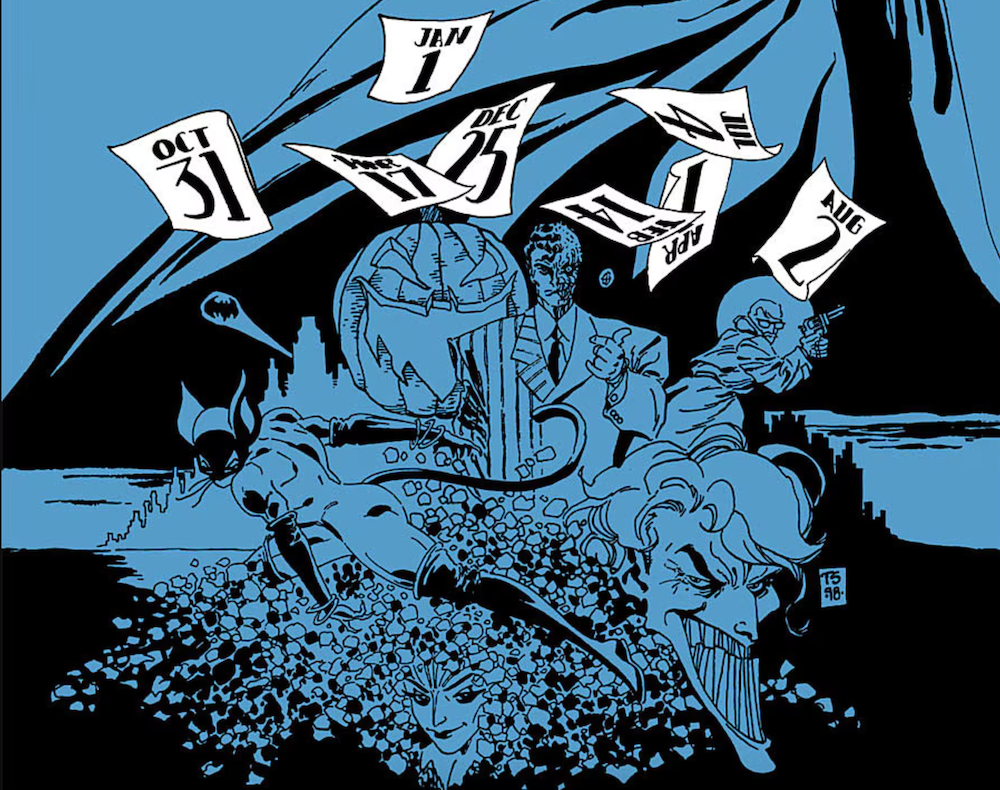
Jeph Loeb and Tim Sale’s Batman: The Long Halloween and its coda The Last Halloween together form one of the most intricate meditations on myth, guilt, and recurrence in the modern superhero canon. Across nearly three decades, Loeb’s evolving collaboration with Tim Sale and other artists transforms a murder mystery into a study of narrative itself, revealing how Gotham’s tragedies repeat because its people are bound to reenact them. This essay argues that The Long Halloween constructs ambiguity as its governing principle, dispersing truth among fractured testimonies, while The Last Halloween reinterprets that ambiguity as spiritual recurrence, turning the “Holiday killer” from a person into an idea. Read together, the two works reveal Gotham as a closed moral system, forever staging its own rituals of guilt and purification.
The final issue of Batman: The Long Halloween–The Last Halloween was released recently, and its arrival prompted me to return to the larger saga for another analytical pass. There are new revelations in this story that, while they don’t significantly change The Long Halloween, recolor the story retroactively.
To approach these works on their own terms, one must first understand how The Long Halloween resists the traditional detective story. Its mystery cannot be solved cleanly in the style of Conan Doyle or Agatha Christie. Instead Loeb and Sale’s intention was arguably more to create an experience for the reader where the interpretive tools of classic detective fiction like deduction, evidence, and revelation break down. Loeb and Sale replace them with atmosphere, chiaroscuro, symbolism, and psychological implication, transforming the act of detection into an act of interpretation. There is no Poirot-like revelation, no detective standing before a room of suspects to explain how each clue fits together. Instead, Loeb and Sale construct a narrative in which the reader must infer motives, emotional states, and causal links through visual language— expressions, shadows, angles, and pacing—rather than through explicit exposition. This approach places The Long Halloween closer to literary modernism and psychological cinema than to the puzzle-box tradition of Doyle or Christie. Its “solution” is not mathematical but experiential: to understand it, one must inhabit the emotional and moral space of its characters. Like Henry James’s The Turn of the Screw, the work sustains its mystery by withholding authorial confirmation. We are left to question whether events are the product of external malice or internal fracture; specifically, whether Gilda Dent’s monologue is confession, delusion, or symbolic reflection.
In this respect, The Long Halloween belongs to a tradition shared by films such as Akira Kurosawa’s Rashomon (1950) and David Fincher’s Zodiac (2007), which present the apparatus of investigation only to dismantle it, exposing the fragility of human perception and the futility of definitive truth. Similarly, Coppola’s The Conversation (1974) and Lynch’s Mulholland Drive (2001) rely on image and atmosphere to communicate meaning that eludes verbal explanation, which is the same technique Sale employs through chiaroscuro, framing, and gesture.
In comics terms, Loeb and Sale’s storytelling sits nearer to Alan Moore and Eddie Campbell’s From Hell or Hugo Pratt’s Corto Maltese than to the linear logic of detective serials. Their panels are designed less to inform than to imply. The reader becomes an active participant, interpreting fragments of evidence, ambiguous smiles, and suggestive silences.
Ultimately, The Long Halloween challenges the notion that a mystery must end with revelation. It insists instead that ambiguity (moral, psychological, and narrative) is not a flaw but the very condition of Gotham itself. Like Tim O’Brien’s In the Lake of the Woods, its meaning resides in the shadows between certainty and doubt. The act of reading becomes an act of investigation, and closure remains forever just out of reach. It is precisely this refusal to provide a single, authoritative explanation that has led many critics to misread The Long Halloween as muddled or incomplete. Because the narrative resists the conventions of closure that dominate mystery fiction, readers accustomed to the deductive clarity of Doyle or Christie often dismiss it as illogical or poorly constructed. In doing so, they mistake ambiguity for incoherence.
Yet the text does contain logically and textually consistent interpretations, even multiple coexisting ‘solutions’ that are supported by its visual and narrative cues. The difference is that The Long Halloween demands a measure of inferential participation from its audience. The clues are present, but they are expressed obliquely: a half-lit face, an unspoken implication, the visual echo of a gesture across time. These details function like the unreliable recollections of Rashomon or the fragmented testimonies of In the Lake of the Woods—evidence that can sustain more than one coherent reconstruction of events.
This ambiguity is not a flaw but a feature of the design. Loeb and Sale invite readers to assemble meaning through intuition and empathy rather than deduction, trusting them to draw conclusions from subtext rather than exposition. When approached in this light, The Long Halloween reveals itself not as a flawed mystery, but as a study in the limits of certainty. It is a work that transforms the act of reading into the final stage of the investigation.
I have organized this essay into three major chapters. The first examines The Long Halloween as a work governed by ambiguity, arguing that its mystery resists closure by design and distributes meaning across perspective, implication, and visual language. The second turns to The Last Halloween, reading it as a spiritual continuation that reframes Holiday not as a culprit to be identified, but as an idea—a recurring psychological mechanism shaped by guilt, longing, and authorship. The third chapter traces Selina Kyle’s journey across the cycle, focusing on her search for belonging, her proximity to Gotham’s myth-making machinery, and the motif of being on the “wrong side,” which ultimately clarifies the saga’s central thematic boundary.
___________________________________________________________
Part I: The Long Halloween—Ambiguity, Authorship, and Interpretation
The Long Halloween is a mystery that refuses the comforts of closure. Its genius lies not in hiding the answer, but in constructing a world where answers themselves are unstable; they are fractured among perspectives, and motives, and facial expressions. In a medium often bound to verbal clarity, Jeph Loeb and Tim Sale instead craft a work where meaning is communicated through chiaroscuro and gesture, through what is seen and almost seen. The reader must play detective not only in Gotham, but within the composition of each panel.
Three Confessions, Three Truths: Gilda
The solution, such as it is, is never expository. There is no single speech to tie the threads together; instead, Loeb disperses truth among three competing testimonies: Gilda Dent, Harvey Dent, and Alberto Falcone. Each is partially correct, each partially deceived, and each defined by limited knowledge and self-deception. What results is a mosaic of partial truths that the reader must assemble.
There has been much disagreement through the years on the role of Gilda Dent in The Long Halloween. Reading the final issue, after Alberto’s confession the mystery starts to feel like a case that is closing. All that’s left to do is find Harvey Dent. But then at the end of the issue we get the bizarre monologue from Gilda Dent, who takes credit for the first three Holiday killings. She then exposes that when she witnessed Harvey come home on New Year’s with wet hair she became suspicious, but then later when she found the .22 in the basement that Harvey brought home as evidence, she “knew” that Harvey picked up where she had left off. The secret would be their “child” and the rest of the world could believe it was all Alberto. But this raises many perplexing questions. The most referenced I could find in online discussions was the “seamless handoff problem”. According to Alberto’s confession, he faked his own death on New Year’s Eve and thereby usurped the mantle of Holiday. How could he be sure that the real Holiday would not kill this same night? Why did Gilda abruptly stop the killings in the first place at exactly the right time? To what extent was pure coincidence involved?
My reading of the text suggests that Gilda’s confession is mostly true. Her motives and actions in the early chapters are rooted not in madness but in desperation. She kills Johnny Viti because he was suspected of murdering Richard Daniels, creating a time-consuming case for Harvey. This is evidenced by the phone call she receives just before the panels depicting the preparation of the .22 for the first Holiday killing. Although she does not name Viti when she alerts Harvey of the phone call, one can infer that the caller may have mentioned Viti to Gilda by name. We see her clearly upset and worried that one day Harvey himself may face a fate similar to Daniels.
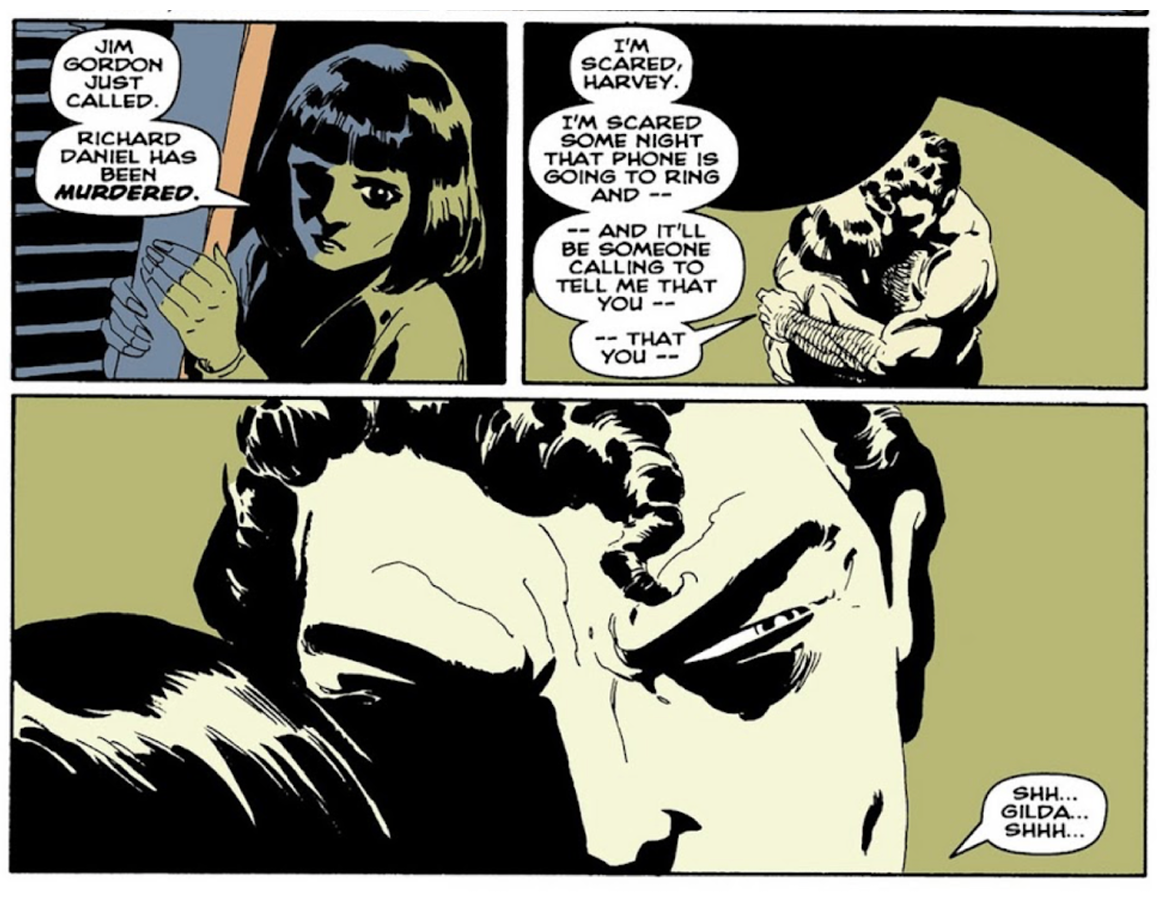
By removing Viti, she imagines (erroneously) that she can free her husband from the endless prosecution cycle. After all, if there’s no one to prosecute and there are no leads to Viti’s killer then the case should go cold quickly, right? Perhaps not, but it is not a huge leap to accept Gilda could think this way. Her disguise as “Holiday” is not born of a taste for serial murder, but as a cover: a single symbolic gesture meant to mislead investigators and redirect attention to Gotham’s growing freak culture. This short-sightedness suggests Gilda likely thought murdering Viti would be a one-time thing. She chose the Holiday gimmick to throw off the authorities. She states this explicitly in her confession.
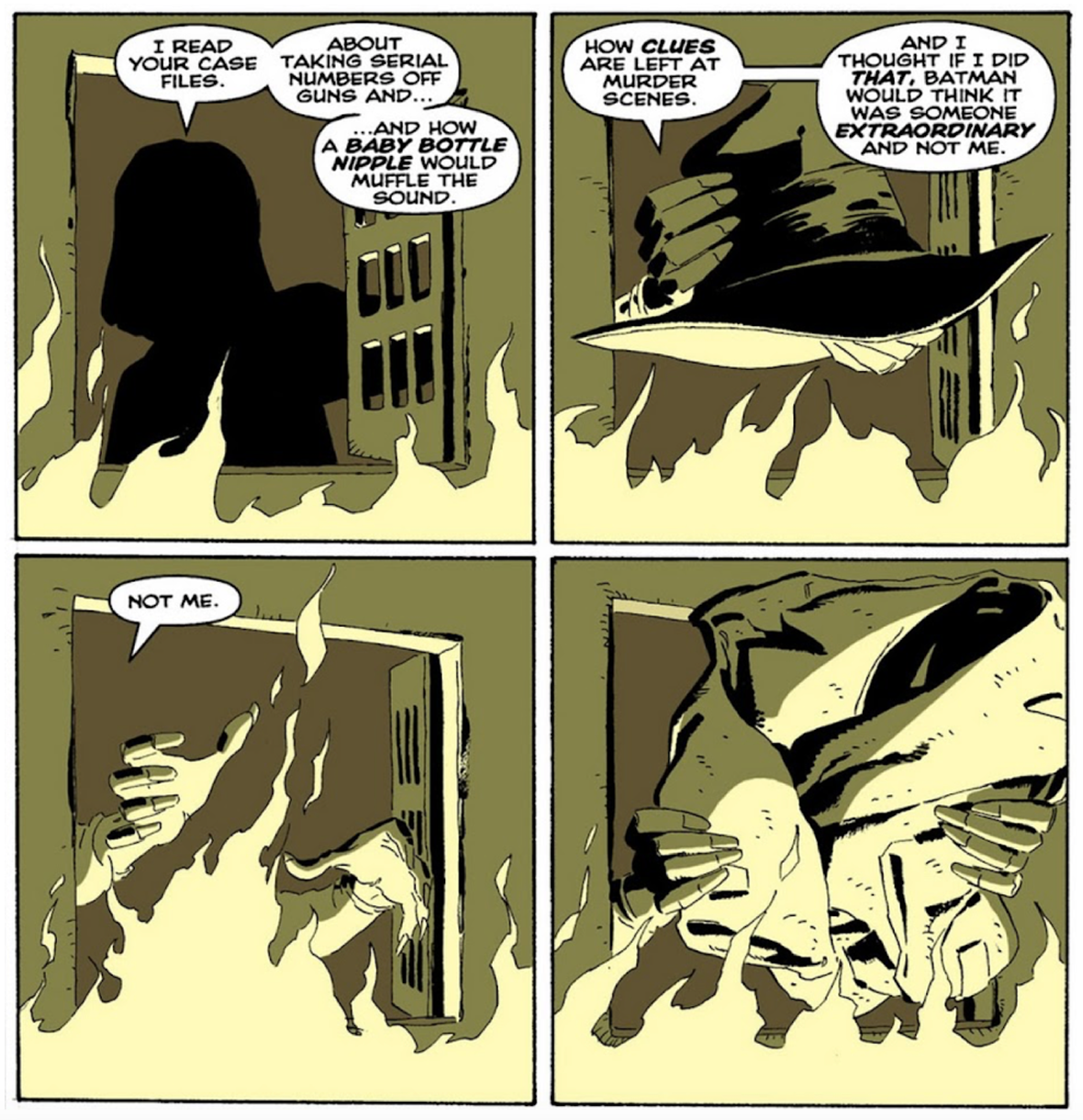
She’s not Dexter Morgan. She does not have a compulsive need to kill. It serves a specific end, however misguided.
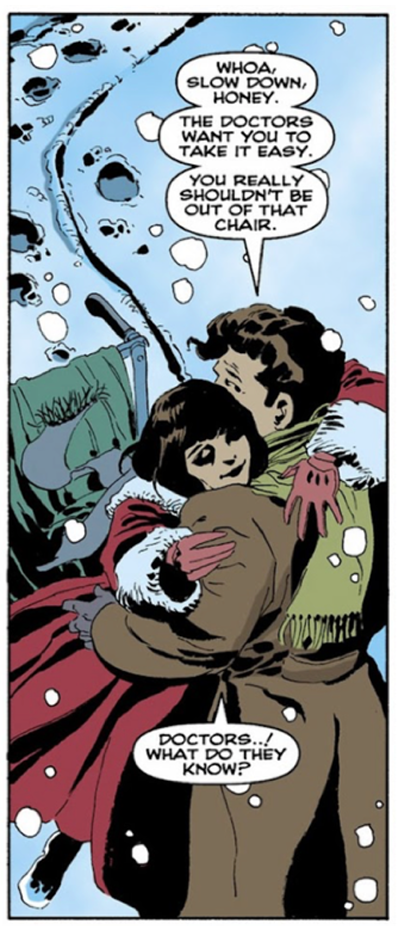
But tragedy follows quickly. After the Sullivan family bombs the Dents’ home, Gilda strikes again—killing their attackers while maintaining the “Holiday” persona to conceal her identity. Now Gilda’s posture abruptly switches from removing the object of Harvey’s attention to self-preservation and reaction. Her motives remain consistent: eliminate direct threats to her family while preserving anonymity. You may ask how she was able to leave her hospital bed and successfully ambush five mafia soldiers. We will get to that when we discuss The Last Halloween, but for now we are left with this curious panel.
A brief glimmer of optimism follows in the Christmas issue. Harvey buys them a new house; there is talk of having a child; there is an air of rebirth. Unfortunately, it collapses when the Joker invades their home. In the ensuing chaos, Gilda pursues the fleeing Joker and accidentally exposes her identity to Falcone’s personal bodyguard Milos, whom the Joker has just assaulted. The panel sequence shows her appearing and aiming directly at the Joker’s departing car. Milos looks back towards Gilda and likely sees her face in the daylight. She fires a shot at the Joker’s fleeing vehicle. We then see her arm shift angles and fire again, this time at Milos.
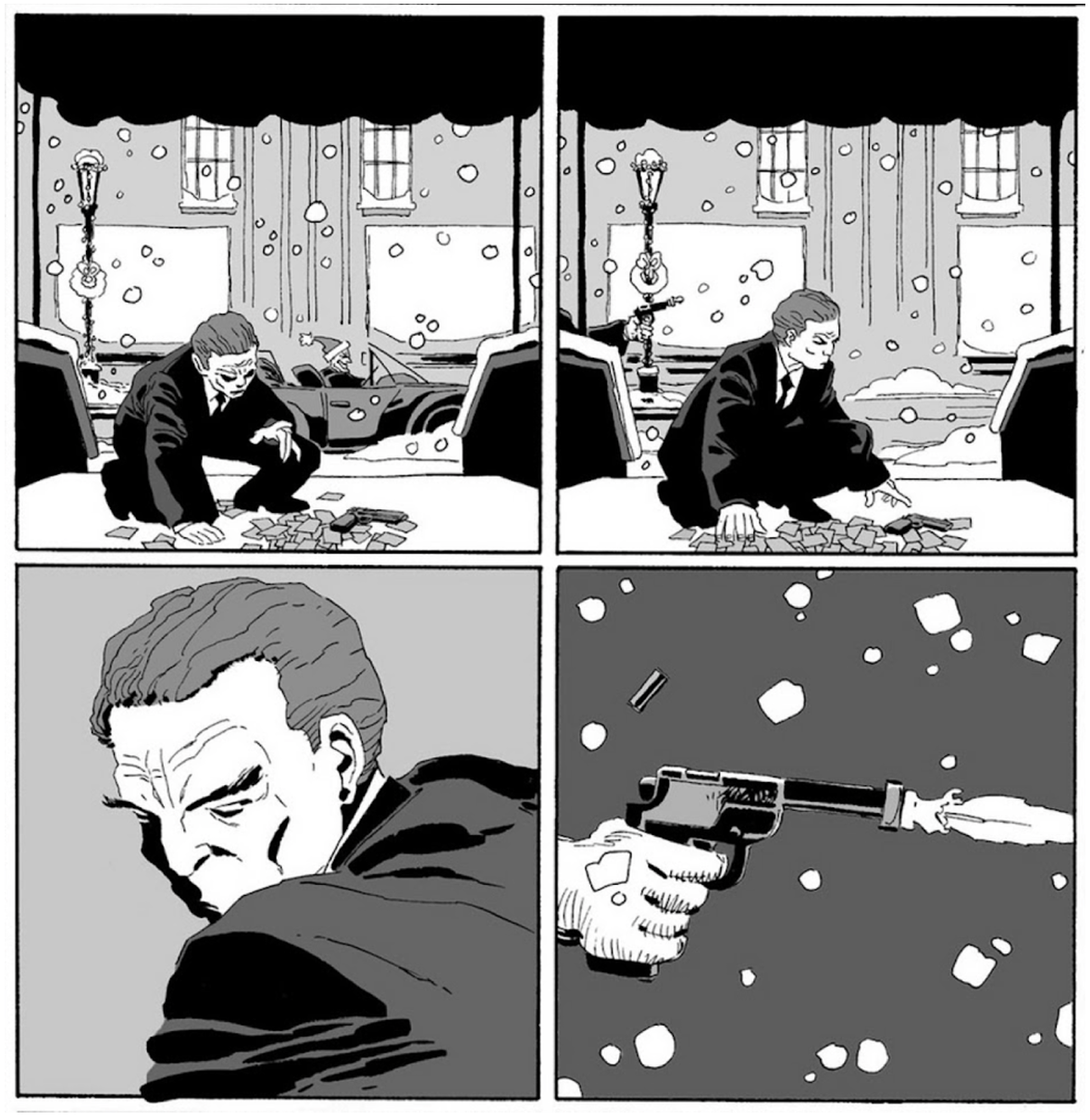
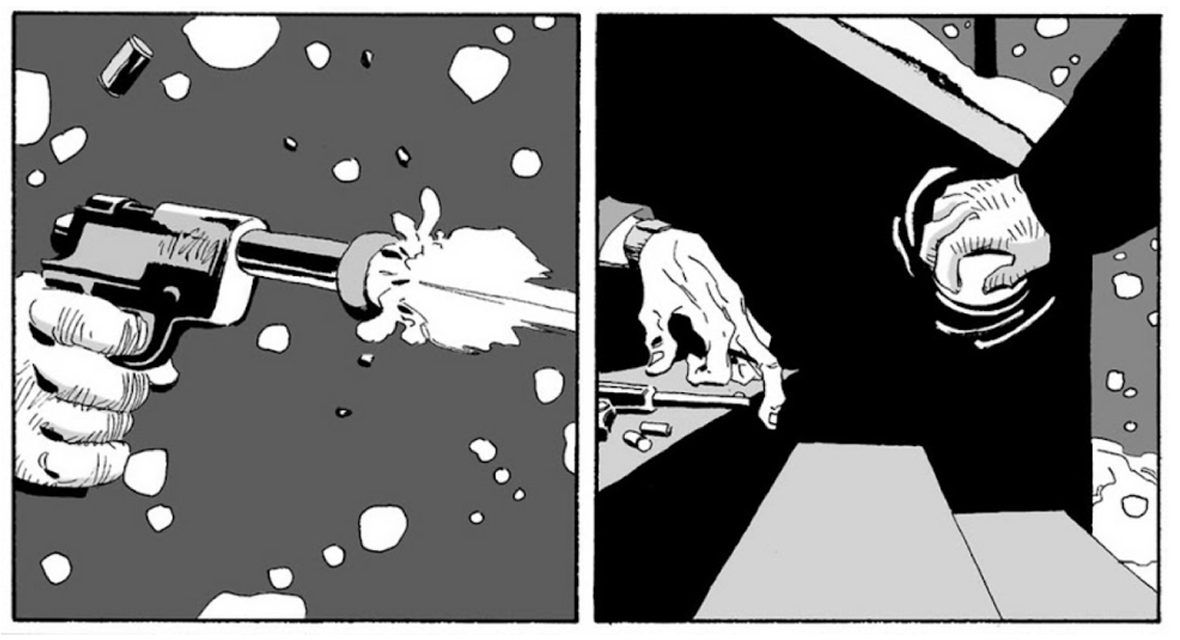
It is a silent confession in linework—she has been seen and must silence the witness. Moreover, she could not risk being seen by an employee of the Falcone family, who would surely recognize her. This would put crosshairs directly on the Dent family. So the third Holiday killing was again a circumstantial reaction, and not a premeditation.
From this point, Gilda’s role ends. Her killings of Viti, the Sullivan family, and Milos all have clear motives grounded in self-preservation and love, not on obsession with murder. Her “Holiday” campaign was never meant to continue past the first murder, and only did so due to circumstance. Her later confession is therefore tragic in its sincerity but mistaken in its scope. She believes Harvey continued her work, deducing this from the “wet hair” and .22 in the basement clues, but this belief reveals more about her longing to share Harvey’s moral burden than about events themselves, as we shall see.
Three Confessions, Three Truths: The Usurpers
In truth, Harvey knows nothing of Gilda’s crimes. His crusade against organized crime proceeds independently until Alberto Falcone’s intervention. Alberto, jealous and neglected, stages his own death on New Year’s Eve. Whether he suspects Harvey or simply desires notoriety, he exploits the existing mystery to carve his own identity as the killer. When the real Holiday ceases killing, Alberto finds the stage empty and fills it himself; eliminating rivals and thrill-killing his way toward a grotesque form of self-validation. Specifically, having already seen a kill in December, Alberto decides to take a risk. He stages his own death on New Year’s Eve (still in December). So far there has only been one Holiday killing per month. No matter how the real Holiday killer would react to this, he has decided he is usurping the title. Perhaps he expected Holiday to come after him, in which case he’d be ready. Perhaps there would be multiple simultaneous killings on New Year’s Eve he would find a way to take credit for. Either way, he commits to the gambit. More likely, he heavily suspected it was Harvey (as did the rest of the Falcone family), and usurping the title would likely draw Harvey to him so he could set a trap. But to his surprise, the real Holiday killer disappears. We then see the abrupt shift from murders of those aligned with the Falcone family to the rivals of the Falcone family like Carla Viti, Sal Maroni, as well as to people who could implicate Alberto personally such as the gunsmith and the coroner. If caught, he would then take credit for all the holiday killings to fulfill his own ego. So is there coincidence here? Yes, a bit. But after three Holiday killings there would be no question in anyone’s mind that there is a consistent pattern. With this information, Alberto attempted to preempt Holiday and from his point of view happened to succeed without conflict.
Moreover, there is a gap in the killings from Alberto’s perspective. He knows he faked his own death and so he knows that the real Holiday killer did not kill anyone in January. In February Alberto kills a few of Maroni’s goons and sees that the real killer still does not reappear. There is a sense that he is testing the waters here. From there his killings only get more bold until Boss Maroni himself is dead. Alberto gets addicted to the spectacle of it. His confession later is partly honest: he did fake his death, he did kill several victims, but he lies about the first three. To admit ignorance of the original murders would undercut his legend. If his confession were completely truthful, you could perhaps justify him killing Johnny Viti as the heir of a rival family, but murdering the Sullivan family and Milos becomes a much larger pill to swallow.
That brings us to Two-Face’s confession.
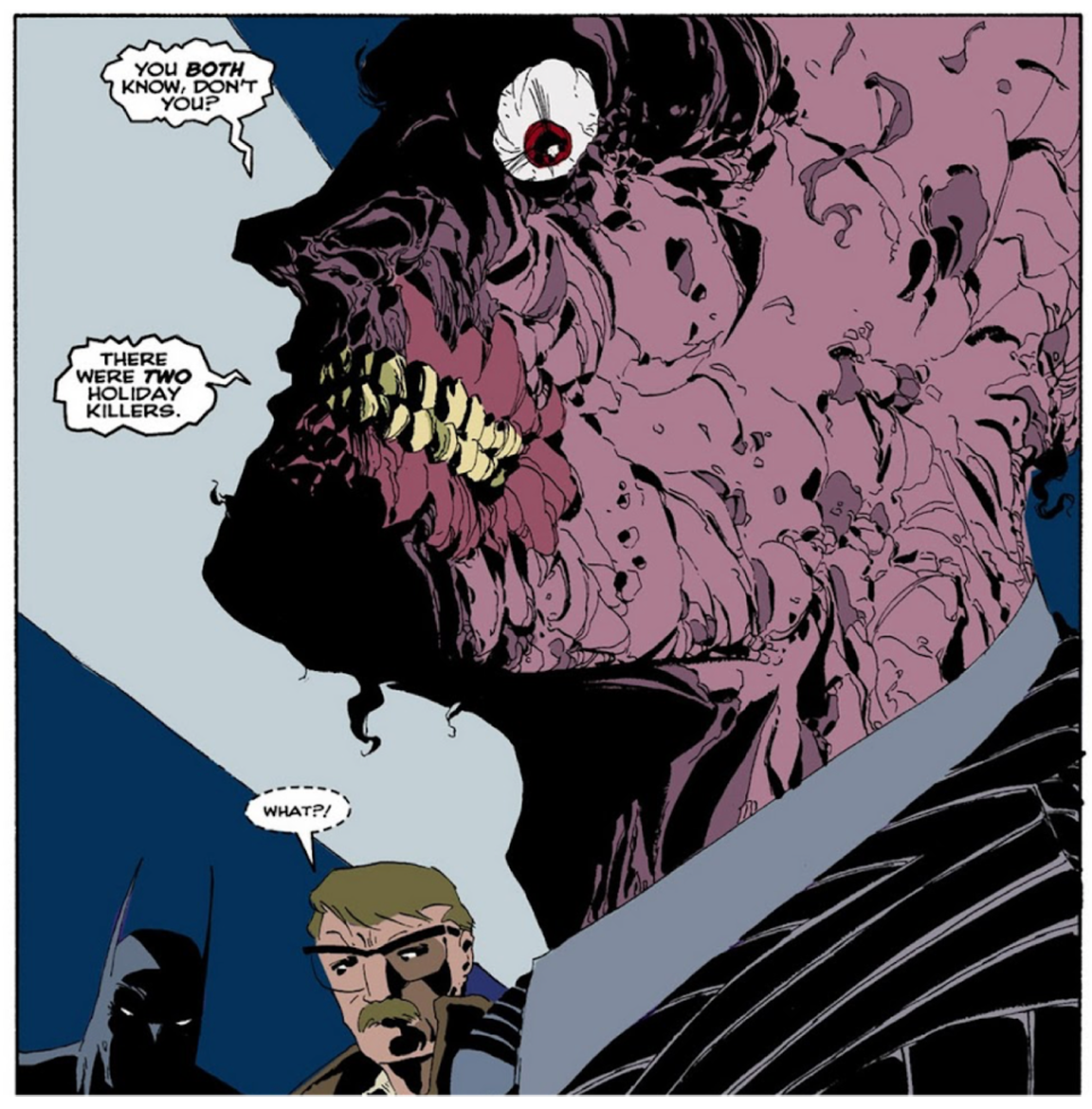
Two-Face becomes a killer only in the final act—murdering Carmine Falcone and Vernon Fields. His confession points to Alberto and himself, but only for the murders of Carmine Falcone and Vernon Fields. I don’t believe Two-Face is trying to protect Gilda here. In fact, it doesn’t seem that he even knows who Gilda is. From Dark Victory:
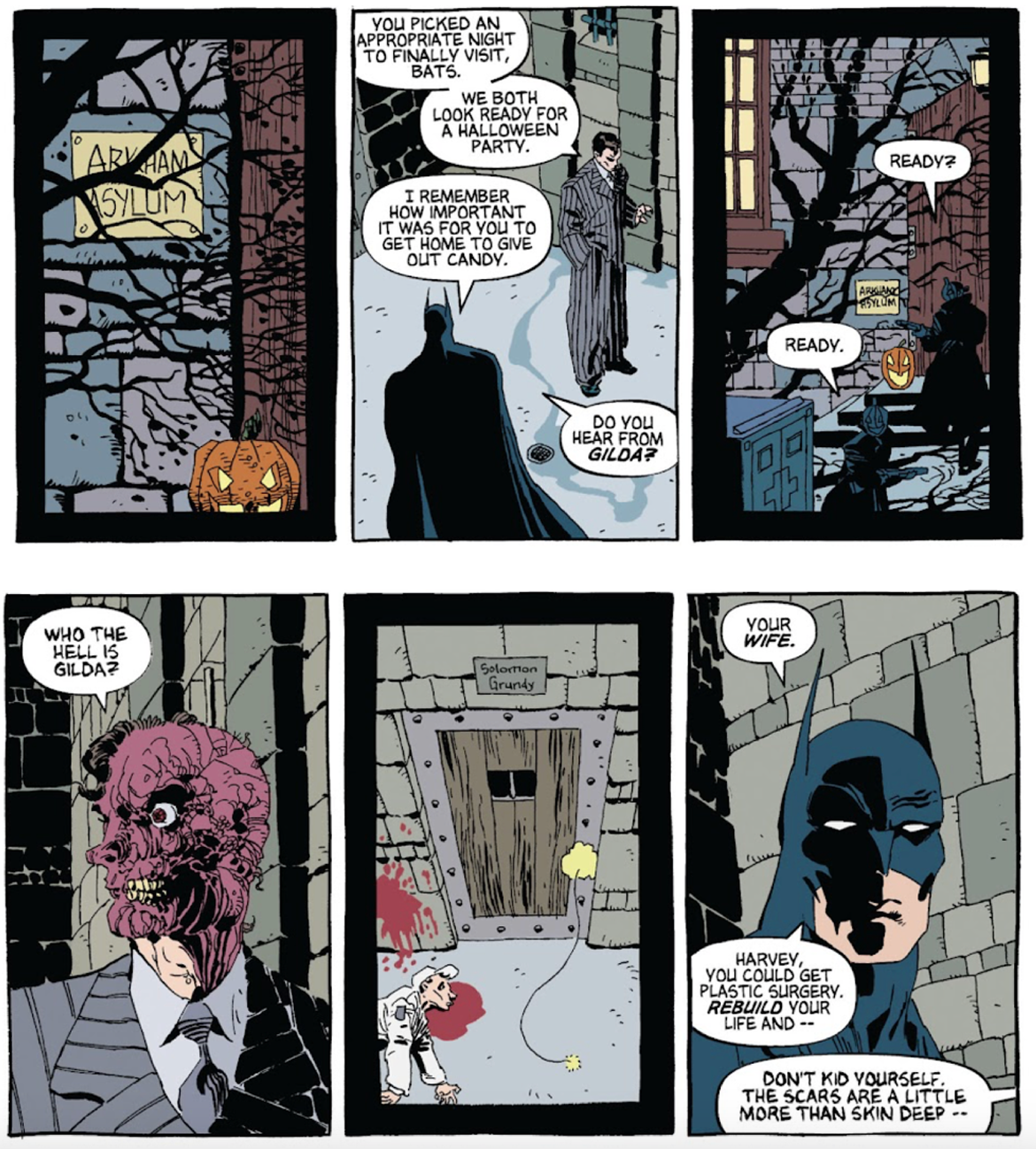
Loeb takes the split personality concept literally. Harvey Dent and Two-Face do not seem to share memories. They are two different people in one body. The visual cue as to who is speaking is clear from the unhinged speech balloons courtesy of stellar letterer Richard Starkings. This literal personality split is supported often in Dark Victory, as seen with Two-Face’s callous execution of Janice Porter and in the sewer courtroom scene.
Each of the three confessions thus expresses a distinct, subjective truth. Gilda’s is emotionally honest but factually incomplete. Harvey’s is accurate in scope but ignorant of Gilda’s role. Alberto’s is self-serving yet anchored in real deeds. Loeb’s brilliance lies in allowing all three to be simultaneously “true” within their limited fields of knowledge.
The Thematic Synthesis
Re-reading The Long Halloween through this lens clarifies the deliberate architecture of its ambiguity. The narrative’s surface, including its chronology of holidays and crimes, conceals a deeper moral structure about perception and guilt. Even the “gap” in killings between December and February, when Alberto is presumed dead, reinforces the pattern: each participant acts within a vacuum of information, misreading silence as confirmation. Gotham itself becomes a city of misinterpretations.
Sale’s chiaroscuro art reinforces this uncertainty visually. Sale’s Gotham is a city half-drowned in shadow, where truth flickers like light reflected from rain-slick pavement. Every face is halfhidden, every gesture doubly suggestive. The art does the heavy lifting to tell the actual story. Gilda’s shifting gaze, Harvey’s divided profile, and Batman’s silhouette are clues as vital as any line of dialogue.
At the story’s moral center is Batman’s conviction that Harvey Dent remains redeemable. The final chapters affirm that Batman was not wrong to believe in Harvey. Two-Face’s vengeance is limited to Carmine Falcone and Vernon Fields—acts of retribution, not madness. In that sense, The Long Halloween is not about the fall of Harvey Dent but about the world’s failure to see him whole. His duality mirrors Gotham’s: every character caught between truth and self-deception, light and shadow.
What makes The Long Halloween enduring is that it gives readers a choice. One may treat it as an atmospheric crime epic—a stylish fusion of noir and superhero mythology—or engage it as an interpretive puzzle demanding close reading. Had The Long Halloween concluded with a neat exposition dump, it might have been remembered merely for Sale’s uniquely beautiful art. But by refusing that closure and entrusting meaning to the reader, it has endured decades.
Here, then, the first mystery ends not with an answer but with a stance: Gotham’s truths are legible only in shadow, and the reader’s work is to inhabit that ambiguity. Yet Loeb and Sale return to this ground once more, not to tidy the evidence but to test what happens after uncertainty hardens into memory. If The Long Halloween made the reader a detective of meaning, The Last Halloween asks what those meanings do to the people who carry them, how rituals become habits, and how feeling becomes destiny. The question shifts from “Which account is true?” to “Why do these accounts need to be told again?”, representing a turn from solution to recurrence that prepares the way for Gilda Dent’s fractured authorship and Mario Falcone’s inheritance of ruin.
___________________________________________________________
Part II: The Last Halloween—Spiritual Continuity, Exegesis, and the Idea of Holiday
If The Long Halloween is a study in ambiguity via a mystery whose truth fractures across competing testimonies, then The Last Halloween is a study in recurrence. It does not resolve the earlier enigma so much as replay it through the distortions of memory, trauma, and myth. Loeb, Sale, and collaborators return not to explain who Holiday was, but to explore what Holiday means as an idea, a pathology, and a legacy. In doing so, The Last Halloween transforms the mystery’s original question (“Who did it?”) into a psychological one (“Why must it happen again?”). The new series reframes The Long Halloween’s open-endedness through Gilda Dent’s fractured identity and Mario Falcone’s corrupted idealism, revealing that Gotham’s cycle of violence is less a whodunit than a whydunit: a ritual repetition of guilt and purification. Where The Long Halloween left readers in the chiaroscuro between truth and doubt, The Last Halloween dwells in the aftermath—a world where the mask has fused to the face, and the mystery itself has become a condition of being.
While Dark Victory followed The Long Halloween narratively, it did not share its interpretive ambiguity. Despite being a fantastic story, its mystery was more mechanical, its motives clear: Sofia Gigante Falcone—the Hangman—sought revenge against those who helped Harvey Dent murder her beloved father. She adopted a gimmick, as Gilda once had, to mislead the authorities. Her deception was calculated, not psychological. The Last Halloween, by contrast, returns to the spiritual territory of The Long Halloween. It is ambiguous, elliptical, and morally gray. It brings closure to the saga while reviving its essential mystery. The Holiday killings begin anew, only they aren’t killings at all. Is the gunman Gilda? Mario? Two-Face? Calendar Man? What was the plan? Loeb again places the reader in the detective’s seat, asking us to interpret motive from shadow and intent from implication.
The Real Gilda Dent
In The Long Halloween Special—Tim Sale’s final issue and prologue to The Last Halloween—we learn something critical about Gilda Dent. Like a banshee in the moonlight, we see her escaping from a mental institution in Nantucket.
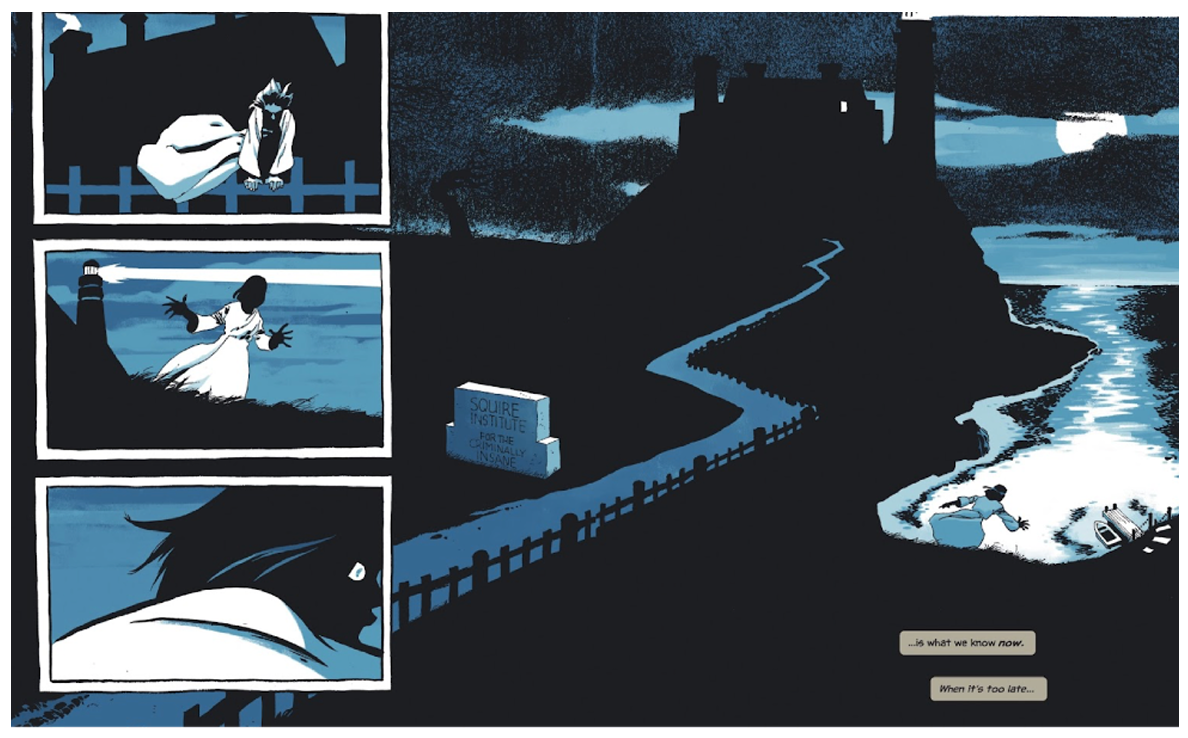
Presumably, this is to where Gilda disappeared after the events of The Long Halloween. However, institutions like these don’t read as places meant merely for acute trauma, but for something deeper and more structural. From here some time passes, but eventually Gilda finds Harvey again three weeks before Halloween. Harvey is elated to see her. We see both Harvey and Two-Face speak, as Two-Face attempts to push her away (Two-Face is now acquainted with Gilda), but she will not be repelled.
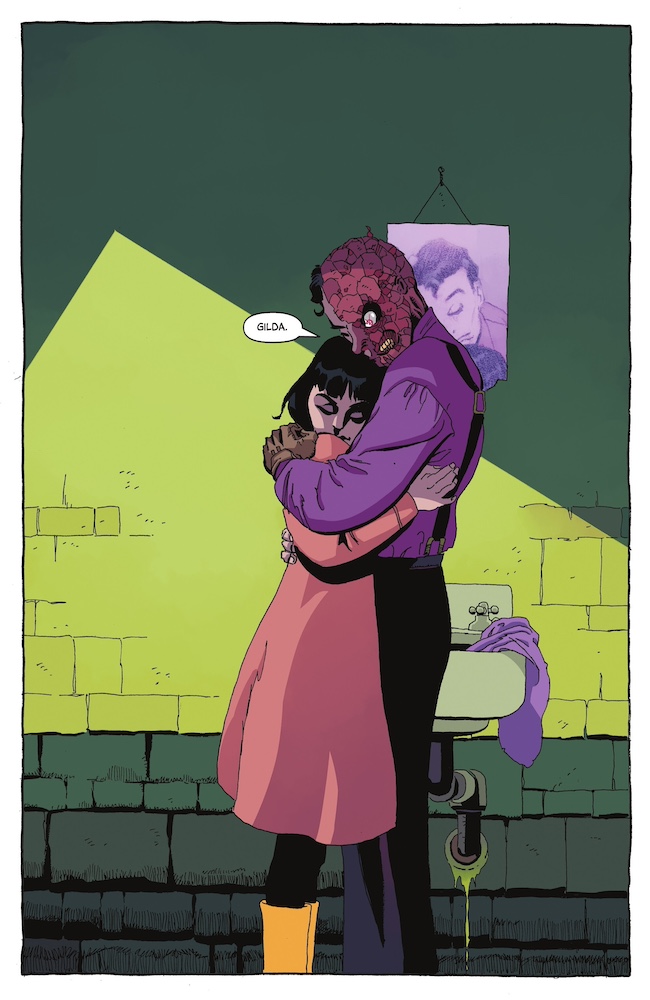
The couple moves back to their old home, until one day Gilda is abducted by Calendar Man, who is convinced that Gilda Dent was in fact the original Holiday killer.
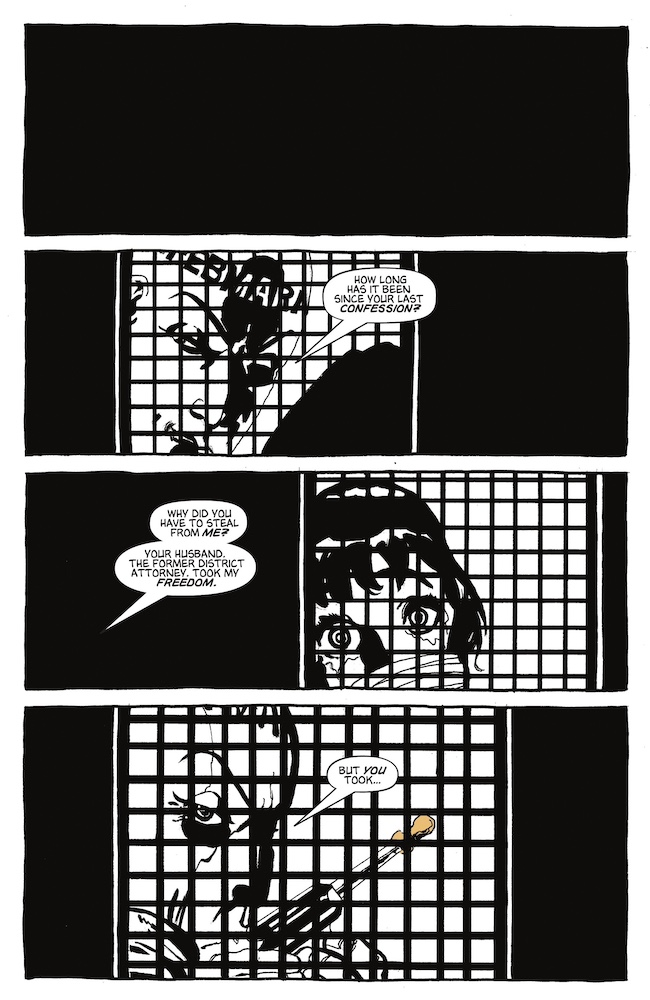
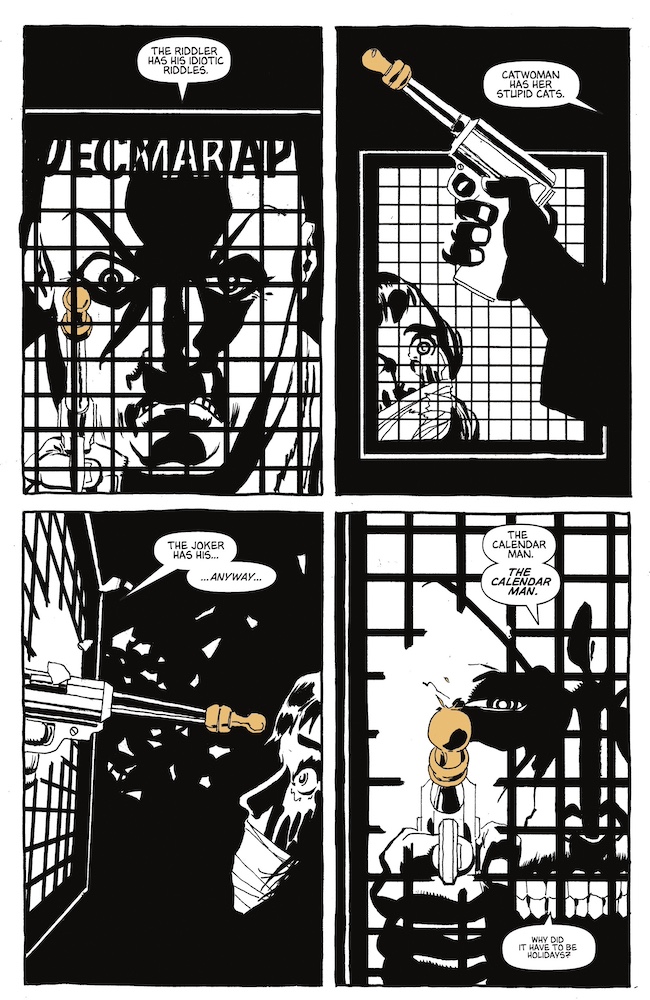
Harvey rescues Gilda while Batman distracts the Calendar Man, but Batman leaves us with a narration that prologues The Last Halloween.
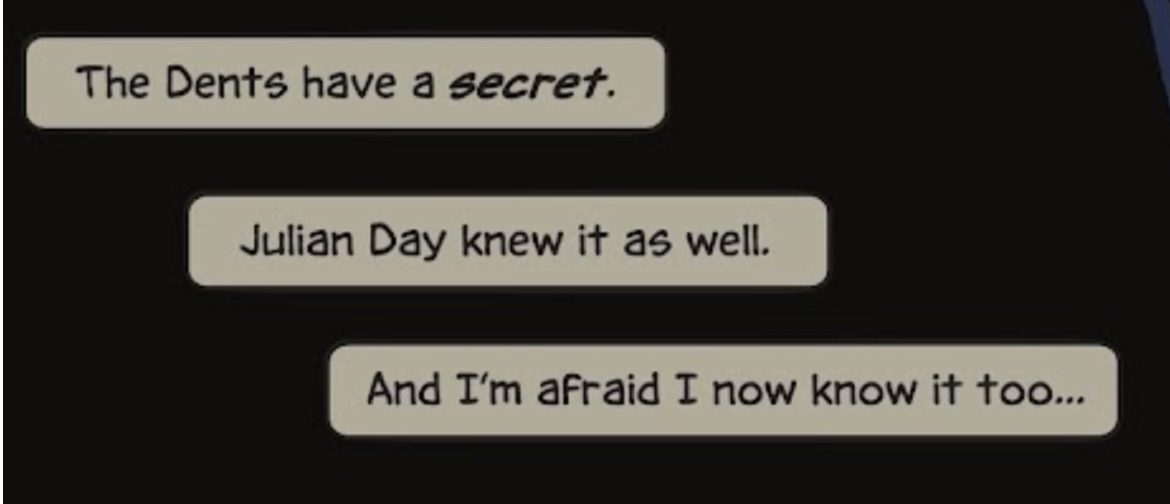
This is all a clear signal from Loeb and Sale. Gilda’s confession was true. She was the first Holiday killer, and any solutions to The Long Halloween that dismiss Gilda as a delusional lunatic who imagined herself as Holiday are no longer tenable.
When The Last Halloween starts, we are told that the Dents have been hiding for a year. After an encounter between Catwoman and a recently returned Mario Falcone, who foreshadows his intentions, events kick off quickly. Catwoman is apparently shot. Her body is missing, but Batman and Robin find the classic Holiday-style .22. James Gordon Jr. goes missing while trickor-treating with his parents. Solomon Grundy is abducted, and Two-Face is shot in his side and in his head directly in front of Gilda by three men wearing clown masks. On the final page the lead clown removes his mask and speaks cryptically, confirming that others appear to know about the connection between Gilda and Holiday.
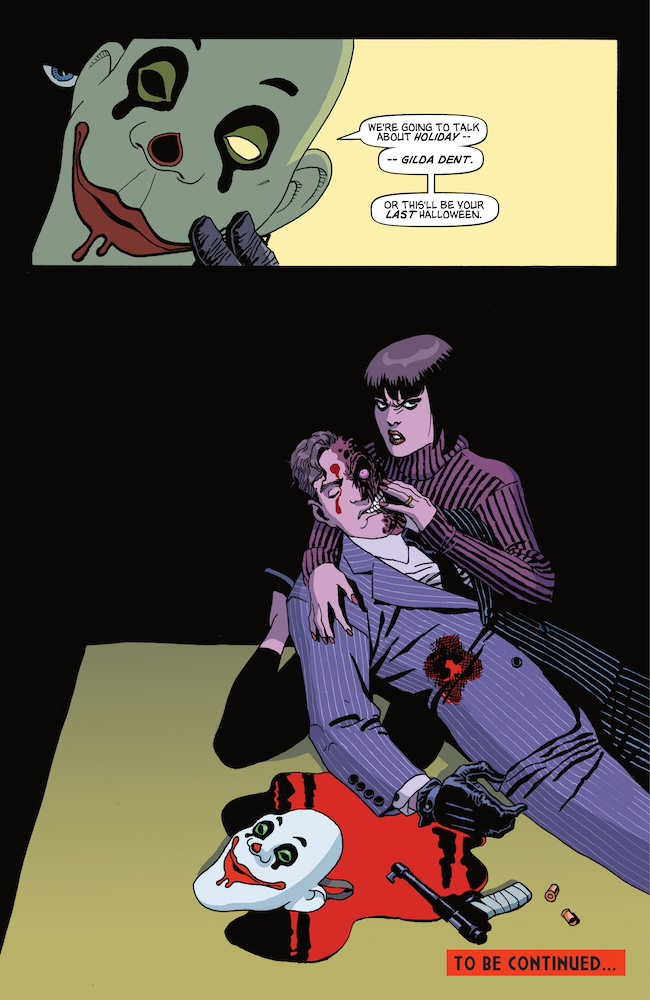
On Christmas, Batman investigates the Dent residence for clues, but finds Gilda under very curious circumstances. She appears to be anticipating both Harvey and Mario.
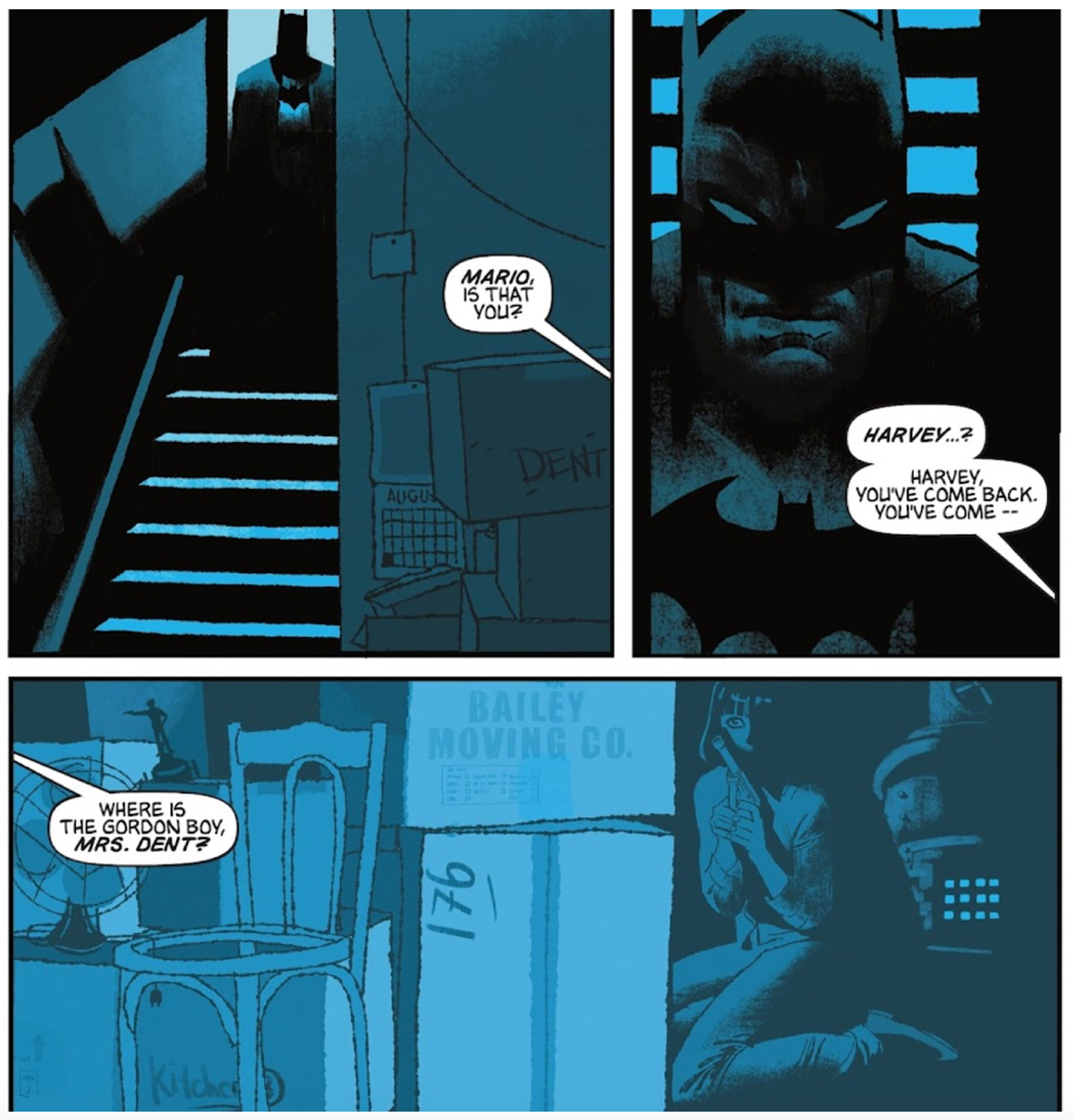
Batman finds that Gilda is looking after James Jr., and she gives him the following story.
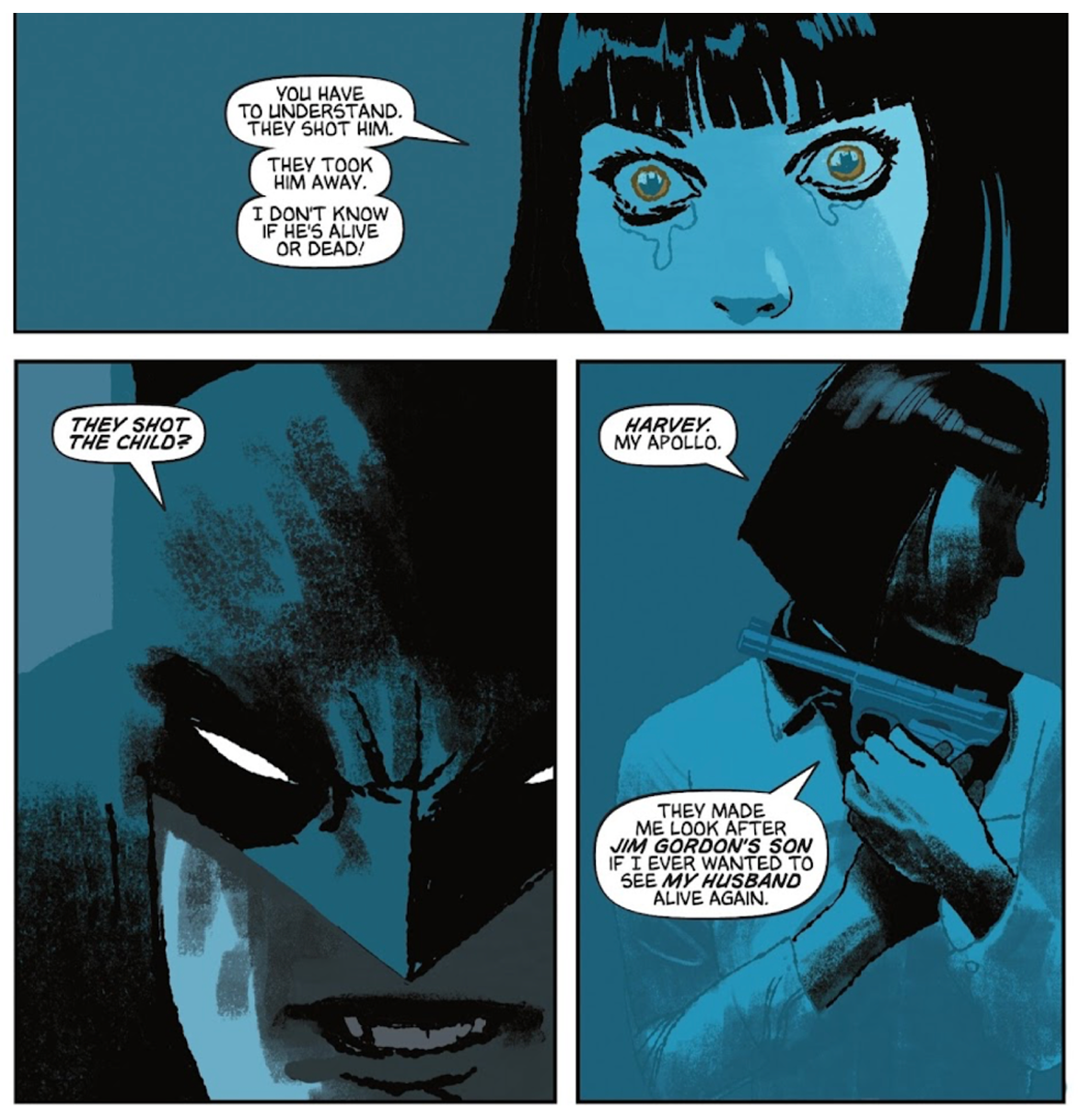
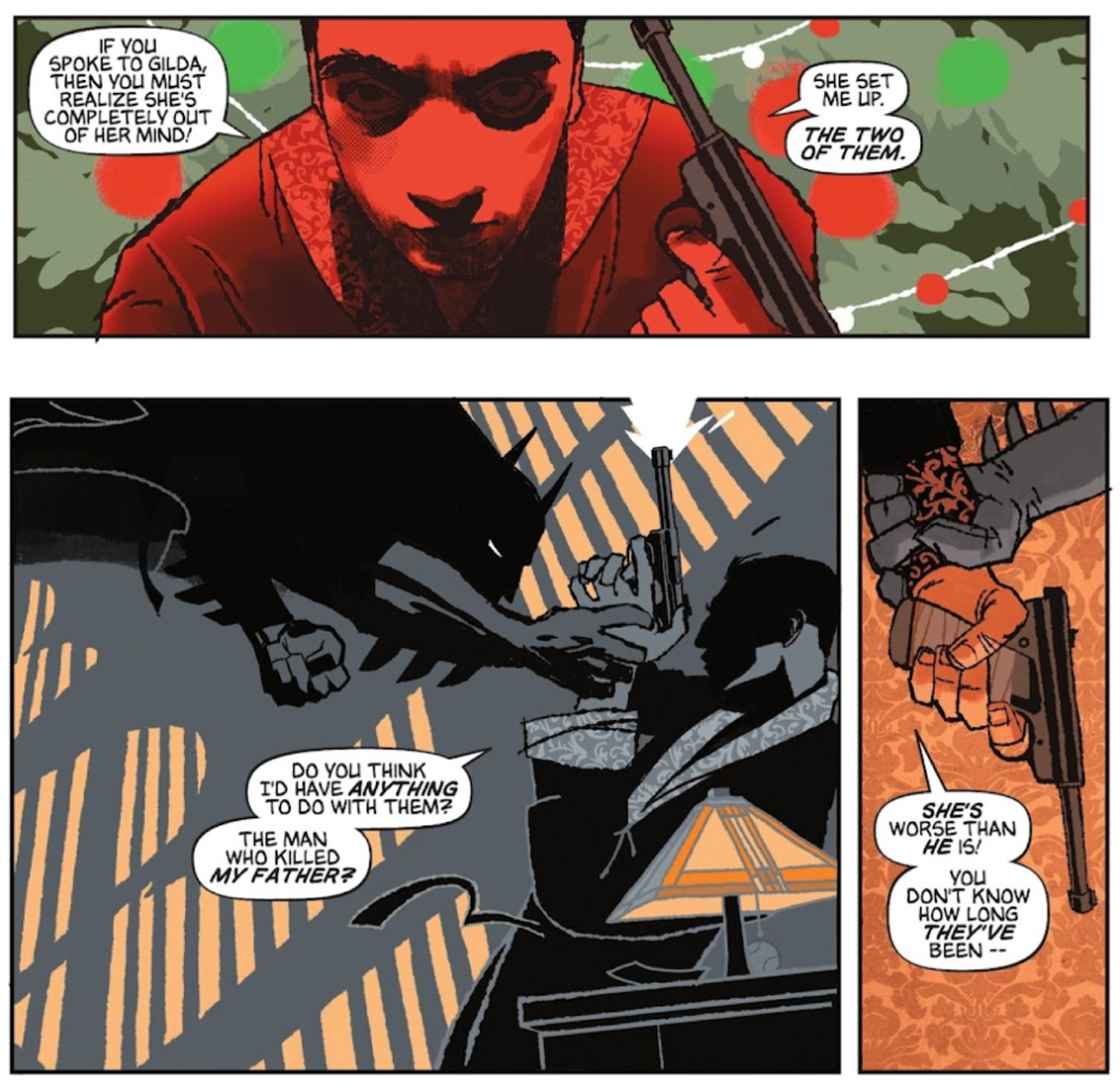
Gilda implicates Mario Falcone as the perpetrator. Batman confronts him, but he contradicts her, and implicates both her and Harvey; explaining that Gilda is worse than Harvey Dent. Gilda is arrested and held at the GCPD jail.
The next time we see Gilda, something is different. She is rescued from the GCPD by Solomon Grundy and this is her reaction.
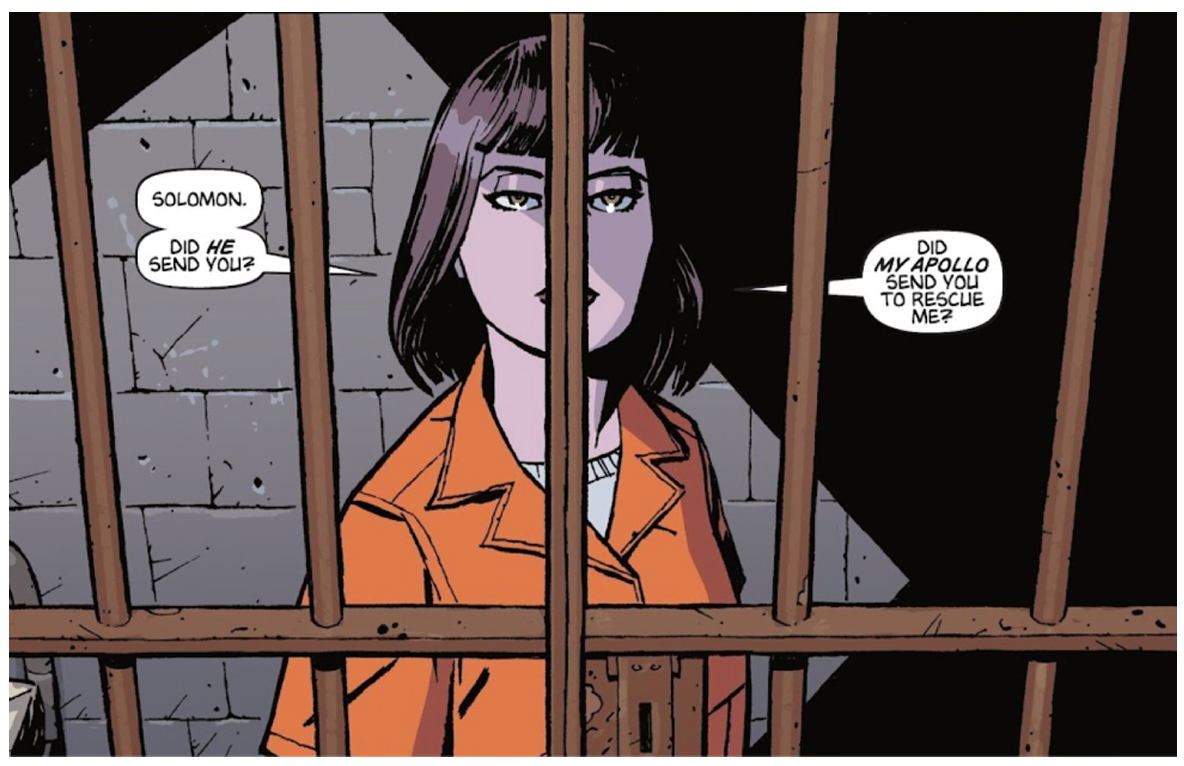
But this is not Gilda. Gilda has soft features, wide eyes, and arched brows. Her posture tends to fold inward, shoulders rounded. But this person has a hardened face, sharper cheekbones, narrowed eyes, thinner lips. Her body is straightened; she looks taller, almost statuesque. No, this is not Gilda. Here we see Holiday with her face split right down the middle. It is never stated explicitly, but the visual storytelling clearly tells us why she was somehow committed to a mental asylum. But this was not the first time we have seen Holiday’s face; Holiday has narrated once before.
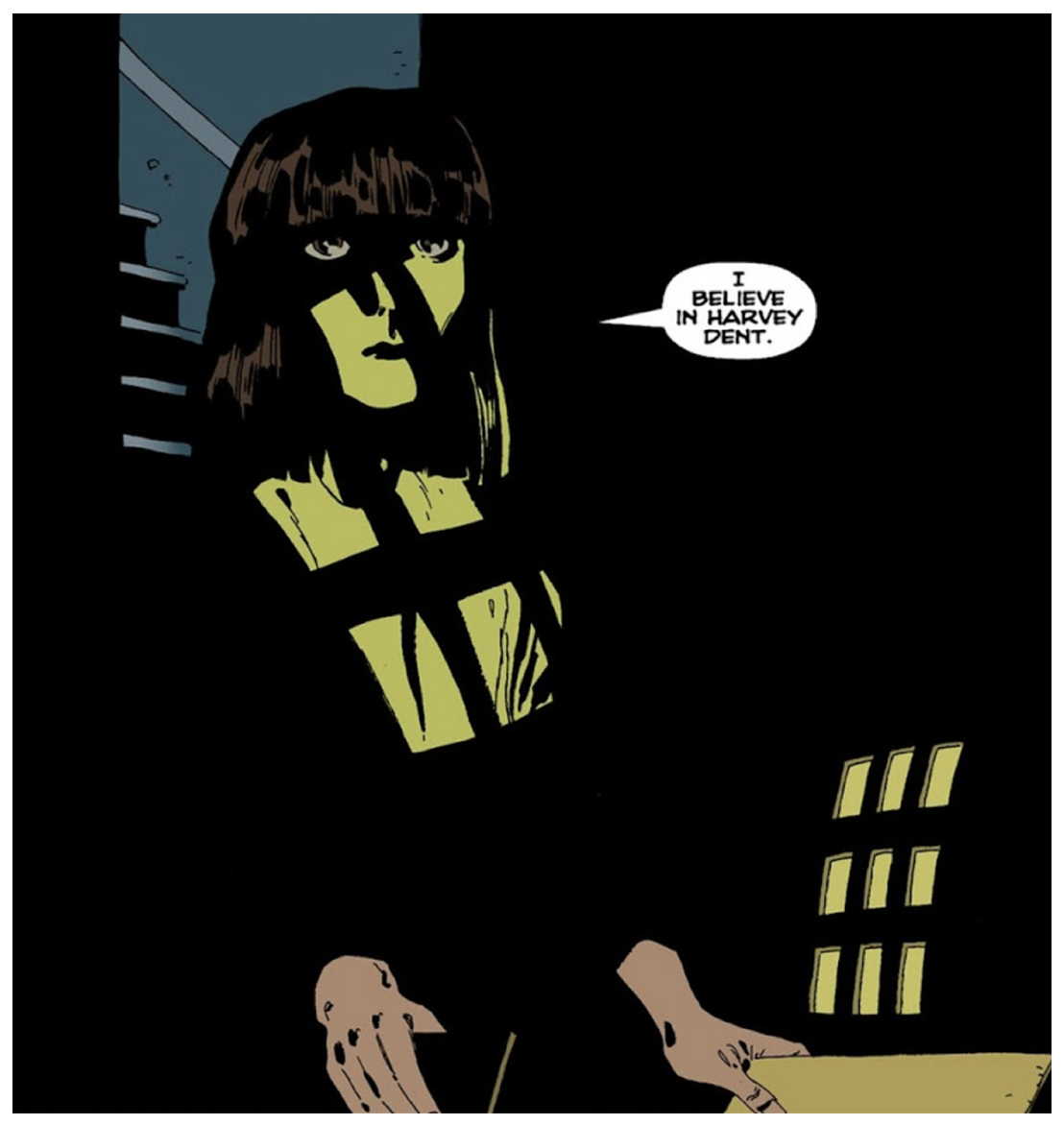
This recolors The Long Halloween. Playing by Loeb and Sale’s rules, the split personalities do not share memories. Gilda is not necessarily aware if or when she is Holiday. The strange red herring where Gilda confronts Harvey about the .22 is clarified as Gilda genuinely suspects Harvey may be the killer. Gilda is not the ruthless, efficient killer—Holiday is. Whenever Gilda and Harvey are threatened, Holiday emerges to take control. This fact also recolors Harvey and Gilda’s relationship, as their common mental illness at least partially explains their connection and why they are drawn to each other at such a deep level.
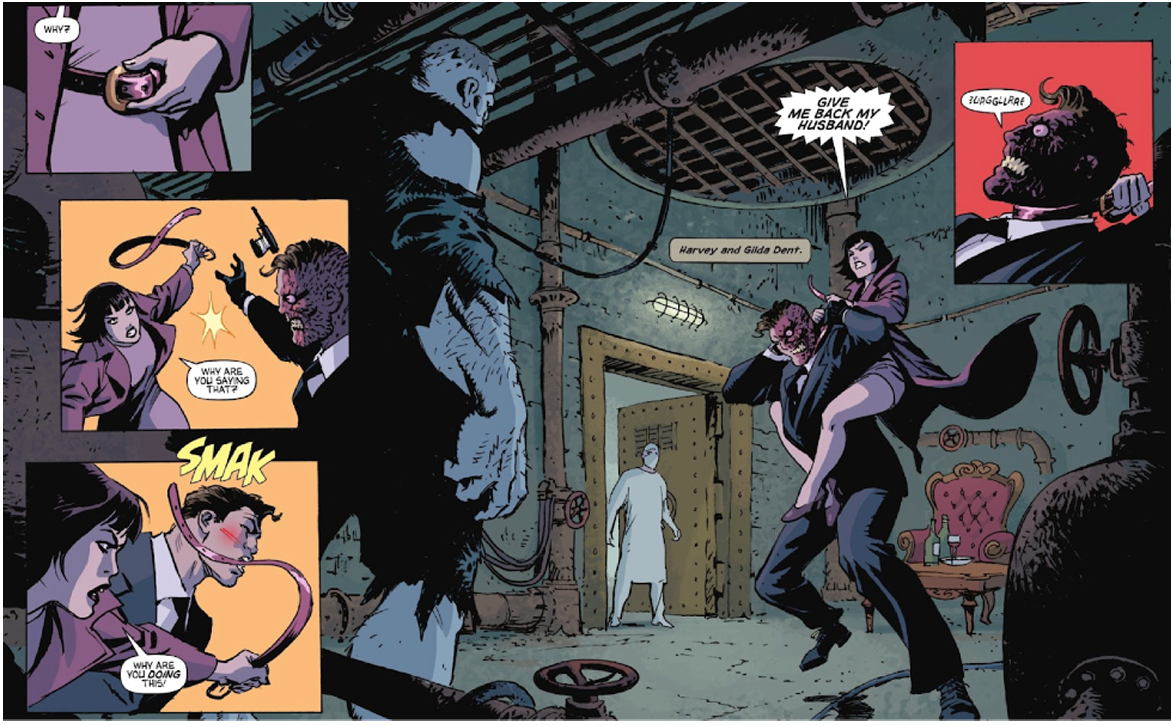
The next time we see Gilda, she (as herself) is being escorted to see Harvey by Dr. Thorne, who explains to her that after his brain surgery, Harvey may not even recognize her. Perplexed by this, Gilda meets Two-Face who refers to her as “Mrs. Dent” and questions why she is visiting him. This frustrates Gilda, causing Holiday to re-emerge. Taking Two-Face by surprise, she manages to overpower him and nearly strangle him to death, demanding her husband back. She is only stopped by Solomon Grundy who removes her from the room. Not only do we get a sense of how physically capable Holiday is, but it is now clear that Holiday sees Two-Face as an enemy who threatens Harvey. In her dissociation, Holiday does not seem to necessarily understand that killing Two-Face implies Harvey’s death as well, or at the very least, she is willing to take more chances with his life to recover Harvey.
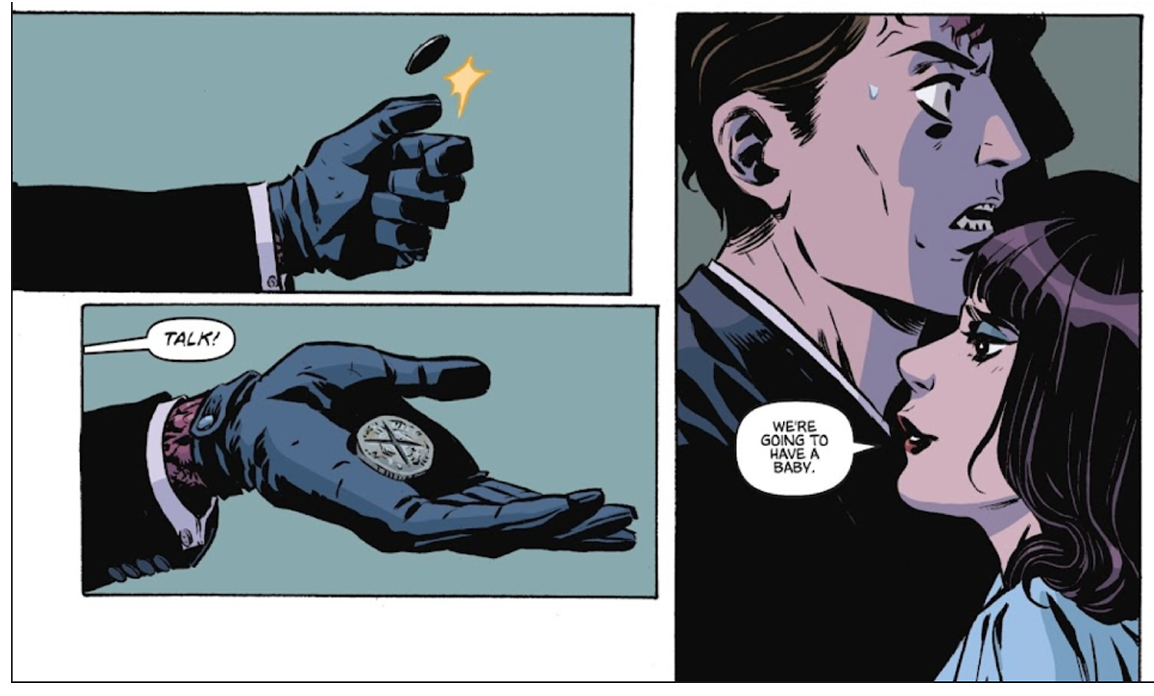
The next informative appearance of Gilda (as herself) is when she brings the Calendar Man to Two-Face at his hideout at the old burned out Falcone mansion and informs Two-Face of his and Gilda’s unborn child. She still believes she is talking to Harvey, but curiously she manipulates him with what we later learn to be a lie.
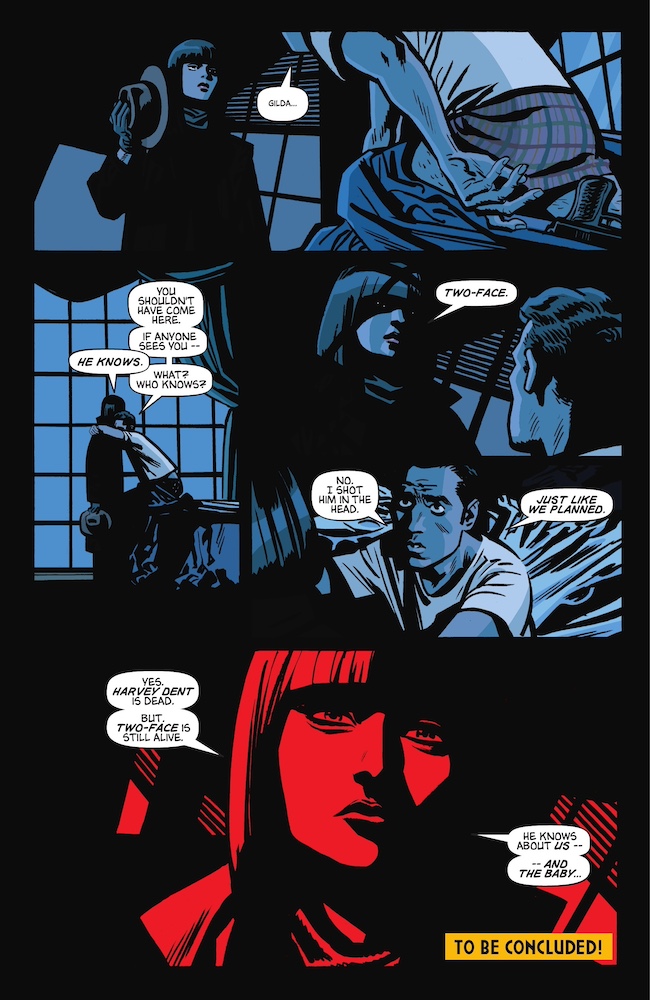
Lastly, we get the big reveal. Batman and Robin discover that Mario Falcone was committed to a particular mental asylum, as was Gilda under an alias. The video footage of Gilda’s escape reveals Mario’s phony FBI agents assisting Gilda’s escape. Batman and Robin conclude that Mario and the Dents were involved with this new bout of Holiday shootings since the beginning. We then see the form of Gilda as Holiday finally names herself and confirms that she has been working with Mario, and the plot to shoot Two-Face in the head was their shared plan. Gilda tells Mario that Two-Face knows about the baby, implying an urgency to act. Holiday is clearly manipulating Mario, as she fails to mention it was she who told him about the child; she never mentioned Mario to Two-Face; and also the phrasing makes it seem like Holiday means that the baby is hers and Mario’s, not hers and Harvey’s. She is instigating something, and from the conversation earlier with Two-Face, we learn that both Holiday and Gilda are willing to lie (apparently to the people they love) to achieve their goals.
The Tragedy of Mario Falcone
The exact role of Mario Falcone is left ambiguous throughout The Last Halloween, but we can assemble a list of facts. We know from Dark Victory and The Long Halloween Special that Mario burns down his family estate and was subsequently sent to a mental asylum for some time. We know also from Dark Victory that Mario Falcone despises that his family is a criminal organization, as evidenced by his cooperation with the police and his acting against Sofia. He wanted his family to be legitimate and respected like the Waynes.
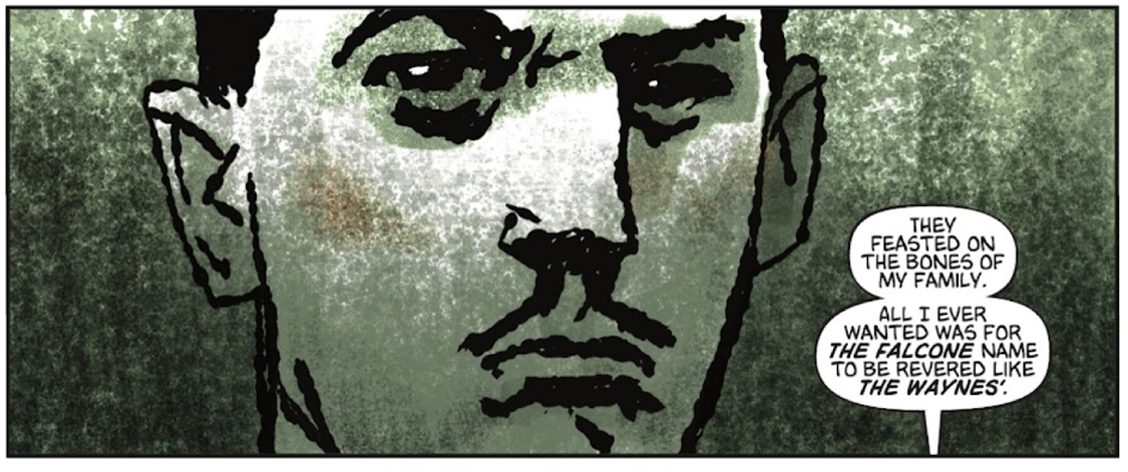
We know that both of his siblings turned out to be prolific serial killers. It is also clear that Mario despises the freaks as well for destroying his family—especially Two-Face. We see clues throughout the story of his involvement in the new Holiday shootings; a Sicilian-style message to Gordon about Grundy, a .22 in his safe. The revelation with Holiday confirms that Mario was the thug wearing the clown mask who shot Two-Face in the head. We know that despite being involved in the new Holiday shootings, Mario was viciously attacked by someone dressed as Holiday on Valentine’s Day, most likely Julian Day since Mario nervously asks which Holiday is standing in his room.
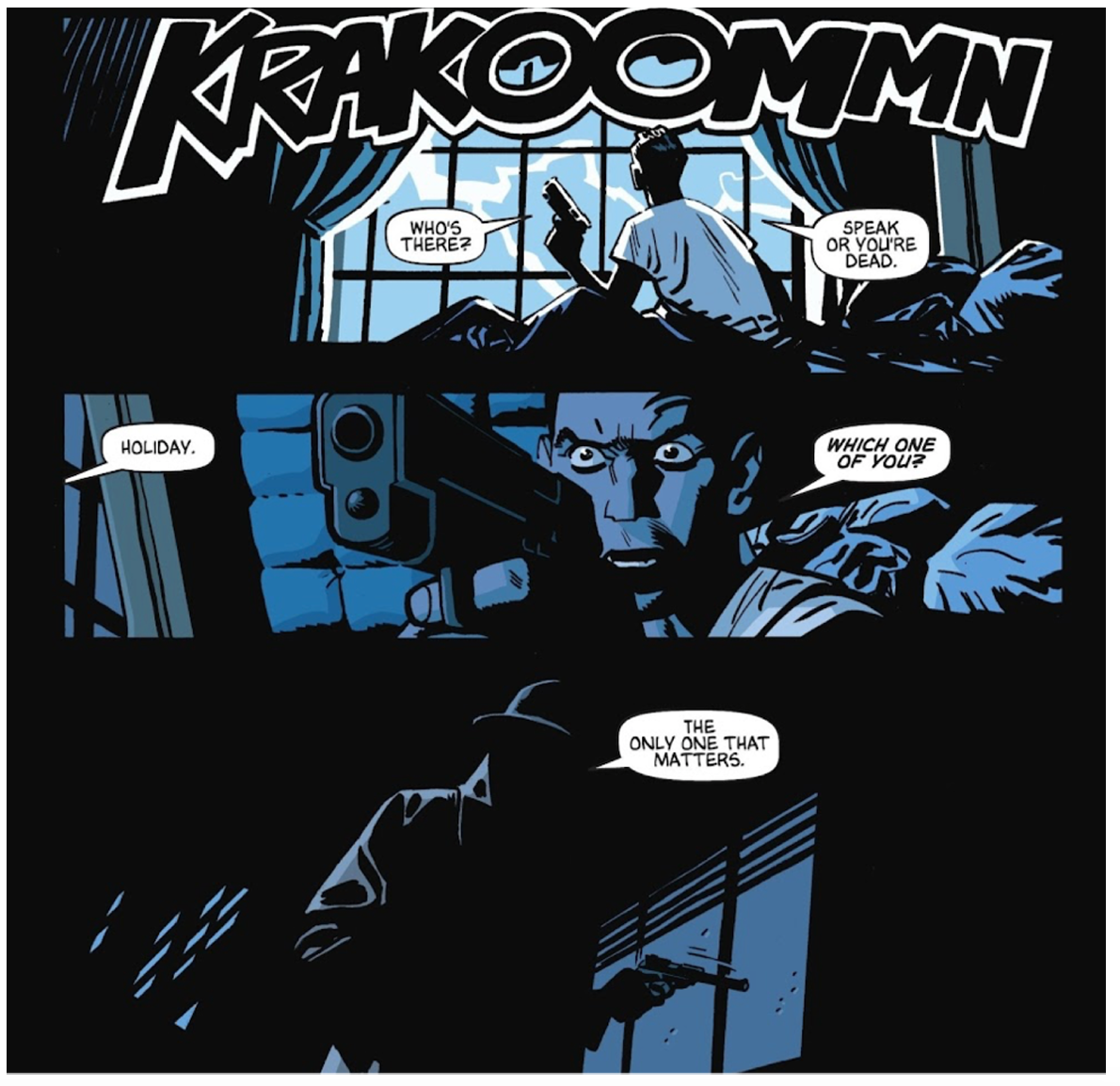
From the scene in the jail after Mario is rescued by Batman, we know that Mario has some kind of pact with Selina. His mother Louisa Falcone has a special hold over him, as she convinces him to finish his work and retake the Falcone empire.
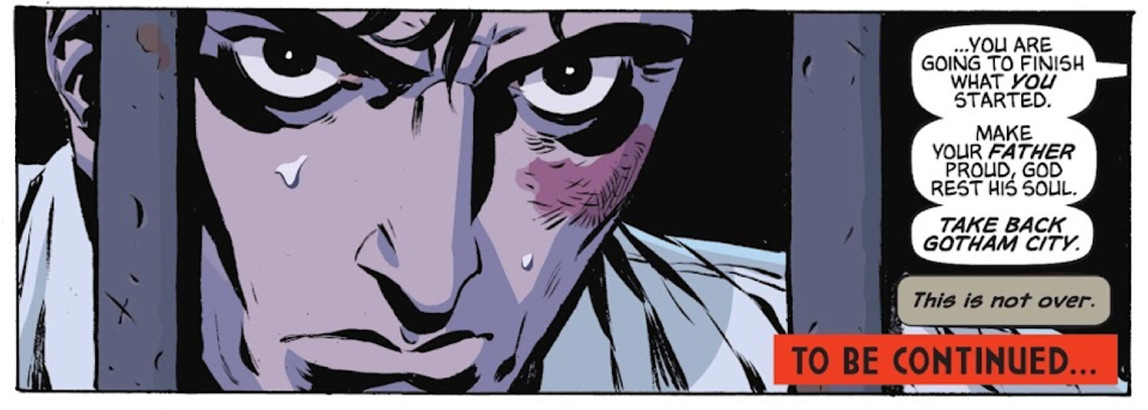
Lastly, we know that Mario is in some kind of romantic, manipulative relationship with Holiday. We also know that this relationship is specifically with Holiday and not Gilda, as Gilda implicates Mario in the kidnapping of James Jr. and Mario denounces Gilda to Batman.
Given what we learn about Gilda and Mario, and what we already know about Two-Face, we can now dissect their motives.
Holiday’s Plan and the Eschaton at Arkham Asylum
At first glance, the scheme that unites Holiday and Mario Falcone appears contradictory, even schizophrenic. It is a web of maimings, kidnappings, and shifting allegiances that resists linear explanation. Read as the product of Gilda’s fractured psyche, however, the details resolve into a grim, internally consistent logic. Let’s go through each shooting and the major events one-by-one.
• Halloween. Selina shoots herself in the leg with a .22 and flees to Arkham for medical treatment (more on why she did this in Part III). The pistol and a smashed pumpkin are left on the ground where her body should have landed. Two-Face is shot by a group of thugs wearing clown masks. We know the shooter is Mario. It seems Holiday and Mario, in consultation with Dr. Thorne, planned to restore Harvey in an incredibly risky way by inflicting targeted brain damage. We saw already in the sewer that Holiday is willing to risk Harvey’s life to bring him back. An unwitting Gilda is present at the scene of the shooting and is horrified by what she witnesses. It is unclear why Mario asks her to talk about Holiday. Perhaps he explains to her Holiday’s plan to get Harvey back and destroy Two-Face forever; and the manipulation she may need to commit should it not work. Beforehand, Solomon Grundy is abducted and sent to the bottom of the bay. This is understandable as Grundy is Two-Face’s bodyguard and would need to be removed to get close to Two-Face. Lastly, James Gordon Jr. is abducted. Why? Well, we know from the Penguin that Gilda ordered it. Its purpose seems to primarily be to help Gilda fulfill her fantasy of raising a child.
• Thanksgiving Eve. The Penguin is shot by a group of thugs wearing Scarecrow masks. He begs for his life saying he won’t talk. He is clearly referring to his involvement in the James Gordon Jr. abduction. The thugs spare his life and he is sent to Arkham for medical treatment (presumably by Mario’s phony FBI agents who arrive at the scene).
• Christmas Eve. A group of thugs wearing Batman masks shoot the Riddler. He is maimed such that he cannot write or speak, presumably to make him incapable of communicating with Batman. The FBI agents insist he go to Arkham despite their location being a larger distance from the nearest hospital. Batman finds James Gordon Jr. with Gilda, who blames Mario for the abduction. Batman confronts Mario, who rebukes Gilda, but accidentally shoots Batman. In the scuffle, Batman injures Mario’s leg.
• New Year’s Eve/Day. There is no shooting. Batman and Robin correctly point out that Gilda is in jail and Mario is nursing an injured leg at the time. Gilda is freed from jail by Solomon Grundy. Robin inadvertently empties Arkham Asylum, but the Joker mysteriously vows to catch all the released inmates.
• Valentine’s Day. The nature of the killings changes. Instead of masked thugs maiming costumed criminals, now Holiday (or most likely Julian Day dressed as Holiday) attacks Mario directly, injuring him and killing his two phony FBI agents. We don’t know the exact circumstances of this behavior but we know that the inmates being released from the Asylum likely threw a wrench in Holiday and Mario’s plan of collecting costumed freaks at Arkham. It seems the Joker was their contingency (hence their shootings stopped), but Calendar Man, having just been released from Arkham Asylum, has usurped the Holiday mantle unilaterally and attacked Mario. Mario and Holiday are somehow aware of this, which is why Mario asks Holiday which one he or she is in a panic just before the battle. Calendar Man essentially admits this later after being caught by the real Holiday. It is unclear how Mario/Holiday convinced the Joker to play his role, but he may have thought the pitched battle idea would be entertaining. In any case, the Joker does indeed begin bringing the freaks back to Arkham.
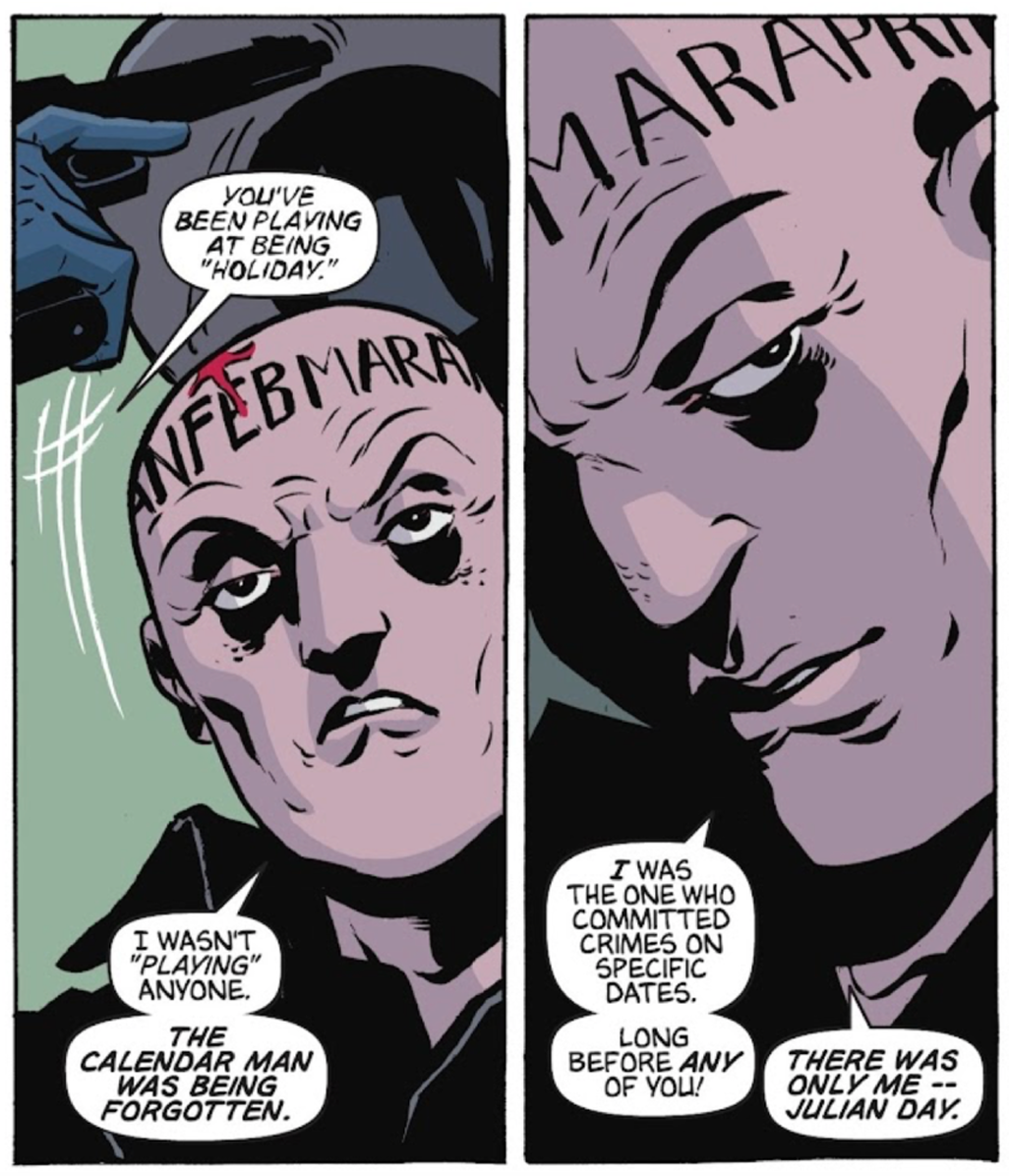
• St. Patrick’s Day. Holiday (Gilda) learns from Dr. Thorne that the plot to bring Harvey back via gunshot to the head and brain surgery has failed. Holiday (Julian Day) shoots Mr. Freeze and injures Robin to escape.
• April Fool’s Day. We see Mario is held hostage by Catwoman (under mind control) and Poison Ivy. After Batman intervenes to rescue Mario, Poison Ivy is maimed by Holiday (Julian Day). The real Holiday maims and captures him. It is unclear why Day has switched to maiming costumed criminals. He likely maimed Robin to avoid being caught (as he was being chased by Robin) and to continue his hunt for Mario and Holiday. He may have maimed Poison Ivy because he somehow knew she was holding Mario and did not get the chance to interrogate her. In any case, Day knows about the pitched battle at Arkham from the beginning and wants Batman present to stop Holiday.
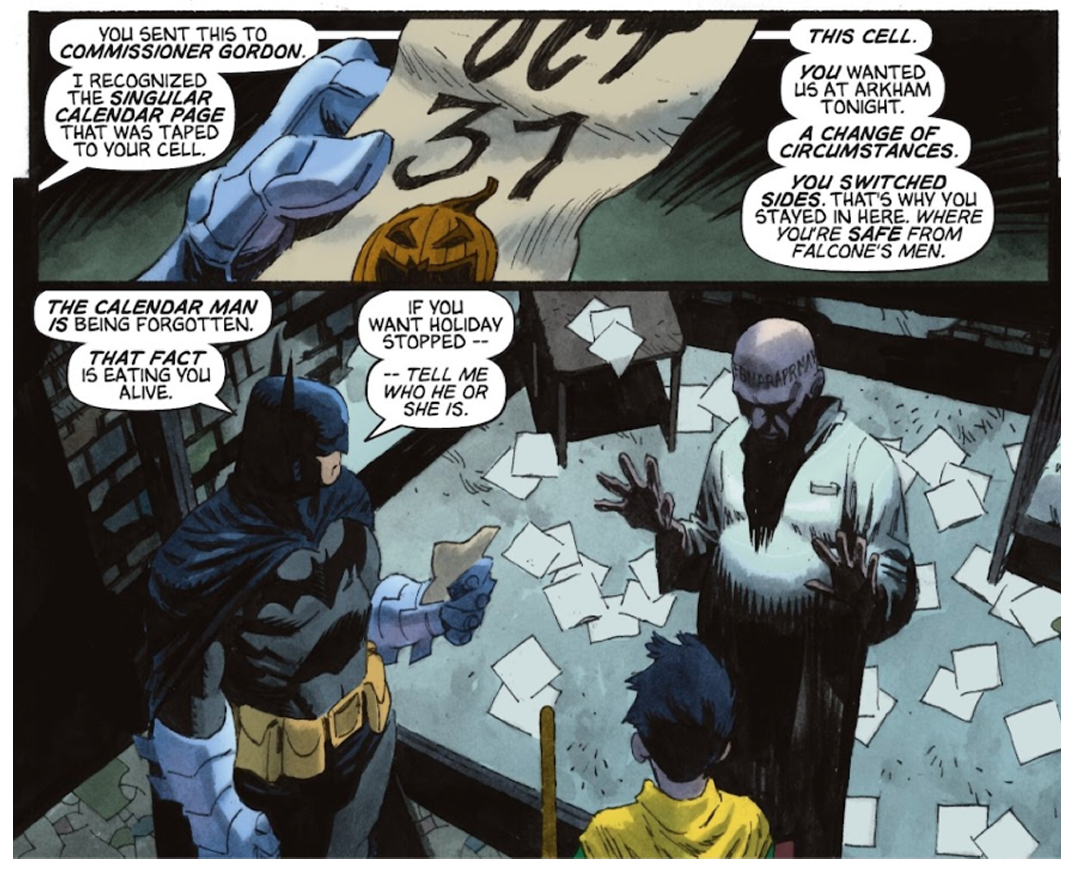
• Father’s Day. Holiday shoots Batman at the ruined Falcone estate to prevent him from apprehending Two-Face before the battle.
• The Roman’s birthday. The Falcone family has mustered soldiers from the old country under the leadership of the newly returned matriarch Louisa Falcone. Mario will lead them into battle. Two-Face suspects that Gilda’s news about a child was a lie as the dates do not align. This manipulation places Two-Face at Arkham Asylum where he is there to confront Dr. Thorne and investigate his medical records just before the assault. His conversation with the Joker implies he knows what is coming, and the coin toss seals his fate. Batman and Robin discover the connection between the Dents and Mario. Batman discovers a shooting trophy for a Gilda Powell, indicating a history of marksmanship and recoloring The Long Halloween (especially her ability to outshoot the Sullivan family). Holiday manipulates Mario and sets the assault on Arkham in motion.
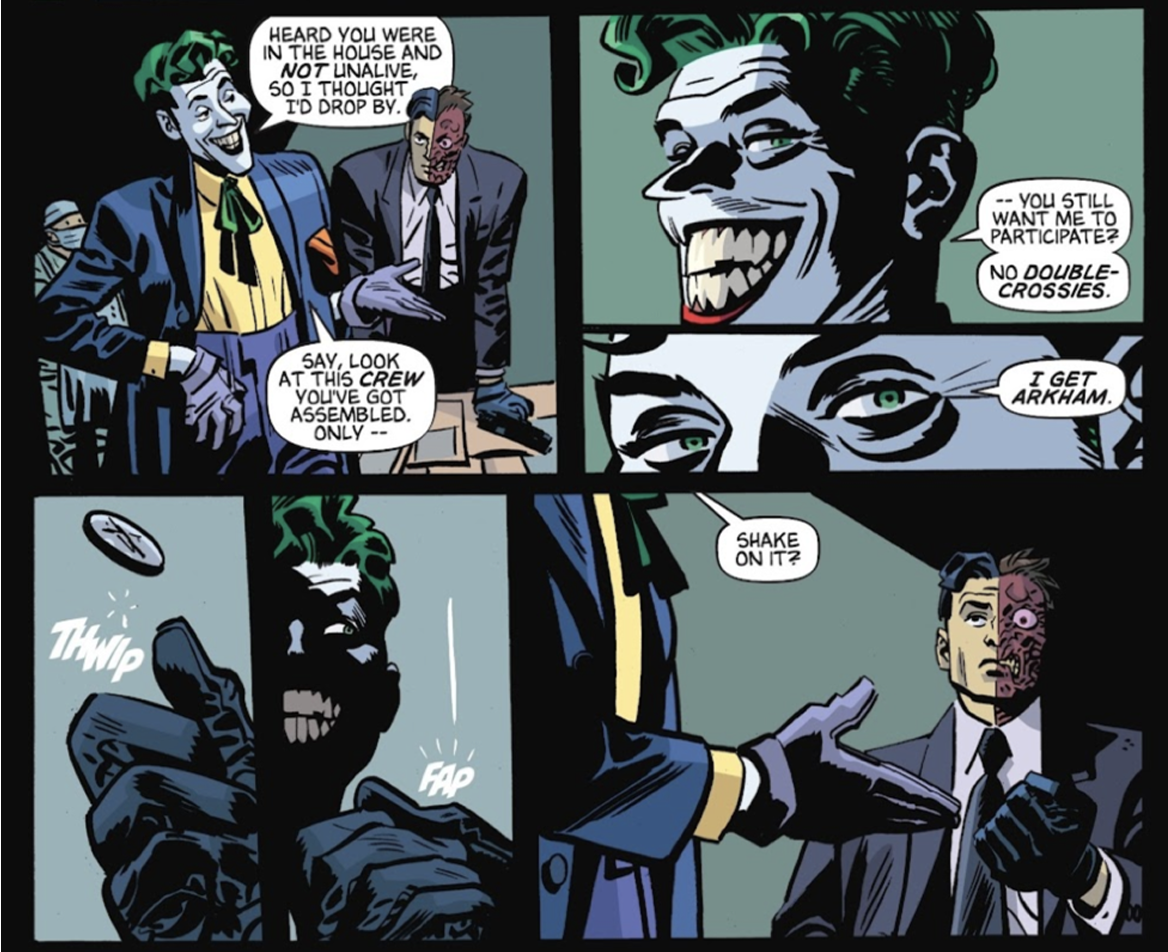
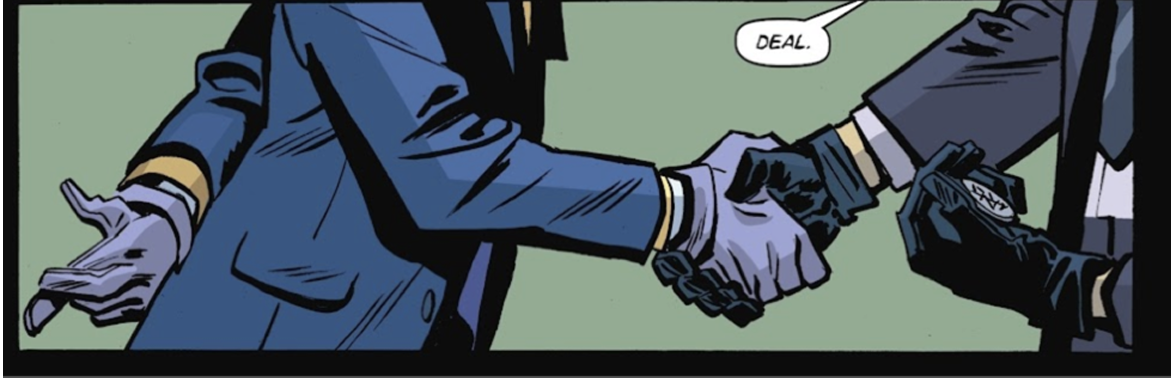
• Halloween. The assault begins.
Holiday is not simply a relapse into violence; it is Gilda’s defense mechanism elevated into a delusional, ideological, but purposeful attempt to “cure” Gotham City by forcing its two diseases, the mob and the freaks, to destroy each other in a pitched battle.
Gilda’s stated aim is the key—that anything she did was to be with Harvey.
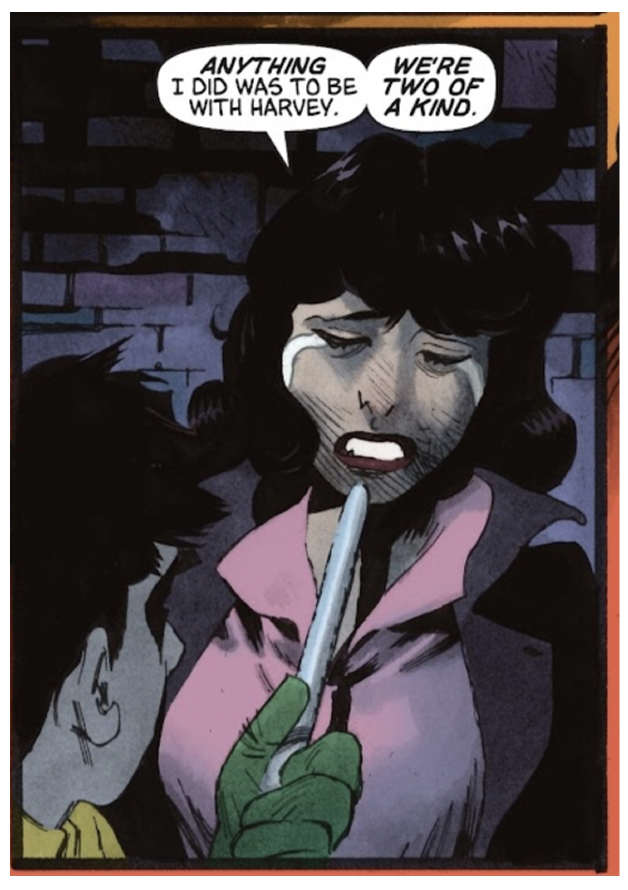
She cannot recover her husband as he once was, nor can she accept his metamorphosis into Two-Face. Her subconscious answer is annihilation: if she cannot bring Harvey back to a sane world, she will instead make the world as deranged as the two of them. The Holiday persona becomes the instrument of that purification. By resurrecting the pattern of ritual shootings from The Long Halloween, she re-enacts the trauma that defined their marriage, but now with the larger target of the entire ecosystem that tore them apart.
The apparent mercy of the maimings thus conceals strategic intent. Each wound drives a “freak” to Arkham Asylum, concentrating Gotham’s monstrosities in one containment site. Why not murder the freaks one-by-one? Well, then they would not be present as an opposing force to cripple the mob. As such, Arkham becomes the crucible where gangsters and costumed criminals will collide. What looks like randomness is actually herding behavior: Holiday is engineering a final holiday in which the city’s twin infections—organized crime and super-villainy—are lured into open war and mutual annihilation. In doing so, she unwittingly mirrors Batman’s own metaphor for Gotham’s illness: Thomas Wayne’s dictum that a doctor must let the fever burn before operating.
Gilda’s mistake is believing she can accelerate that process through violence; she cuts into the wound while it is still septic.
Mario Falcone, meanwhile, mistakes her mania for shared purpose. He, too, despises both mobsters and freaks for desecrating his father’s legacy and ruining his family’s honor. In Holiday he finds a zealot whose madness can serve his restoration fantasy. She believes she is clearing the path for love’s rebirth; he believes he is reclaiming Gotham for the Falcone name, a love, and a new family.
Two-Face was lured to Arkham Asylum by Gilda’s ruse, but has an opportunity to destroy the Falcone family once and for all. Calendar Man’s cryptic description of two men who hated each other and one person who knew and maybe even loved them both captures this unholy alliance precisely. The “two men” are Mario and Two-Face, and the “one person” is Holiday, the manipulator who unites their hatred into a single self-destructive idea: Holiday as purification.
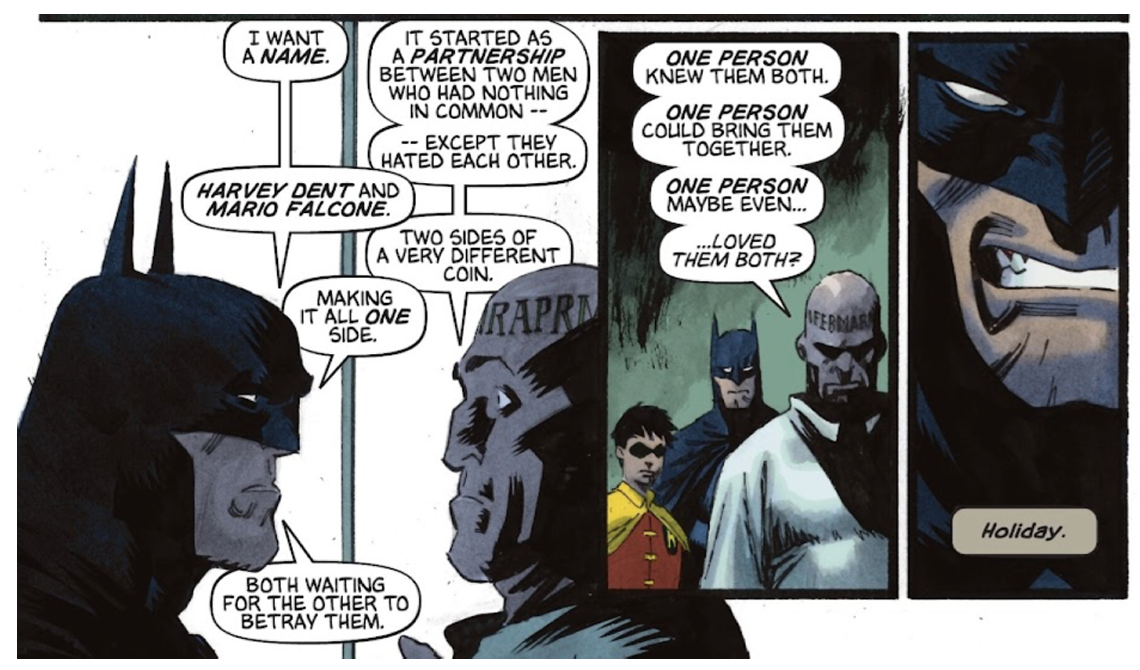
The final siege of Arkham, then, is not chaos but culmination. It is the fever breaking. But the annihilation never happens. Batman intervenes and things fall apart for Holiday. In Batman’s version of the metaphor, Holiday is the infection. All the costumed freaks and gangsters being drawn into one place gives him the opportunity to operate surgically and dismantle Holiday’s plan. Batman disarms both the mob and the freaks before their battle becomes too deadly.
Things Fall Apart
Holiday’s machinations collapse when Batman disarms the opposing forces and Selina informs Mario off-panel that Holiday’s pregnancy is a farce and thus Mario’s future was a lie. After realizing he was manipulated by both Holiday and his mother Louisa into becoming a criminal, he snaps. The final confrontation takes place between Batman and Robin, Two-Face, Gilda, Commissioner Gordon, and Mario. Mario is holding Gilda at gunpoint, and Two-Face realizes when the gunman removes his clown mask that Mario was the one who shot him. She pleads for Harvey to take control again, and Mario threatens to finish the job he started with Two-Face. This triggers Gilda’s defense mechanism and Holiday re-emerges. She wrestles the gun from Mario and shoots him, though reluctantly. We see that Holiday did indeed love Mario, but not enough to override her primary purpose. This act reawakens Harvey for the first time in the entire series.
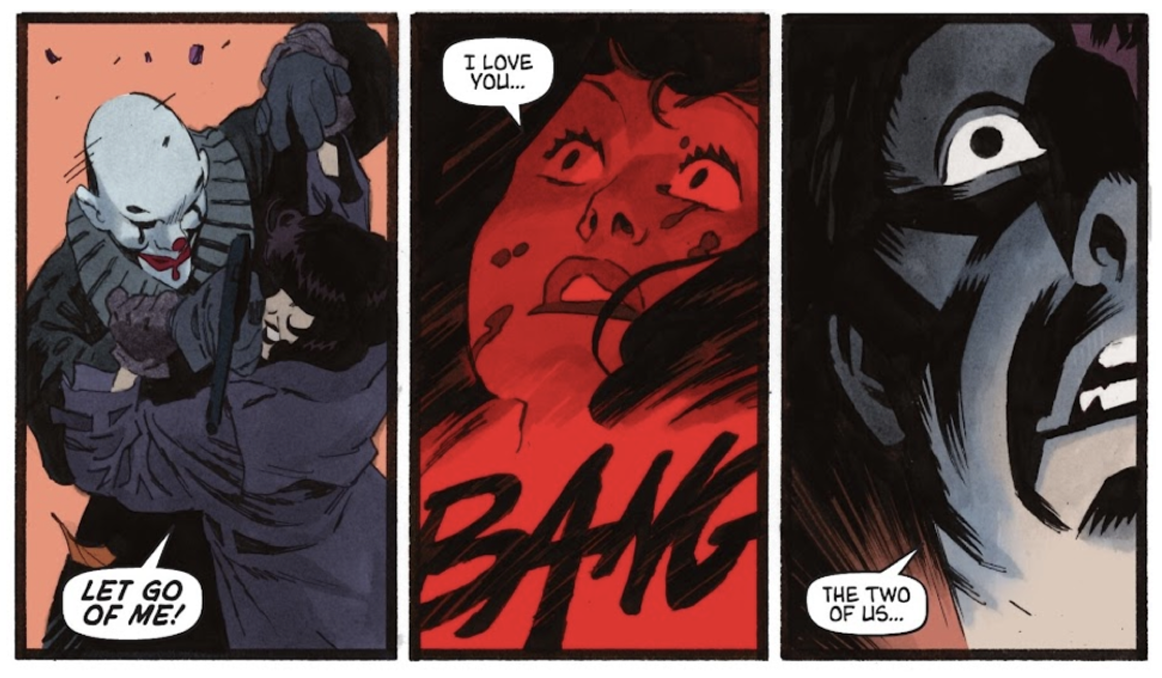
Gilda has gotten her Harvey back, but when he returns he sees how sick she has become, having missed all of the events of The Last Halloween. After executing Mario, Harvey offers to surrender to Gordon in exchange for Gilda receiving help instead of prosecution. Gilda has restored Harvey, but ironically they cannot be together.
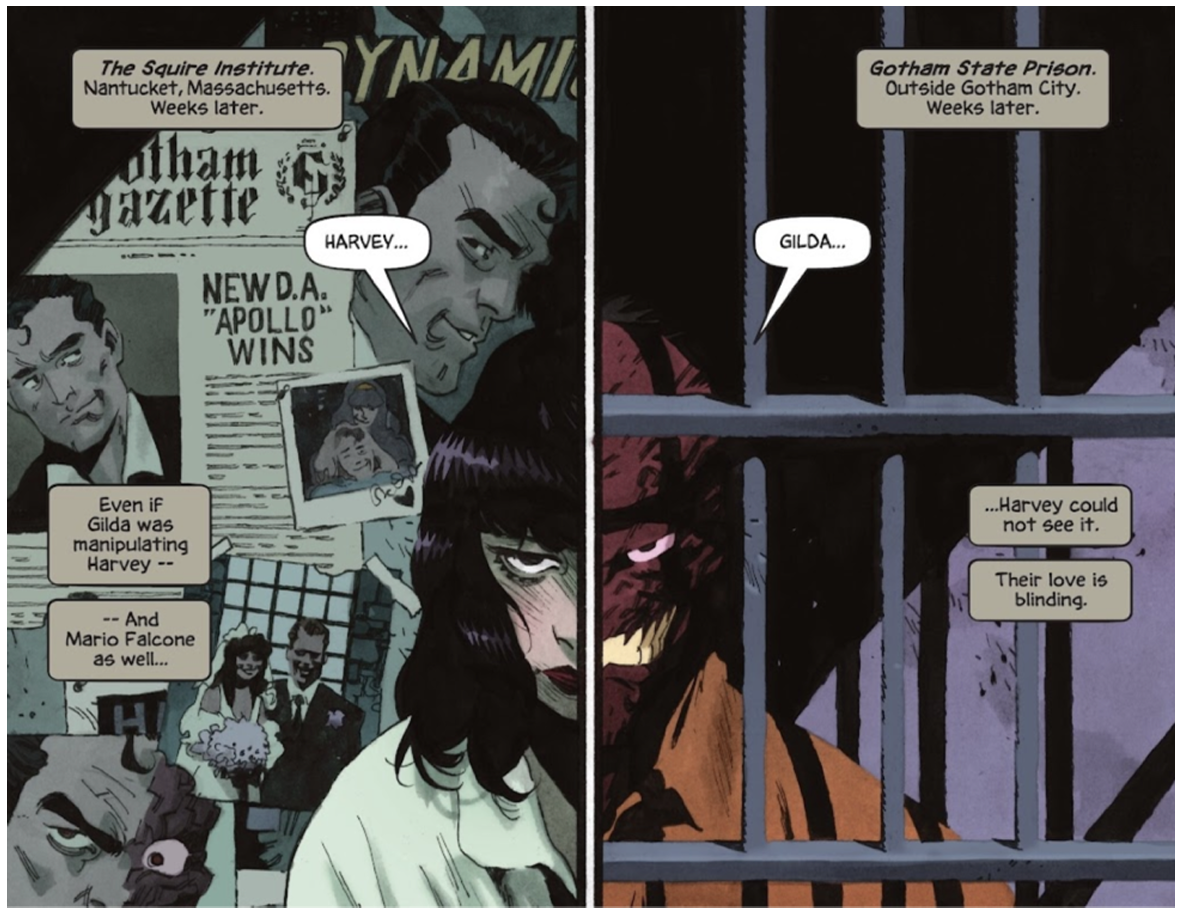
All of which returns us to the only question that matters in Gotham: not who wore the mask, but what the mask became.
The Idea of Holiday
In the end, The Last Halloween closes the circle not by naming a killer but by confronting what the name Holiday has become. Calendar Man’s pronouncement—“A Holiday is not a he or a she. It is an idea…”—reframes the entire saga in mythic terms. The murders were never only acts of violence but rituals in a city addicted to repetition, each echo proving how small a spark is needed to reignite Gotham’s fever. The “little gun” becomes an instrument of contagion: proof that terror in Gotham does not depend on identity or raw power, only on symbol. In this view, Holiday is less a person than a pattern, an idea that re-embodies itself whenever love, guilt, or justice turn inward and consume their host—replacing agency with ritual performance. It is the city’s seasonal heartbeat and its dark liturgy repeating in new guises.
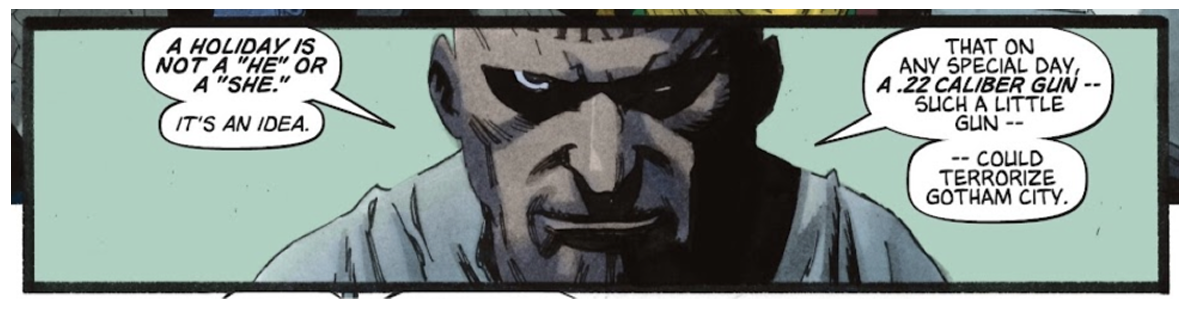
Yet Batman’s closing reflection insists on the inverse truth: The Long Halloween was about one man: Harvey Dent. By grounding the myth back in the tragedy of a single soul, Batman resists Calendar Man’s fatalism. He sees in Harvey not a symptom but a person, a man whose crusade against corruption became another mask in Gotham’s masquerade. Loeb and his collaborators let both readings stand, unresolved but interdependent. Calendar Man speaks for Gotham’s eternal recurrence, Batman for its flicker of redemption; between them lies the essence of noir—a world where the human and the mythic perpetually blur. The “idea of Holiday” is thus the city’s curse and its confession: every act of salvation risks becoming performance, and every performance hides a plea to be saved.
If Gilda Dent embodies the inward collapse of Gotham’s myths, Selina Kyle embodies the outward yearning they leave behind. That is, a longing for order, for identity, and for a family she can never fully claim.
___________________________________________________________
Part III: When in Rome—Legacy, Yearning, and the Wrong Side
If Harvey Dent represents Gotham’s fractured conscience and Gilda Dent its private mythology, then Selina Kyle represents something far more elusive: the city’s yearning. Across The Long Halloween, Dark Victory, and When in Rome, Selina moves not between sides but between the identities of thief, vigilante, lover, and heir. She adopts each of these in response to an unspoken absence she carries within her. She orbits the Falcone family not out of loyalty or greed but from the need to anchor herself to a lineage, or a belonging she has never possessed. Unlike Harvey and Gilda, whose identities collapse under the weight of Gotham’s myths, Selina continually reinvents herself in an effort to outrun hers. As the phrase “when in Rome” suggests, Selina is adaptive, and her arc is therefore existential. In tracing her journey—her fixation with the Roman, her thwarted intimacy with Bruce, her flight to Italy, and her final confrontation with the truth of her origins—we find a character shaped less by crime or heroism than by the persistent ache of wanting a family, wanting a past, and wanting to know which side she ought to be on. Understanding this longing is essential to understanding The Last Halloween, where Selina’s critique of Batman and Gotham ossifies into the clearest articulation of what it means to stand on the “wrong side” in a city defined by masks, myths, and competing visions of order.
Before The Last Halloween and before her self-imposed exile to Italy in When in Rome, Selina Kyle’s trajectory through The Long Halloween and Dark Victory reveals a character defined not by villainy or opportunism, but by yearning and a persistent gravitational pull toward the Falcone family. Her scenes across these works form a parallel narrative presented as a psychological contour map that charts her attempts to locate herself within Gotham’s shifting structures of power, order, and identity. Long before she articulates it aloud, Selina’s actions betray an emptiness she is desperate to fill, even as she performs the role of the aloof, unflappable thief.
Origins of a Fixation
Throughout The Long Halloween we see Selina primarily acting as a foil to Carmine Falcone. She is constantly robbing him, spying on him, interfering with his business and thwarting his plans. Selina’s first appearance in The Long Halloween shows her robbing the Falcone penthouse. Shortly afterward, she intentionally allows herself to be seen spying on Batman, Harvey Dent, and Commissioner Gordon. She does this not for strategic advantage, but for Batman’s attention. She offers him the location of a warehouse full of Falcone money. This tip results in Batman and Harvey setting Falcone’s cash pile ablaze. Her involvement is neither cleanly heroic nor criminal. Instead, she appears almost testing the boundaries of allegiance, as if seeking a role neither Batman nor the Falcone empire is ready to define for her.
When Alberto Falcone is apparently murdered on New Year’s Eve, Selina intervenes in Batman’s tense confrontation with Carmine Falcone by disarming the Roman with a bola. She flees, but Batman catches her (both literally and metaphorically). She leaves a small scratch across his lip. The next night, on her Valentine’s Day date with Bruce Wayne, she teasingly asks if he “cut himself shaving.” The implication lands heavily: she knows more than she lets on, and Bruce knows she knows. Their dance of half-truths has begun.
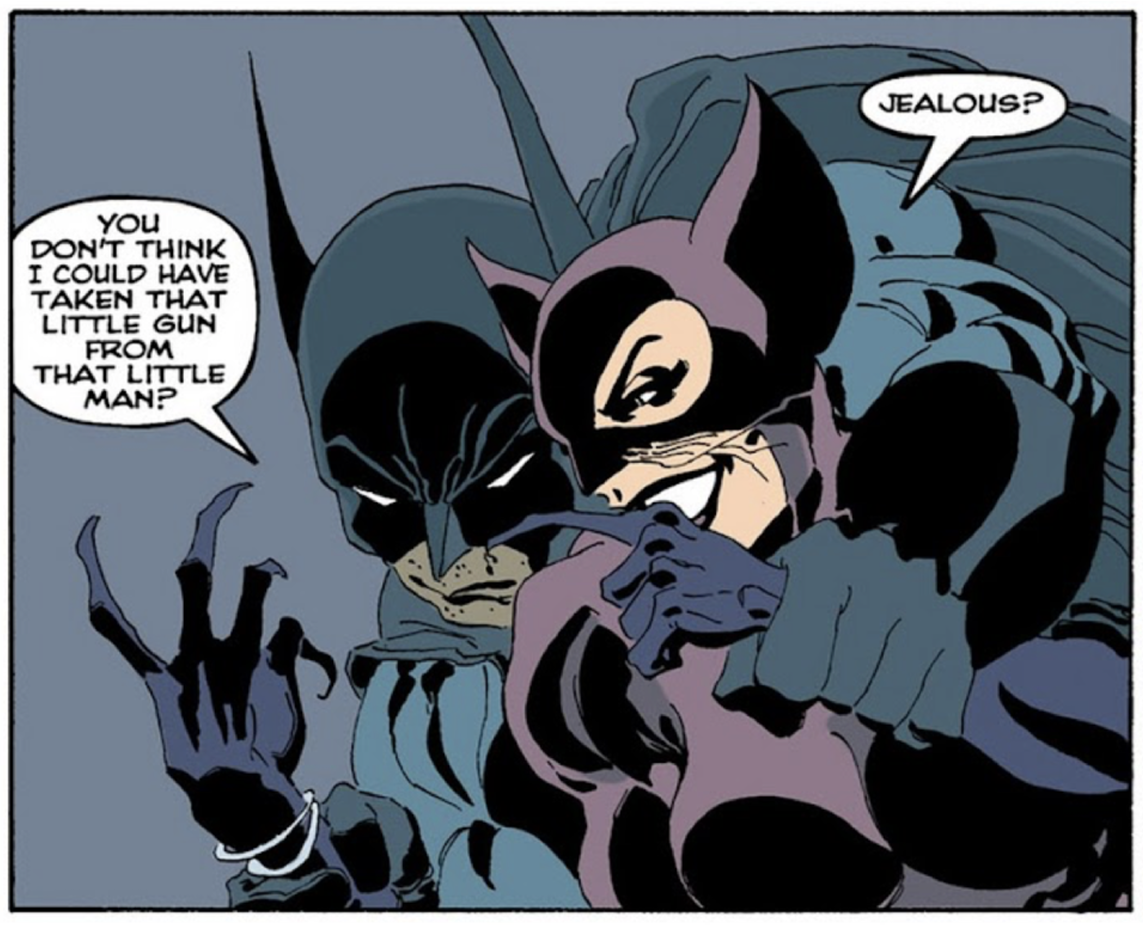
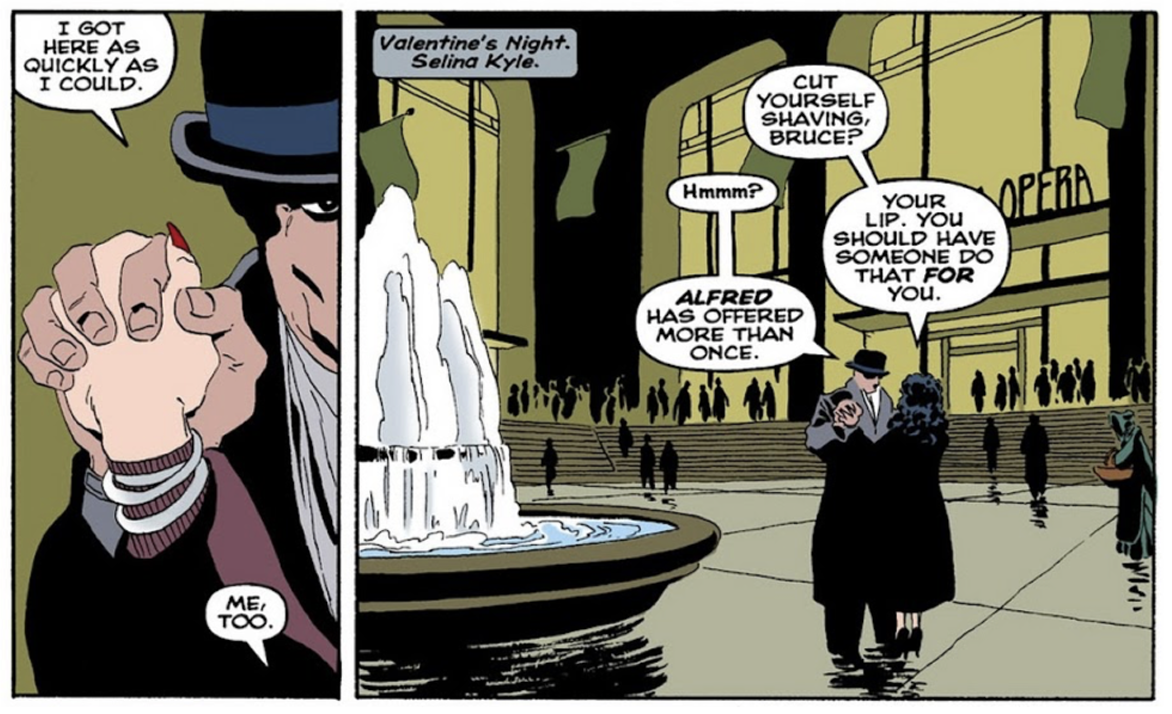
Their connection deepens when Bruce falls under Poison Ivy’s control, who then enacts financial maneuvers favorable to Carmine Falcone. Selina senses something wrong immediately and rescues him by breaking Ivy’s hold. Later, Batman privately acknowledges, “I owe Catwoman much.” This admission underscores a dynamic that Selina will repeatedly try to define: she wants recognition and to be someone on whom Bruce depends and trusts.
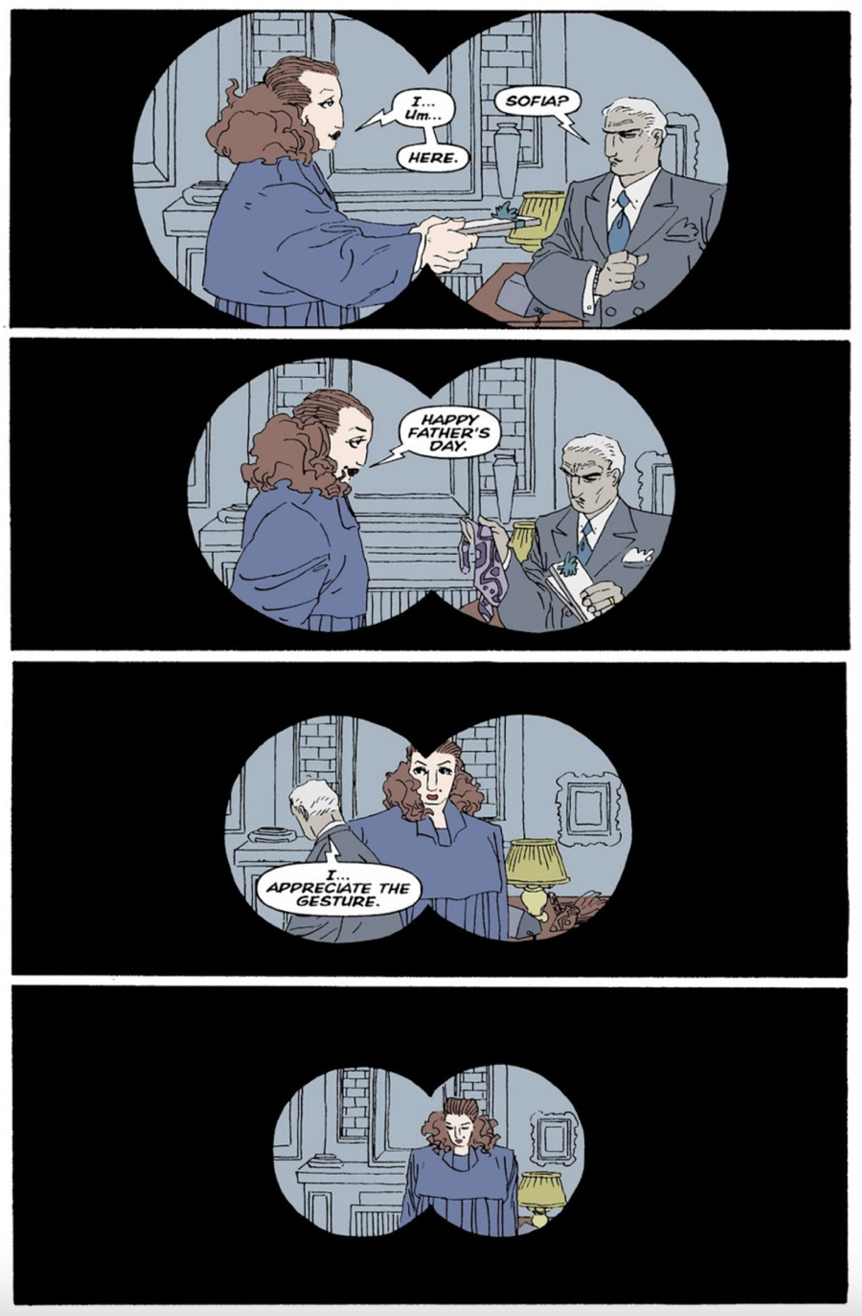
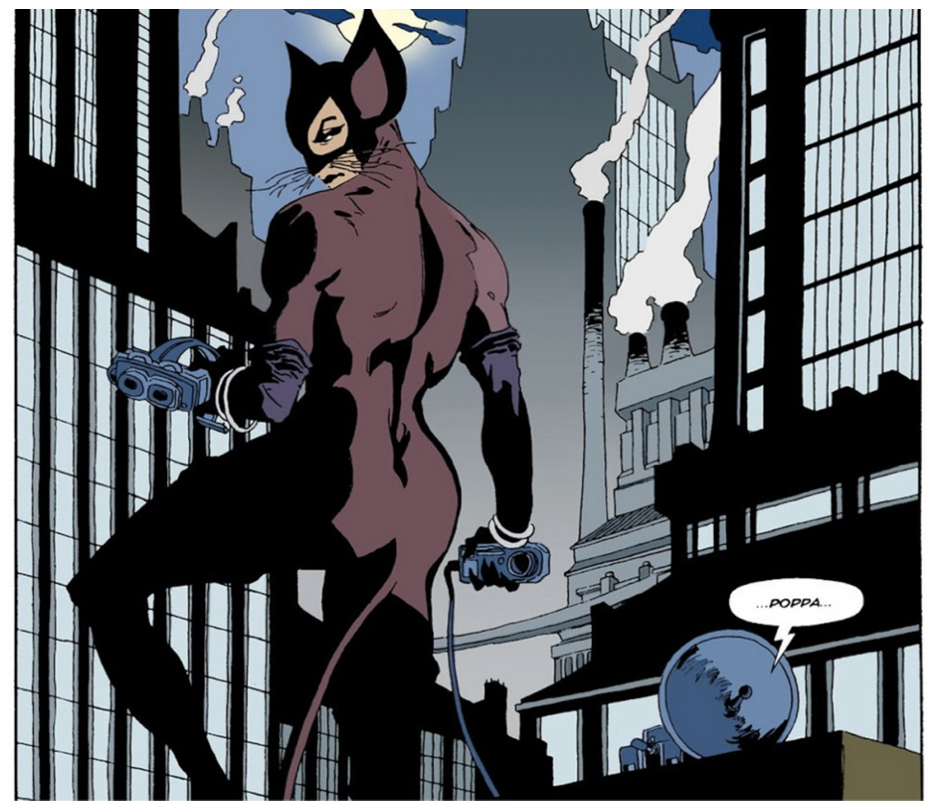
Her fascination with the Falcone family resurfaces poignantly on Father’s Day, when she spies on Carmine and Sofia from afar. When Carmine brushes past his daughter’s affectionate gesture, Sofia’s face falls as she quietly utters, “Poppa…” Selina reacts to this (listening through the microphone) in an angered or disgusted way. She appears to be angry at Carmine for his minimal acknowledgement of Sofia’s gift. This empathy for Sofia will present itself again.
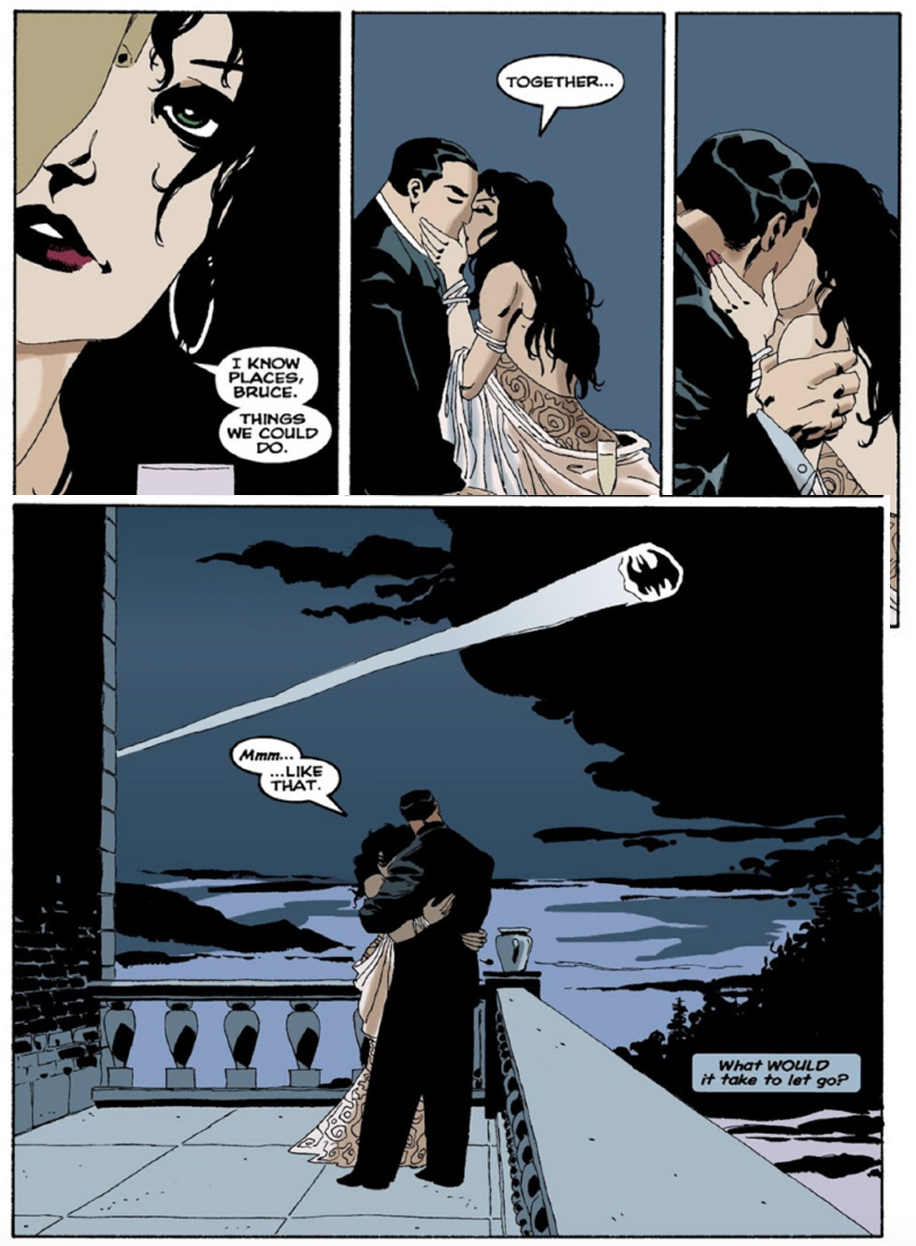
Her conversations with Bruce grow more intimate. On Independence Day, she presses him to “let go” of Gotham, but the subtext is that he should let go of his role as the social face of Gotham. That is, he should abandon the billionaire performance he hides behind. Selina has no interest in the champagne galas or the empty social rituals of Bruce Wayne; she wants him to admit that the mask he wears by day is the true façade. “I know places,” she tells him, “things we could do together,” hinting not at domestic escape but at a life lived openly in the shadows. She wants them to live together as fellow creatures of the night rather than as a socialite and a thief. When the Bat-Signal ignites the sky, she removes the ambiguity: “Like that.” The moment encapsulates their unspoken understanding. Both know who the other really is beneath the mask, and Selina is offering Bruce a freedom he almost never allows himself: the chance to stop pretending to be Bruce Wayne at all—and to live, openly, as the man she knows he truly is.
When Catwoman assists Batman in defeating Scarecrow, she again floats the idea of escape and partnership. Batman focuses on the Roman, and it reminds her of the gulf between them. She retreats: “Your loss.” Selina’s ambiguity reaches a breaking point when Batman catches her spying on Falcone yet again and demands to know why she is always near the Roman. She invites candidness by playfully suggesting they “trade secrets”, but when Bruce inadvertently hurts her while grabbing her arm, she realizes the wall between them is not coming down. She offers a cryptic explanation and quickly vanishes.
At the climax, when Gotham’s “freaks” assault the Falcone penthouse, Catwoman is already inside. Batman asks which side she’s on—the story’s first explicit invocation of the motif of choosing sides. “The same side I’m always on,” she replies. It is neither a dodge nor a declaration, because Selina’s loyalties are not ideological—they are emotional, and nowhere is this clearer than in her reaction to Sofia. When Two-Face executes Carmine, Sofia charges him in a rage, and Selina instinctively leaps onto her back to restrain her. The gesture reads as personal. From her rooftop spying, Selina has watched Sofia struggle for acknowledgment from a father who withholds affection in ways painfully familiar to her. The two women are not friends, but they occupy adjacent emotional terrain as daughters of a man who may never claim them. Selina’s intervention can therefore be read as an attempt to save Sofia, to keep her from being shot at point-blank range by Two-Face. At the same time, it may reflect Selina’s own conflicted desires: to prevent another murder she feels symbolically entangled in, or even to witness Two-Face’s retribution against Carmine Falcone without letting that violence consume the only Falcone daughter who mirrors her longing. Sofia crashes through a window and falls, apparently to her death, and the ambiguity of Selina’s presence remains. She may have suspected Two-Face’s intentions toward the Roman and come to see them fulfilled—yet in the end, her impulse is not to celebrate the killing but to cling, however briefly, to the fragile thread of kinship she imagines between herself and Sofia.
In The Long Halloween, Selina Kyle’s motives produce neither a heroic arc nor a villainous one. Instead, they reveal a woman suspended between worlds. She is drawn to the Falcone dynasty, drawn to Batman, but belongs to neither.
Outlines of Abandonment
Dark Victory extends this psychological thread. Selina attends the Roman’s funeral—an act Batman cannot ignore. Her presence signals something deeper than opportunism to Batman: she is mourning a man she who is connected to her in ways she has not yet revealed. The next day, she brings Mario Falcone to Wayne Manor, positioning him as the legitimate heir to the Falcone legacy. This is extraordinary: it establishes that Selina is operating within the inner circle of the family she once robbed. Whether she sees in Mario a brother, a mirror, a possible answer, or merely a political actor is left deliberately ambiguous, but her proximity to the family is unmistakable.
On a rooftop, she warns Batman that the Falcone family intends to kill his friend Harvey Dent. When Batman coldly asserts that Harvey is “not a friend,” she slaps him. “I hope you’ll show a little more interest when they come after me,” she adds. Again, the plea for emotional acknowledgement undercuts her bravado.
Bruce and Selina share a brief, tender moment at Thanksgiving, but Bruce is distant. On Christmas, he stands her up. She waits until after midnight, heart sinking, before walking out. Bruce visits Selina after New Year’s with a hollow excuse about a missed flight. Selina declares the relationship over, but then, in a gesture that betrays the depth of her yearning, tells him to stay.
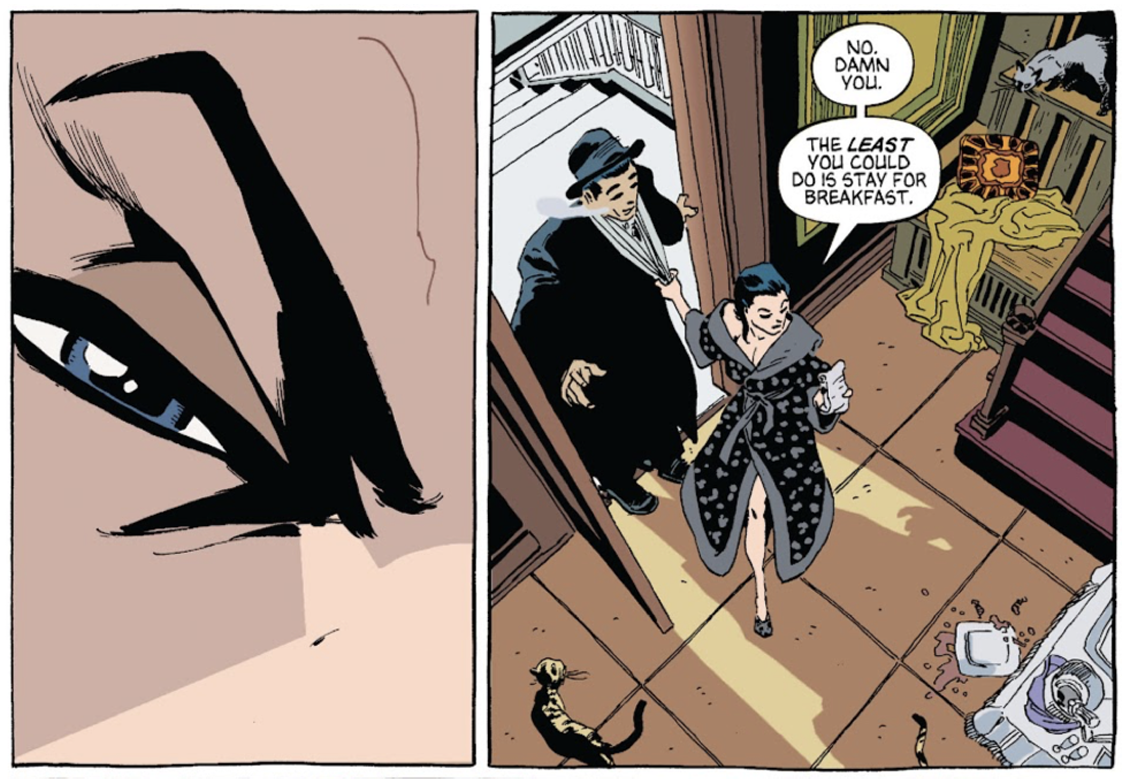
Her search for Carmine’s body (per a tacit agreement with Sofia) leads to one of the defining sequences of Loeb and Sale’s portrayal of Catwoman. After tracking down the Riddler, coercing him into helping her, and infiltrating the morgue, she awakens in a cremation chamber just before burning alive. Batman rescues her. In the aftermath, she confronts him:
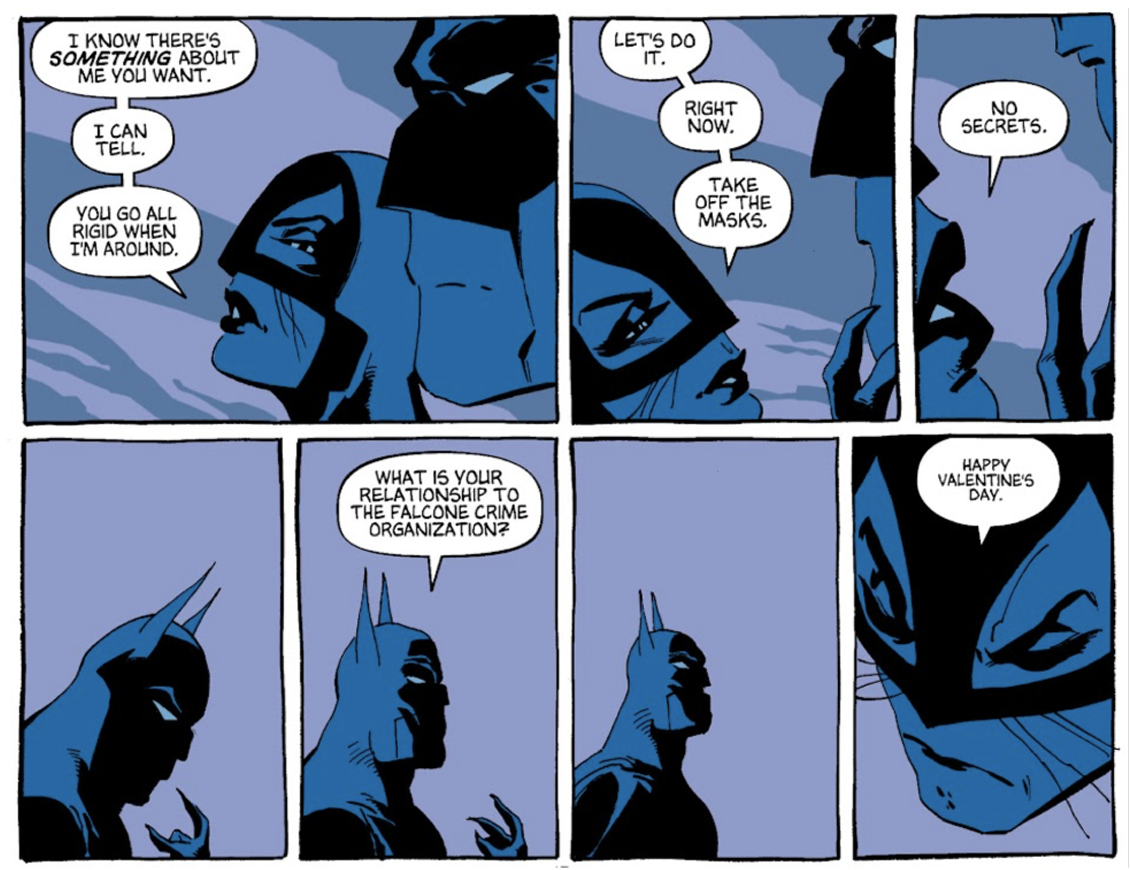
“What am I to you? An ally, competition, a criminal?”
“No secrets,” she pleads. “Take off the masks.”
Selina yearns to belong fully to his world and to have his full trust, but Batman ignores the emotional stakes and interrogates her about her connection to the Falcones. Her face falls. “Happy Valentine’s Day,” she says, departing with the same bitter refrain from The Long Halloween: “Your loss.”
Selina then leaves Gotham in the quiet devastation of realizing there is simply no place for her in Bruce Wayne’s life as he lives it. Her parting note makes this painfully clear. She recounts being stood up on Christmas, New Year’s Eve, and now Valentine’s Day, understanding at last that Bruce’s world has no room for someone like her, and perhaps—she admits with a moment of self-awareness—that the reverse may also be true. She does not accuse him of mistrust outright; instead, she mourns the distance he maintains and the way he retreats into duty whenever intimacy approaches. Her letter is less an ultimatum than a confession of exhaustion: she cannot keep waiting for a man who is never truly present. “I don’t want to be found,” she writes, a line that lands with unusual finality. Selina is running from the ache of wanting something Bruce cannot give. Rome becomes the only place left to go when Gotham offers no answers and Bruce Wayne has no space for her. If she cannot belong in Batman’s world, perhaps she can still find a family in the Falcones.
The Ghosts of Rome
Selina’s exile to Italy in When in Rome fails to distance her from Gotham; instead, it pulls Gotham deeper into her psyche. Rome becomes a stage upon which her unresolved fears, desires, and memories reenact themselves in distorted form. The dreams that punctuate the story serve as psychological case studies, each peeling back a layer of Selina’s identity. Through them, Loeb and Sale reveal that Selina’s quest is for a stable sense of self that has always eluded her, and that she is haunted by a conflated form of both Batman and Carmine Falcone.
Selina’s first dream in Rome is the most direct fusion of her two gravitational centers: Batman and Carmine Falcone. In the dream, she confronts Batman, who repeats the phrase she once said to Batman: “No secrets.” When she removes his cowl, she does not find Bruce Wayne beneath it, but Carmine Falcone. The Roman immediately shoots her. This is the emotional grammar of Selina’s psyche made literal. Both are unreachable men that she wants to share her life with in different ways. That removing Batman’s mask reveals Carmine suggests that Selina’s search for intimacy and her search for identity are entangled. Love and lineage are indistinguishable to her. Both promise belonging, both withhold it, and both wound her. The Roman shooting her articulates a lifelong fear that discovering the truth of her origins will be the thing that destroys her.
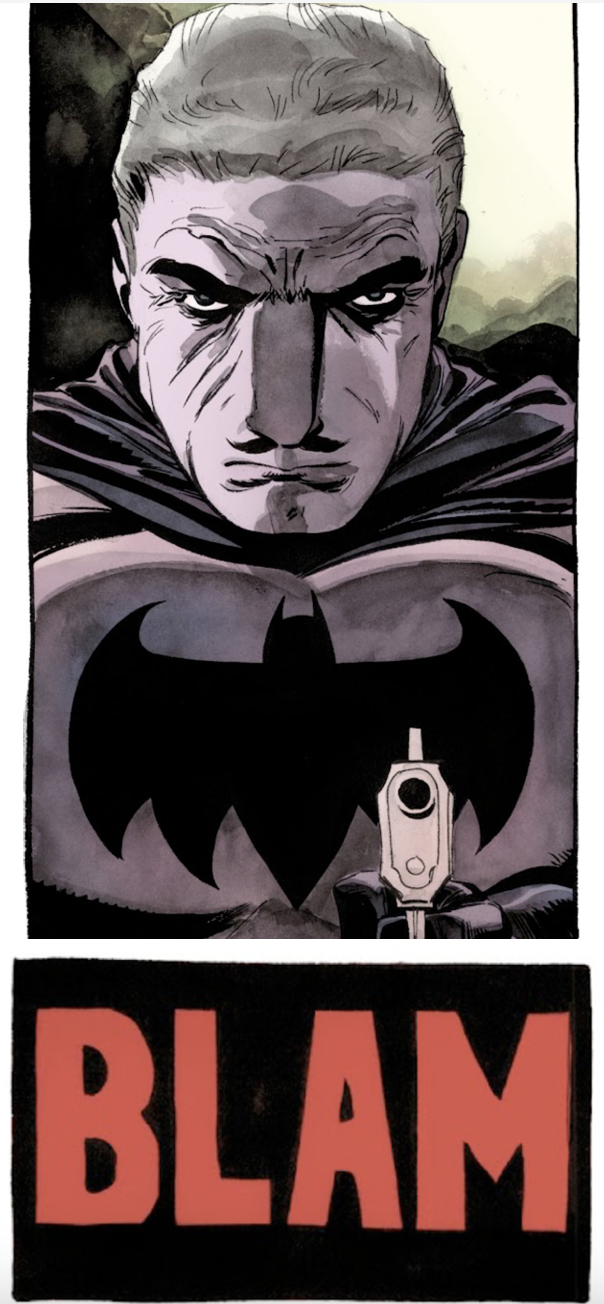
In the next dream, Selina senses Batman approaching her with a gun. She awakens and violently tackles Blondie, who is standing beside her bed. The dream expresses another facet of her internal conflict: the fear that trusting Batman (or anyone) will leave her vulnerable. Her body reacts before her mind can interpret the scene; she defends herself against an imagined betrayal. This anticipatory defensiveness speaks to a lifelong pattern: Selina strikes first because she assumes no one will protect her. Her attack on Blondie is more than a jump-scare reflex. It is the embodiment of her anxiety around intimacy. Even in sleep, she cannot allow herself to be caught off guard. The dream is not about Batman harming her, but about the impossibility of letting her guard down.
After sustaining injuries on the boat, Selina dreams again. This time she lies on an operating table, Batman looming over her in a surgical mask, scalpel raised. He tells her he is trying to save her. She accuses him of “dissecting every little part” of who she is. Then she calls him “Bruce. This dream is one of the most revealing in the saga. It dramatizes three layers of Selina’s psychology: She subconsciously acknowledges Batman is Bruce Wayne. Even in sleep, her mind connects the two masks, refusing the artificial divide Bruce maintains.
She also fears that intimacy means being cut open and judged. To be “saved” by Batman here is to be dissected and to have her identity examined and possibly invalidated. Her deeper fear is plain: If Bruce truly saw her inner self, he might reject it.
The dream mirrors her emotional reality in Gotham. Batman investigates her motives, Bruce refuses to share his truth, and both “study” her without inviting her in. On the table, Selina voices what she cannot say aloud: “You’ll never accept me for who I really am.” The scalpel becomes the symbol of her existential dread: that the truth of her identity (whatever its shape) cannot survive scrutiny. The dream that follows is a memory reframed through longing. Selina recalls her robbery of the Roman’s penthouse from Batman: Year One: the break-in, the scratches across Carmine’s face, the escape into the Gotham night. What fixes in her mind is the object she found hidden in his safe—a locket containing a photograph of Carmine and Louisa Falcone holding an infant. This is the primal scene of her obsession.
What makes the moment so revealing is how little it logically proves, and how much Selina demands from it. There is nothing in the photograph to indicate the child is her. It could be Sofia. It could be a relative. It could be anyone in a sprawling crime family. But Selina’s reasoning is not evidentiary, but rather it is emotional: Because the photo is hidden in a safe, the child must be a secret. And if the Falcone family has a secret daughter, then that daughter must be Selina. The concealment of the locket becomes, in her mind, proof of a concealed lineage.
The locket offers ambiguity, but Selina’s hunger converts ambiguity into certainty. It does not reveal a fact so much as offer a myth capable of filling the void of her unknown past. She clings to it, even as Batman insists she return it. In the dream, he is not a moral voice but an obstacle to the only narrative that makes her feel chosen rather than discarded. Faced with a choice, Selina chooses the story she needs over the truth she cannot bear, even if it makes no logical sense at all.
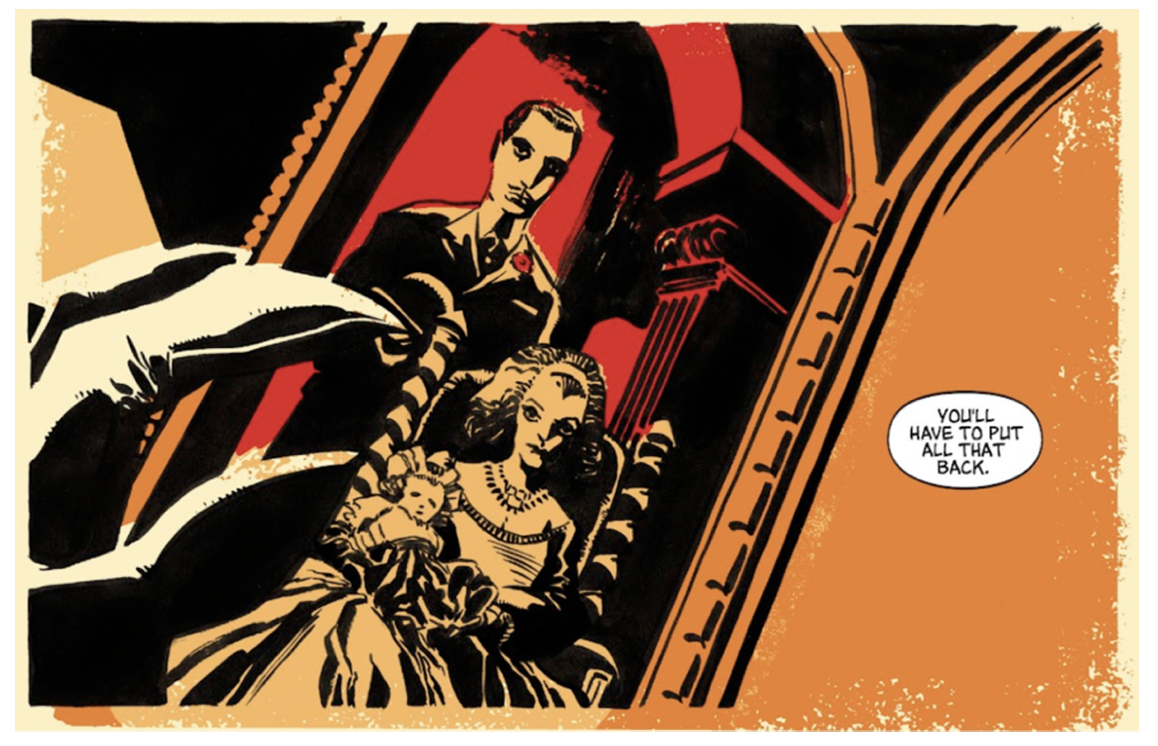
As Rome unravels around her, Selina dreams a final time. This time she dreams of Batman appearing in her room to confess that he loves her. They kiss. The dream is tender, simple, idealized. And… she wakes up kissing the Riddler. This is the most heartbreaking dream because it reveals the core truth of her exile: Selina wants love to be easy, and it never is. Not with Bruce, not with Gotham, not with her imagined past. Where the other dreams are nightmares of identity, this one is a fantasy of emotional resolution. It is the dream she wishes were real and the only one that perhaps never will be.
Selina’s journey ends with the discovery of Louisa Falcone, now a nun in a remote monastery. Louisa resembles Selina, echoing the visual cue that began Selina’s entire obsession. But Louisa denies everything. She claims to have only one daughter—Sofia. Again, Selina is rejected by a f igure she hoped would accept her, and again, she leaves heartbroken. But the truth is subtler and more cruel: Louisa immediately orders Blondie to kill Selina after she departs. Louisa knows exactly who Selina is.
When Blondie later confesses that Louisa lied—that there was a second daughter, hidden away to preserve the family’s standing—the tragedy becomes complete. Selina gains only a story, not proof. Only circumstantial hints, never certainty. Even the truth is given to her by a dying man. She returns to America with the Capo di Capi ring but without closure. Rome has answered nothing. The ache remains.
The dreams in When in Rome are not surreal interludes but the internal architecture of Selina Kyle’s character: her longing for family; her fear of intimacy; her unresolved identity; her displacement between Batman and the Falcones; and her inability to fully trust the world (or herself). Rome does not give Selina answers; it gives her a mirror that reflects her own insecurities and sense of unfulfillment. She lacks a place to belong, a story to inherit, and someone who might finally choose her. Crucially, when she returns from Italy at the end of Dark Victory, Selina begins to recognize these patterns for what they are. Standing at Carmine Falcone’s grave, she accepts that she can never prove what she believes, and chooses to say goodbye anyway. In doing so, she achieves psychological closure without narrative certainty. This is the moment Selina diverges from Gilda’s trajectory—refusing the Holiday mechanism by allowing ambiguity to remain unresolved, rather than be consumed by it.
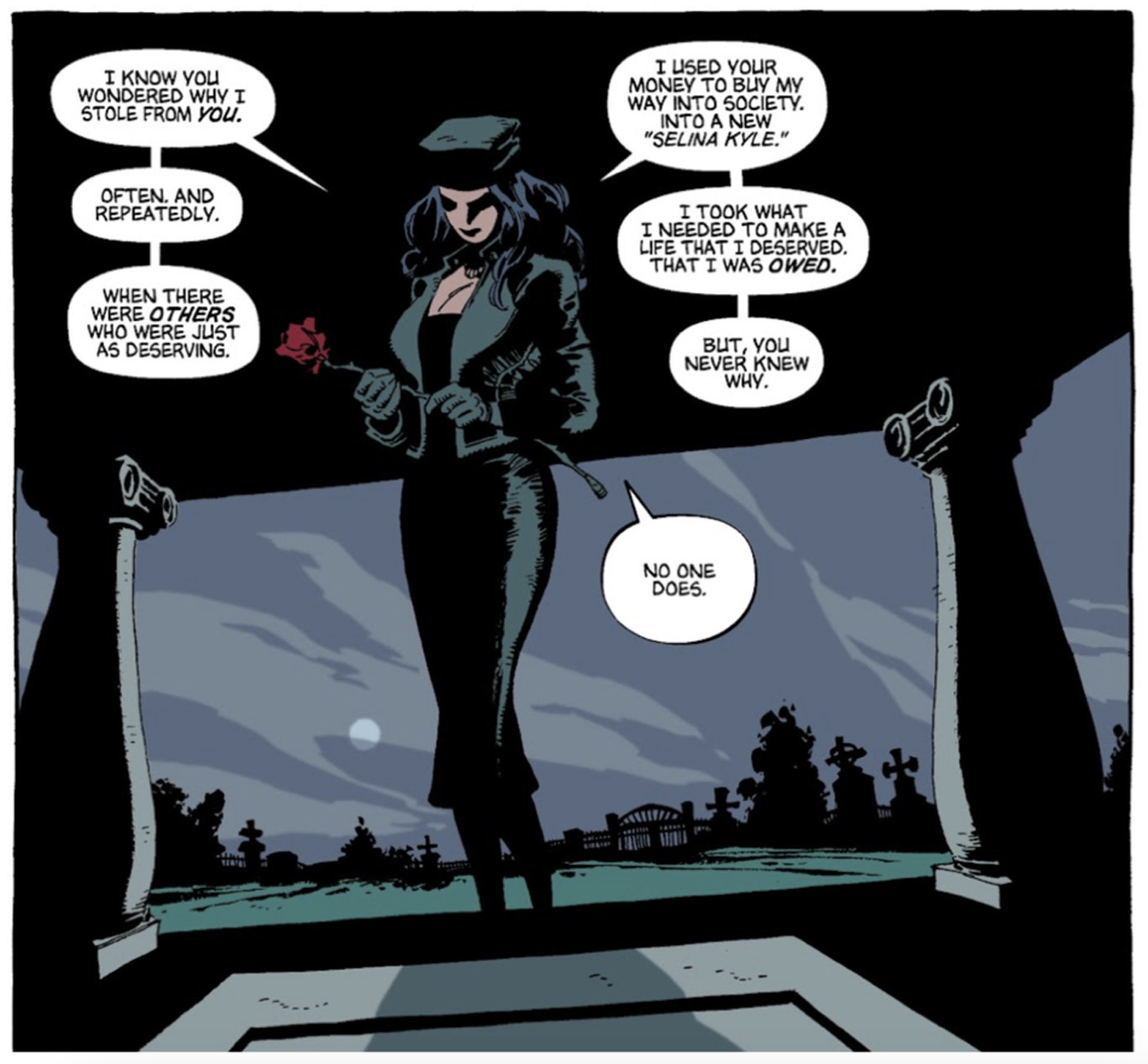
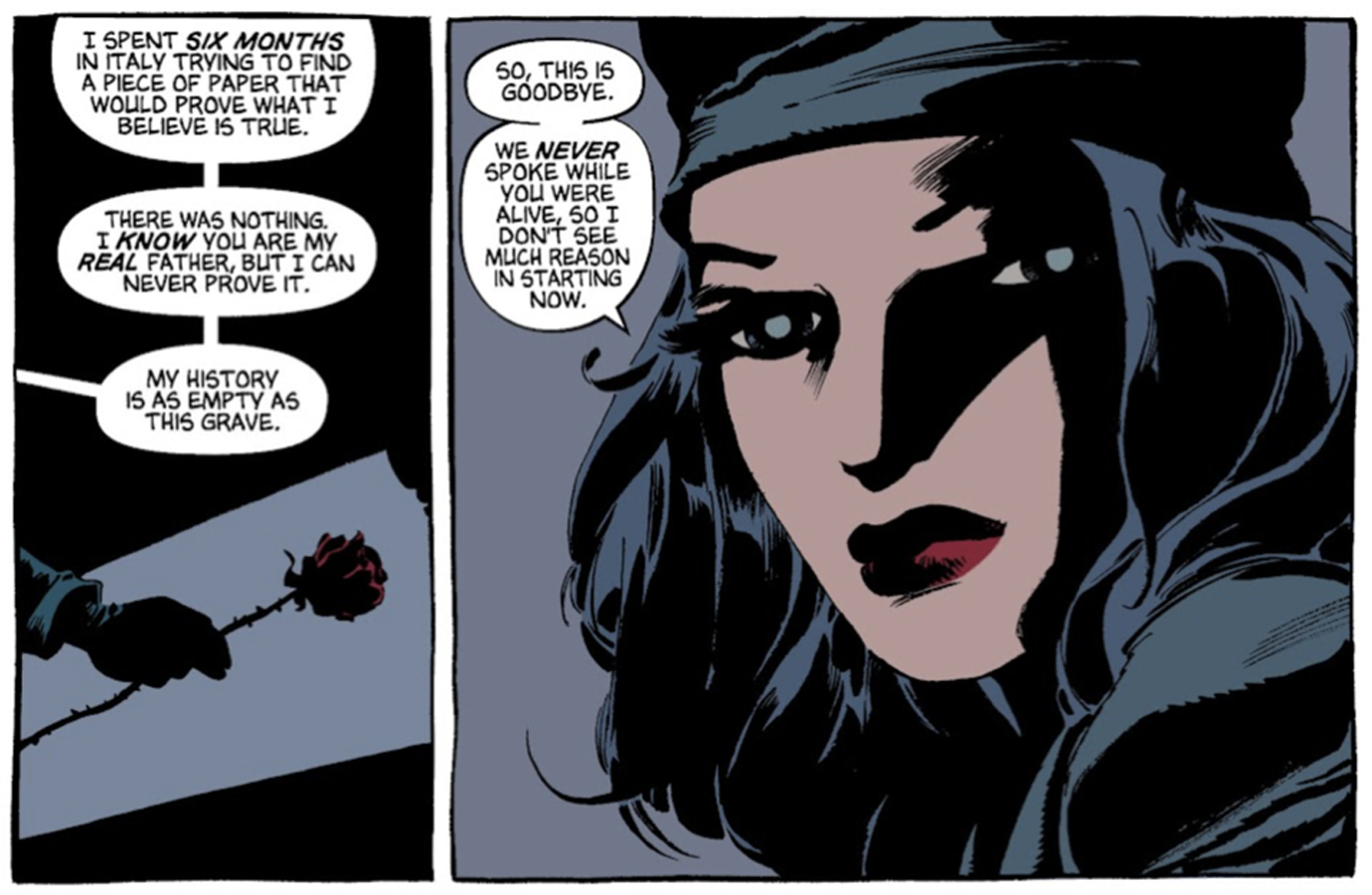
Transcendence
Selina Kyle is the only character in The Long Halloween saga who feels the full force of Gotham’s myth-making machinery and still refuses to let it define her. In The Last Halloween, she is placed closer than any other character to the psychological mechanism that produced Holiday—and, critically, she does not cross it. Where others allow longing, guilt, or rage to crystallize into identity, Selina recognizes the pattern as it forms and resists its final consolidation. If Gilda Dent’s tragedy was giving the idea of Holiday a body, Selina Kyle’s clarity lies in understanding that idea while refusing to become it. She sees that Holiday was never simply a killer, but the endpoint of a process: what happens when emotion overwhelms selfhood and narrative replaces choice. Selina feels the same consuming forces that produce Holiday—abandonment, desire, the hunger for meaning—but she never allows them to overwrite her sense of self. Where others harden feeling into destiny, Selina holds it at arm’s length. She experiences the Holiday impulse without surrendering to it.
Her arc in The Last Halloween unfolds across three movements that mirror—and ultimately interrupt—the Holiday pattern: her brief induction into Bruce Wayne’s family myth, her seduction by the Falcone family myth, and her final confrontation with Batman over belonging, identity, and what it truly means to be on the “wrong side.”
Selina’s first major appearance in The Last Halloween quietly reopens the wound that began her journey in When in Rome. Once again prowling the Falcone penthouse, she stops before the large portrait of Carmine and Louisa Falcone. It is unmistakably the same image as the one in the locket—but here the infant is missing. The frame has been altered. The child erased.
If a locket hidden in a safe suggested a secret, this public portrait with its most meaningful element removed suggests something more disturbing: a secret actively denied. Selina asks Mario where the rest of the painting is. He appears genuinely confused. She quietly vanishes before he can answer. Even after her graveyard goodbye, the portrait still pulls her back, although this time she retreats more quietly than usual—letting go is an iterative process.
Later, Selina encounters Robin speaking with Calendar Man in Arkham Asylum. She does not know who the boy is, but she understands immediately that he matters to Batman. And because she understands how myths consume the vulnerable, she intervenes.
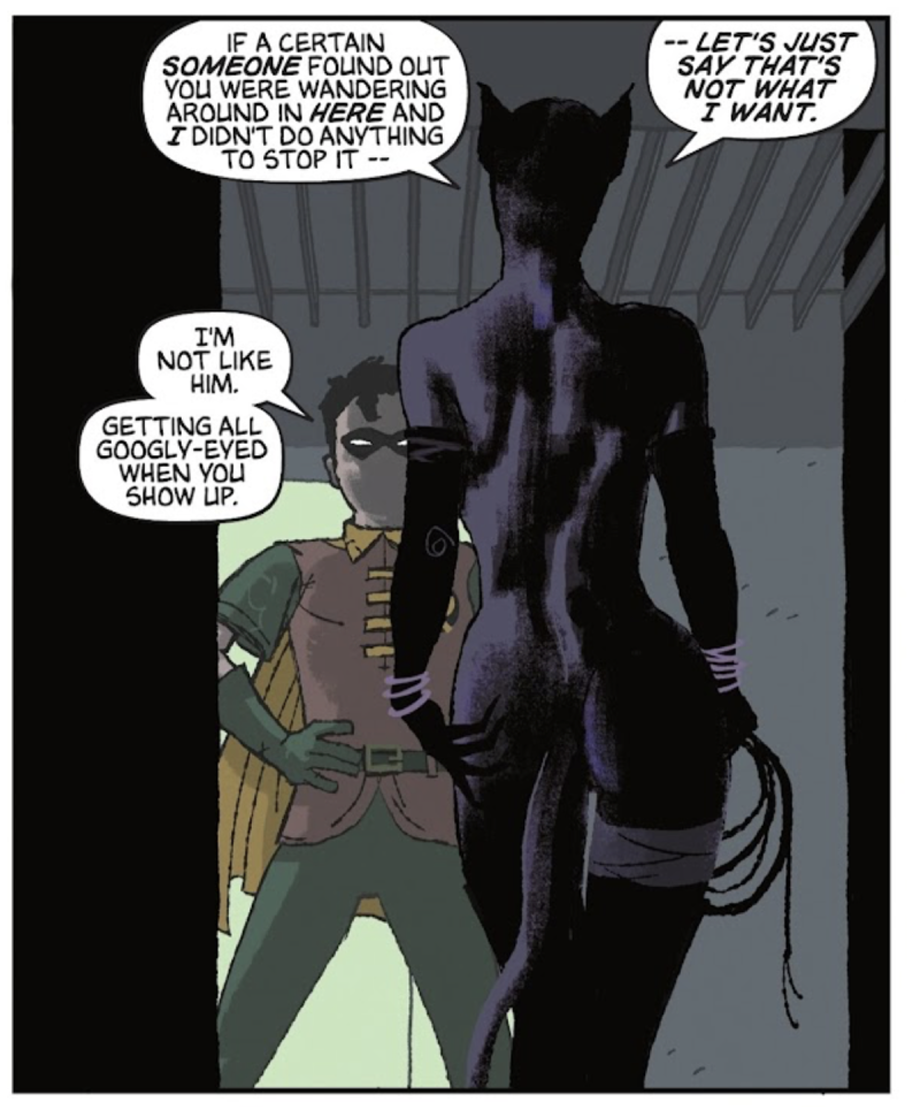
Selina does not act out of heroism, nor out of authority, but out of recognition. She understands how Calendar Man operates—how he feeds on fixation, on the desire to matter, on the hunger to be seen. She recognizes in Robin the same vulnerability Gotham once exploited in herself.
Selina’s intervention here is the inverse of the idea of Holiday. The idea of Holiday preys on obsession. Selina interrupts it. In doing so, she reveals her role in the saga: not as a creator of myth, but as someone who has learned how easily myth devours those who mistake longing for destiny.
Later, when Mario accidentally shoots Batman, the Batmobile autopilots home and crashes into the Batcave. Alfred and Robin restore Bruce’s heartbeat and remove the bullet, but he falls into a coma. Alfred tells Robin that survival cannot be forced.
“He and he alone needs to find the will to live.”
Days pass. Robin despairs. And in a moment that is reckless, questionable, and unmistakably childlike, he decides to give Batman something no medicine can provide: a reason. So he abducts Catwoman. Robin gasses her, drags her unconscious body into the Batmobile, and brings her into the Batcave. Finally, she stands in the inner sanctum of Batman’s mythology. When Selina awakens—furious and disoriented—her anger dissolves the moment she sees Batman lying motionless on the table. The mask is still on. The body beneath it is fragile. She leans close and whispers in his ear. What she says (as we learn later) is not comfort or confession, but accusation: “You’re on the wrong side.” The words and a kiss restore him.
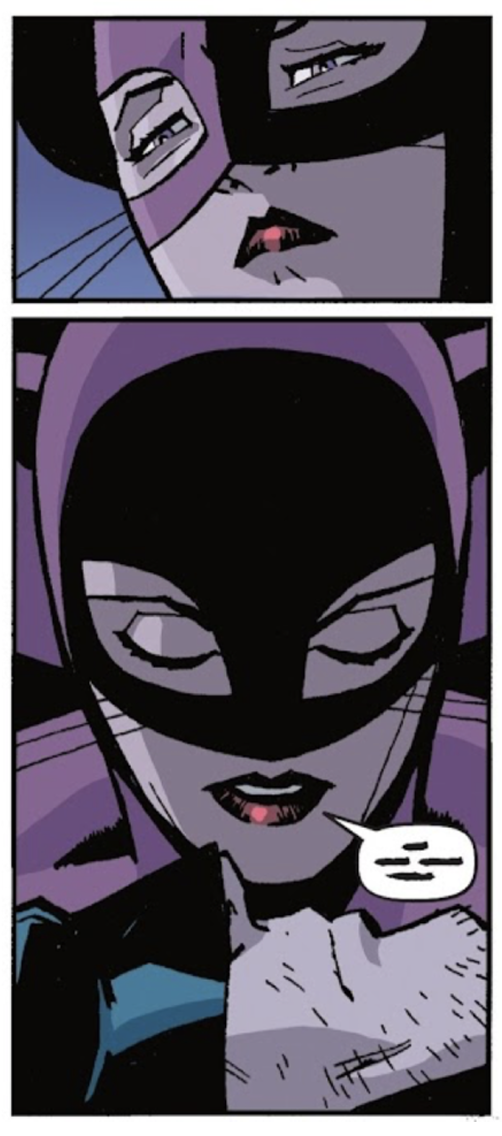
This moment solidifies Selina’s relationship to the idea of Holiday. Holiday represents Gotham’s belief that identity is forged through violence, sacrifice, and spectacle. Selina offers a counterforce: identity as choice. Batman does not awaken because of love or duty, but because Selina challenges the story he has been telling himself. He thinks he’s outside Gotham’s rituals, but he’s already living one—he just calls it the mission. Batman is willing to die for the mission. Her whisper subconsciously reorients him, returning agency where myth threatened to calcify.
After Bruce recovers, Selina asks him about Robin—who he is to Batman, what he means to him. It is a rare moment of vulnerability. She wants to understand Bruce’s emotional architecture, the system of attachments that gives his life meaning. Bruce responds by asking why she went to Rome.
“You tell me your secrets and I’ll tell you mine,” she says.
This is the oldest wound between them. Selina cannot trust a man who withholds his truth, and Bruce cannot risk intimacy without losing control of his myth. Despite Selina’s reorienting whispers, he walks away again, having come to his prior senses. She curses him in frustration, having only almost gotten through to him.
After Batman rescues Selina from Poison Ivy—mirroring the rescue she once performed for Bruce—Selina confronts Louisa Falcone at the Gotham harbor. Louisa arrives from Italy expecting to see Mario, but instead finds Selina waiting. She no longer pretends to be blind. Armed soldiers flank her.
“You have something I want,” Louisa says.
“And you have something I want,” Selina replies.
The exchange is ritualistic. Each woman holds the other’s myth: Louisa wants the Capo di Capi ring. Selina wants clarity, lineage, the story she has chased across continents.
Before the battle at Arkham, Louisa addresses the Falcone soldiers in the penthouse. The matriarch is now flanked by her heirs. Selina stands unmasked at her left, and Mario stands at her right. Batman hides among the mobsters. Selina sees through him instantly and exposes him.
Her motives remain deliberately ambiguous. Bitterness, loyalty, resentment, foresight—all are plausible. What matters is that Selina asserts control over the narrative. She chooses when the mask comes off. In fact, Selina’s arc culminates here as an actualized, emotionally autonomous agent. Perhaps it was nearly losing Bruce, or seeing her “mother” again, but something fundamental has changed in her at this point.
Chaos erupts. Batman flees to Carmine’s office, where the portrait now hangs complete, and the infant restored at last. Two gunmen open fire. Selina, now in costume, shoves Batman aside, saving his life. The bullets shred the portrait, obliterating the image she has spent years chasing. They crash through a sunroof onto a heart-shaped bed. Batman asks about Holiday. He asks why he is on the wrong side.
Selina answers in her usual cryptic way:
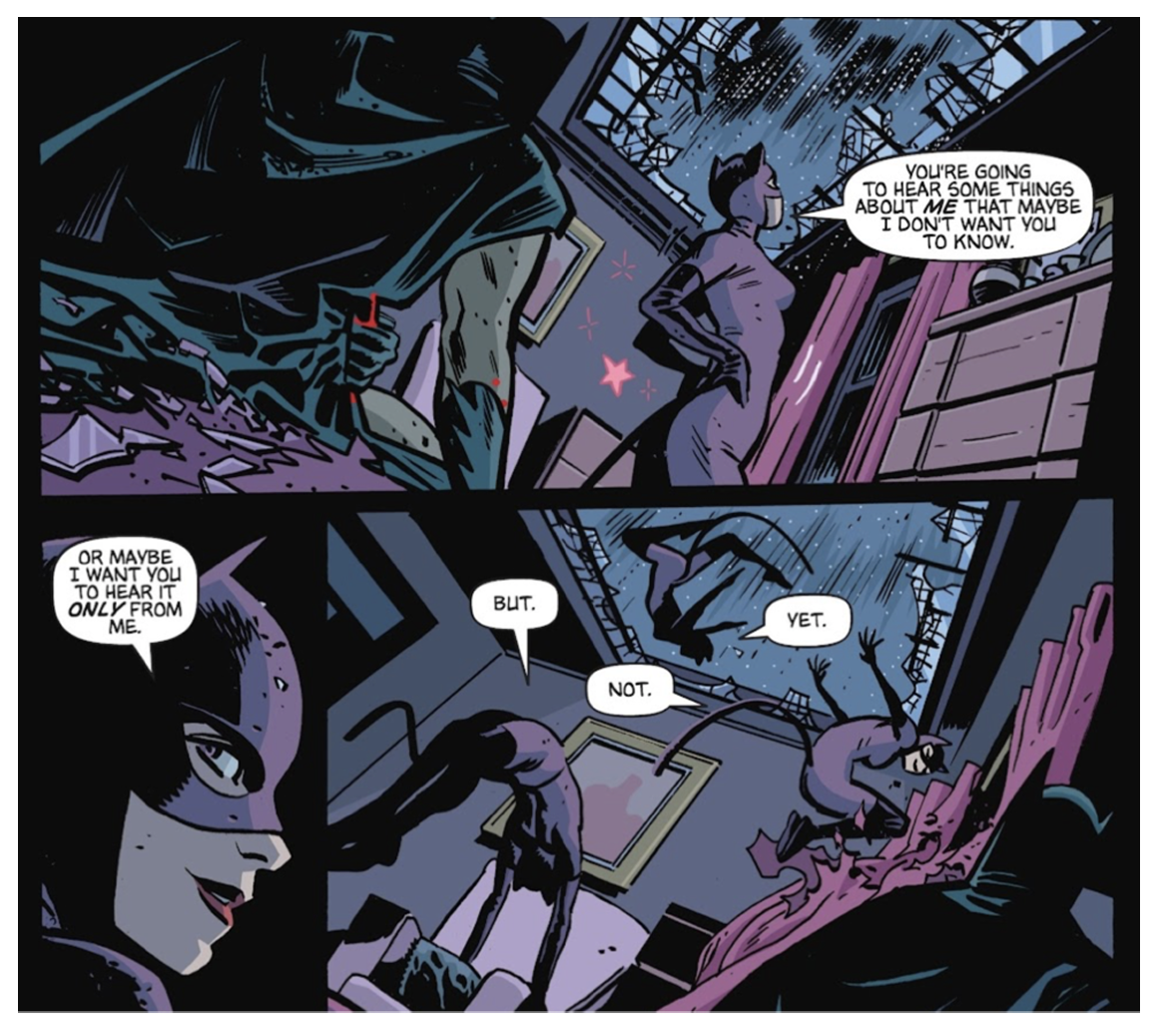
She leaves him injured and bewildered. In a story obsessed with masks, Selina refuses to let anyone else decide when hers comes off.
With the portrait destroyed, Selina confronts Louisa in Carmine’s office. Without the image, Selina states plainly, neither woman can get what she wants. Louisa asks which side Selina is on.
“I’m on the same side I’m always on.”
“Yes,” Louisa replies. “But your side is now ours.”
Selina rejects this framing. She has not come to discuss Gotham or Batman. She has come to say goodbye.
Then Louisa offers the story Selina has been waiting for. She claims Selina is Carmine’s daughter—taken from her because she was a girl, hidden for her protection. She offers documents. She offers confirmation. She offers closure.
Selina removes her mask and asks the only question that matters:
“Is that the truth?”
“I never want to lie to you again,” Louisa answers. They embrace.
This moment is the purest echo of the Holiday mechanism: ambiguous evidence, conflicting narratives, and emotional necessity masquerading as certainty. Selina is offered a story capable of ending her search—but at the cost of surrendering her agency to it. Louisa may be telling the truth. She may be manipulating Selina for the ring. She may be doing both. What matters is not the answer, but Selina’s response: she accepts the story provisionally, not absolutely. She believes enough to move forward—but not enough to erase herself. This is illustrated by the fact that she retains the Capo di Capi ring. She will not be a card-carrying member of the Bat-family, nor a full-fledged Falcone, but rather, she stands on her own side as the antithesis of Holiday.
As a final demonstration of this actualization, Selina sabotages Mario’s plan at Arkham not out of loyalty to Batman or rejection of the Falcones, but because she recognizes the pattern repeating. Another lie (Gilda’s child) is about to harden into destiny. Another story is about to consume its host. She chooses to interrupt it to prevent its completion, completing her arc.
The Wrong Side and the Idea of Holiday
When Selina tells Batman that he is “on the wrong side,” she is not accusing him of moral failure, criminal hypocrisy, or ideological blindness. She is diagnosing something far more precise—and far more dangerous. In Gotham, sides are not defined by law or crime, but by whether one allows emotion to harden into identity. The wrong side is not where violence occurs; it is where feeling is mistaken for fate, where longing replaces choice, and where narrative overtakes selfhood.
This is the boundary that produces Holiday.
Holiday is not evil because it kills, but because it finalizes. It takes grief, rage, or abandonment and gives it a name, a ritual, and a destiny. Once crossed, the self no longer chooses. It instead performs. Batman crosses the boundary when he surrenders his life to the mission. Gilda Dent crosses this boundary when love and despair solidify into authorship. Harvey Dent crosses it when justice becomes inevitability. Mario Falcone crosses it when inheritance becomes obligation. Selina Kyle does not cross it at all.
When she finally tells Bruce, “You inspired me. To be whoever I wanted to be,” she offers the clearest articulation of her philosophy that until recently she was unable to articulate. Inspiration, in Gotham, is dangerous. It can become imitation. It can become identity. Selina accepts inspiration without surrender. She learns from myths without living inside them. That is what it means to be on the right side in Gotham. It has nothing to do with law and crime, but authorship and autonomy.
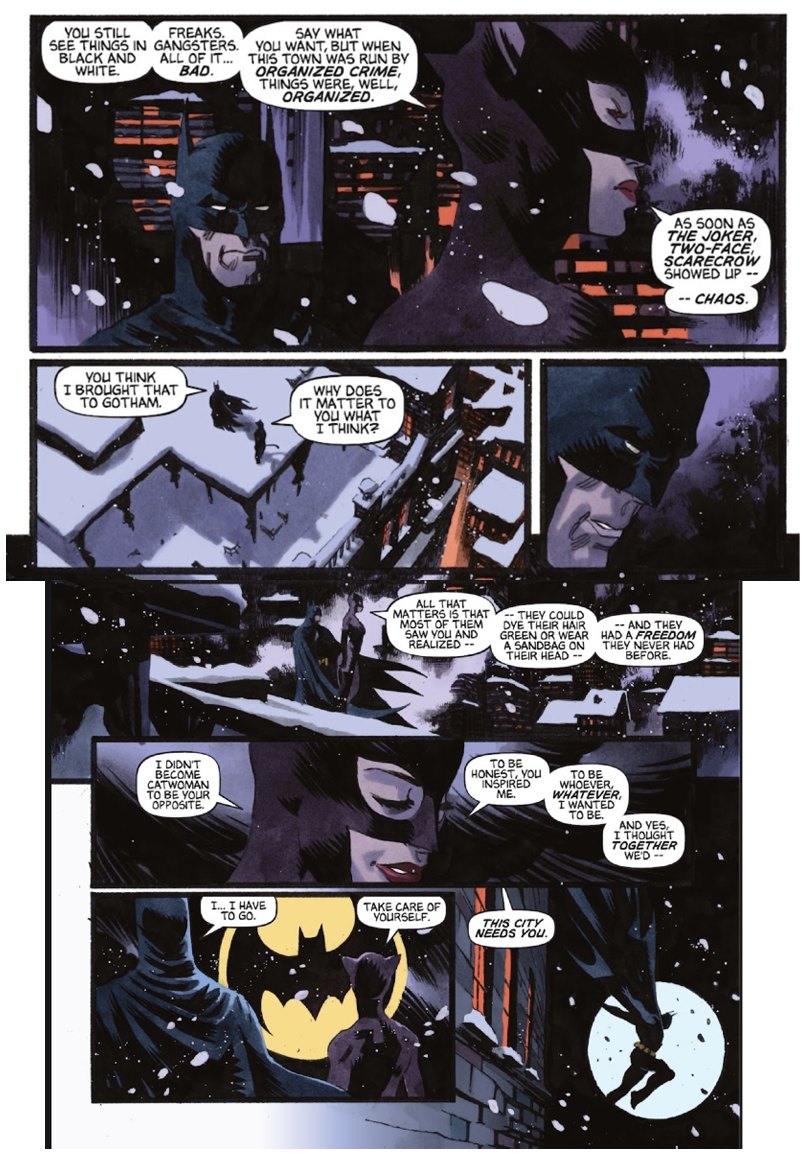
Selina Kyle survives The Long Halloween saga because she experiences the Holiday impulse without surrendering to it. She feels the pull of myth, legacy, love, and abandonment, and refuses to let any of them decide who she is. She understands the idea of Holiday not as a mystery to be solved, but as a mechanism to be avoided. Loeb, Sale, and collaborators frame her as both the antithesis of—and the negative space around—the idea of Holiday, establishing a foundational dialectic in Batman continuity that will recur and resolve over the years to come.
___________________________________________________________
Postscript
If you’ve made it this far, thanks for reading. If one includes the three Legends of the Dark Knight Halloween specials (and I do, even though I did not discuss them here), The Long Halloween saga spans 47 individual comic issues that can be read as a contiguous, cohesive, and remarkably profound run depicting the formative years of Batman’s world. I invite you to offer your own readings in the comments. It is all but certain that my interpretation of The Last Halloween will continue to evolve on future revisits, just as my understanding of The Long Halloween itself has changed over decades of rereading. See you next time.
—Jamison W. Weber, Ph.D.
___________________________________________________________

Damn. This was an amazing analysis that makes me want to reread the whole saga. I’ll admit being a little mixed on the finale (probably due to reading it month to month, and being delayed; also to do with revelations about Loeb’s personal life I have been informed of in recent years), but seeing how you connect all the threads of plot and character really goes to show how well crafted and thought out these books are. Will definitely be doing a big reread and can share more thought out opinions after.
Side note: any opinion on how the same writer can give this much nuance and complexity while also creating the mess that is Hush 2?
Dylan, thank you for reading and for taking the time to leave such a thoughtful note. I find it fantastic that the essay made you want to pick up the whole saga again. That is, in a sense, the wager of the piece: that these books reward return not because they “solve” cleanly, but because their ambiguity is structured and their meanings recur.
I also think it’s completely fair to note how extra-textual context—whether publication delays, shifting critical consensus, or revelations about a creator—can complicate how a work lands, especially a finale. One of the things I wanted to test was whether The Long Halloween and The Last Halloween could still cohere when approached on their own terms, not by bracketing that context out of existence, but by asking whether the thematic architecture holds even once that distance is introduced.
On your side note: I’ve wondered the same thing, especially because The Last Halloween and Hush 2 arrived so close together and invite direct comparison.
My best answer is that they’re almost opposites in what they demand from a writer. The Last Halloween is a return to a closed thematic system. It’s designed to echo, reinterpret, and spiritualize an existing structure (ambiguity, guilt, recurrence), and it’s allowed to be about an idea rather than a checklist of plot mechanics. It succeeds when it feels like myth and ritual, when the story behaves the way memory behaves. That’s exactly the terrain where Loeb can be very strong.
Hush 2, by contrast, is built as an open-system sequel to a mega-hit, whose primary job is continuity reactivation: familiar faces, familiar rhythms, fan-service pressures, and the gravitational pull of “bigger” rather than “truer.” That kind of project can flatten nuance quickly, because it’s structurally incentivized to remind rather than to reveal. The Last Halloween is concerned with thematic evolution and coda; Hush 2 is more Hush in a surface sense. I don’t think there’s anything inherently wrong with that, the stories are simply aiming at different goals. I think Loeb is very strong on the former, but perhaps not so much on the latter.
There’s also the collaborator effect. The Long Halloween / The Last Halloween live and die by atmosphere, pacing, and visual implication—the very tools that make ambiguity feel intentional rather than accidental. In those books, the art is carrying a large share of the narrative burden. When the aesthetic and narrative aims aren’t aligned at that level, the same writer can produce radically different results. Jim Lee is a great artist, but the artists on The Last Halloween clearly understood that the story depended on restraint, rhythm, and suggestion rather than spectacle.
If you do end up rereading the saga, I’d genuinely love to hear whether the finale plays differently when experienced as the culmination of its governing principle—Holiday as recurrence—rather than as a single delayed reveal.
Very interesting thesis. It gives me a lot to chew on and makes some of the things I grappled with the most regarding Last Halloween easier to swallow, firstly the feeling that a sequel was an unnecessary, and secondly that Selina’s character in Last Halloween was overly ambiguous in a cute manner that stretched things too far with nothing to say. I quibble with some details, but overall, your explanation of what it means to be “on the wrong side”, and how Batman is caught in the same web as the mobsters, and the freaks, whereas Catwoman is free, is beautiful.
I notice the essay promised it’d cover Selina shooting herself in “Part 3” but when it finally tackles Selina, it skips over her shooting herself. Perhaps an intentional hole to echo Loeb’s stories? 😉
Since you provided so much to think about, I’d like to point out two aspects that I feel were overlooked: Firstly, Batman (and his role as a whole, since he’s the titular character, but seems to conspiciously be missing agency or an arc in your reading)’s final statement in the last pages of the final issue that the entire saga was “the story of Harvey Dent”, and how he is able to believe in him again. I think that aspect was extremely important to Loeb, his anchor through the decades, so by not at least summarising it, any analysis is incomplete.
Secondly, in the last issue Catwoman announces she’s going to Italy, as if setting the stage for a sequel to When In Rome. I don’t think that will actually happen, but the point is that your reading makes her wholly self-actualized and complete in her character, but this planned trip implies her longing for identity is ongoing and she may never be fully complete. What’s more, I think there was more going on when she accessed the medical files in Arkham than her learning Gilda’s son was a fabrication. Somehow, she learned something about her own lineage in that basement which resulted her in planning a trip to Italy, and it’s left ambiguous whether she found final proof of being a Falcone, hence she’s traveling to lead the Empire from the throne, or to restart her search for evidence again. Either way, I think there’s something to dig into here.
I wrote my own analysis of Last Halloween on Reddit (https://www.reddit.com/r/DCcomics/comments/1okyory/discussion_solving_batman_the_long_halloween_the/), but I completely missed the possibility of Gilda having her own split personality, which brings a lot of things together. But for what it is, it might add something to the conversation.
thank you for this insightful analysis; I’d initially been disappointed in the Mario reveal at the end of LAST, but your close reading made me appreciate Loeb’s artistry and planning. I hope to read more from you about comics, soon.
Lenny